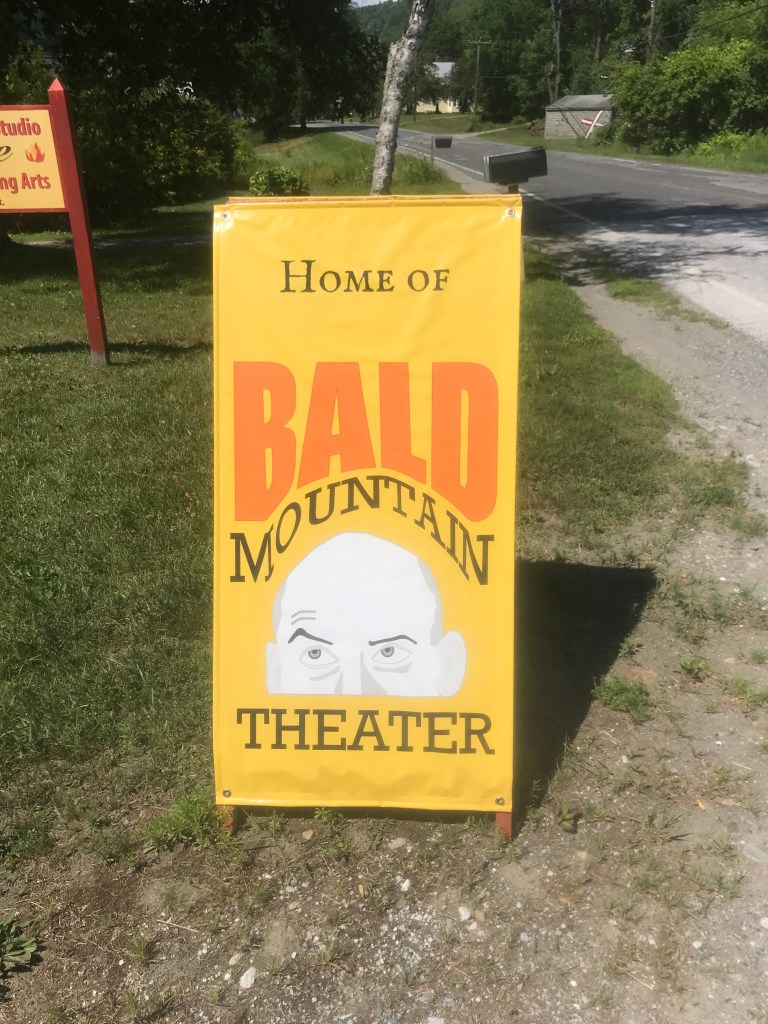
Ride 34: Goshen, Chittenden, Mendon, Killington, Stockbridge, Pittsfield & Rochester

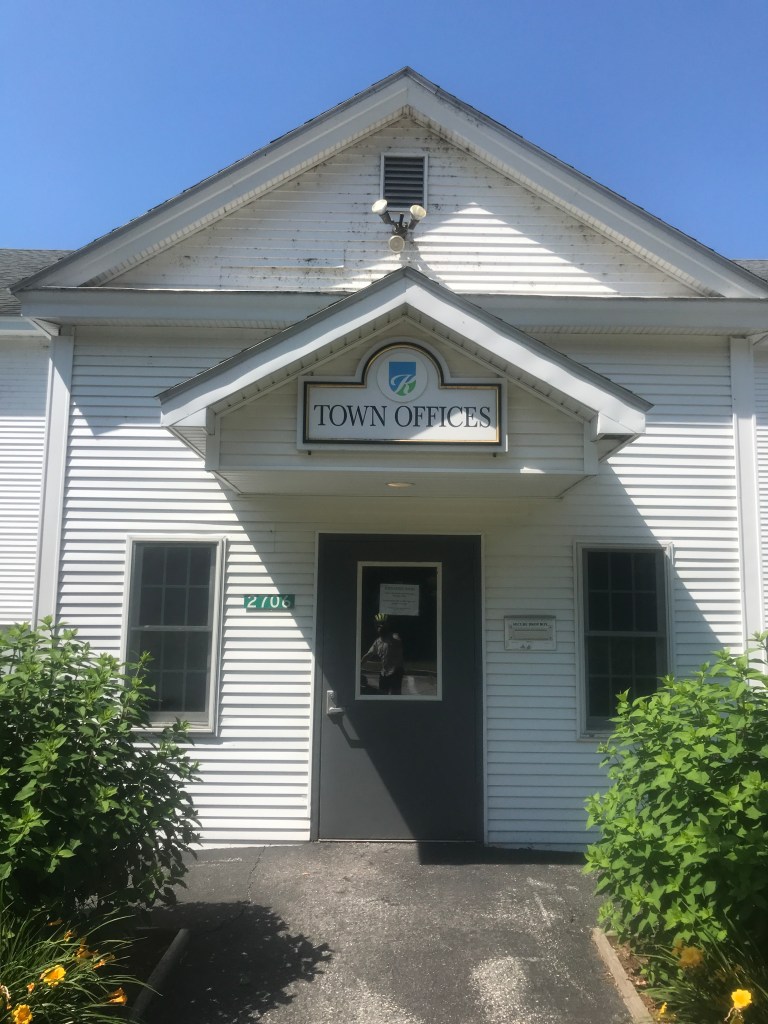
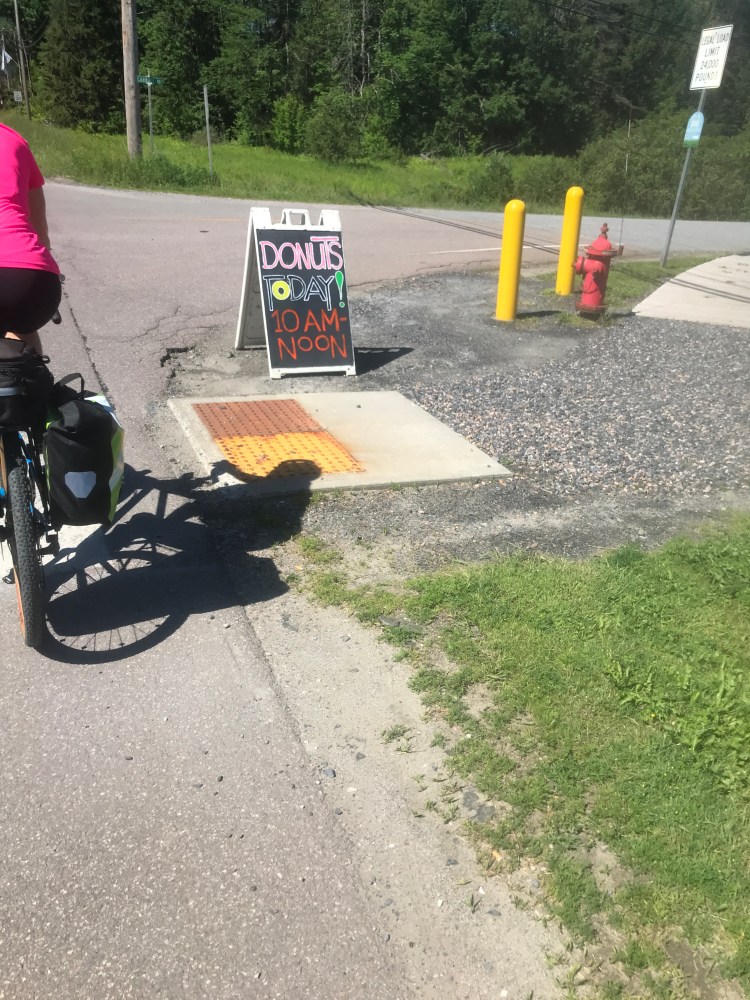
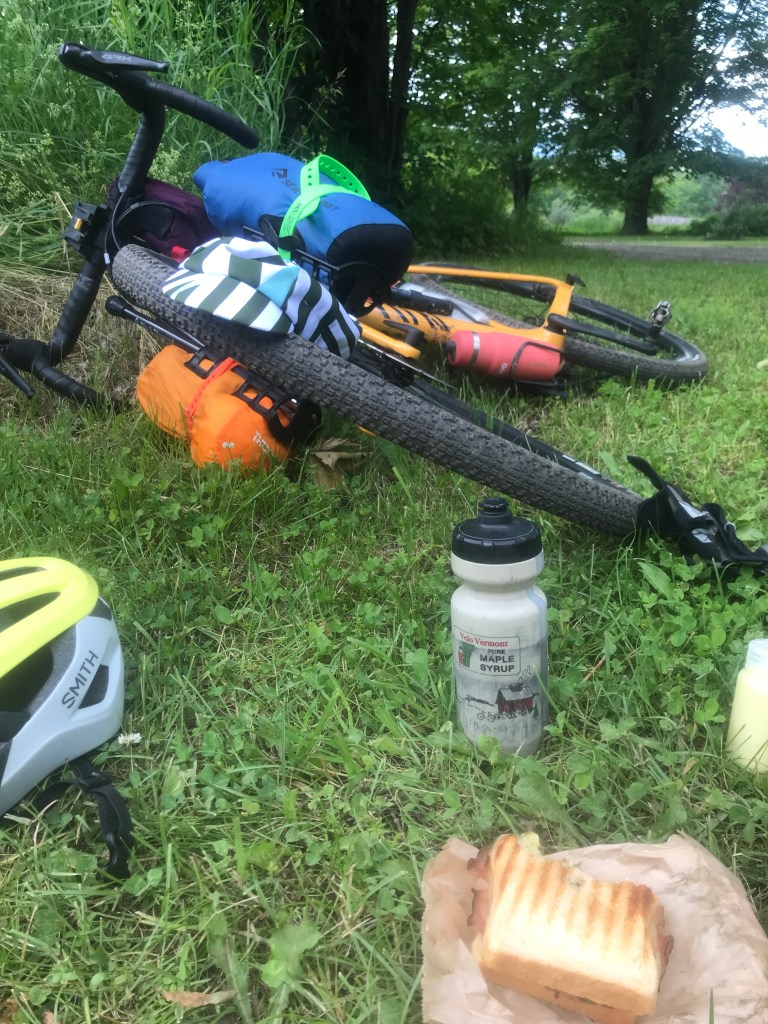
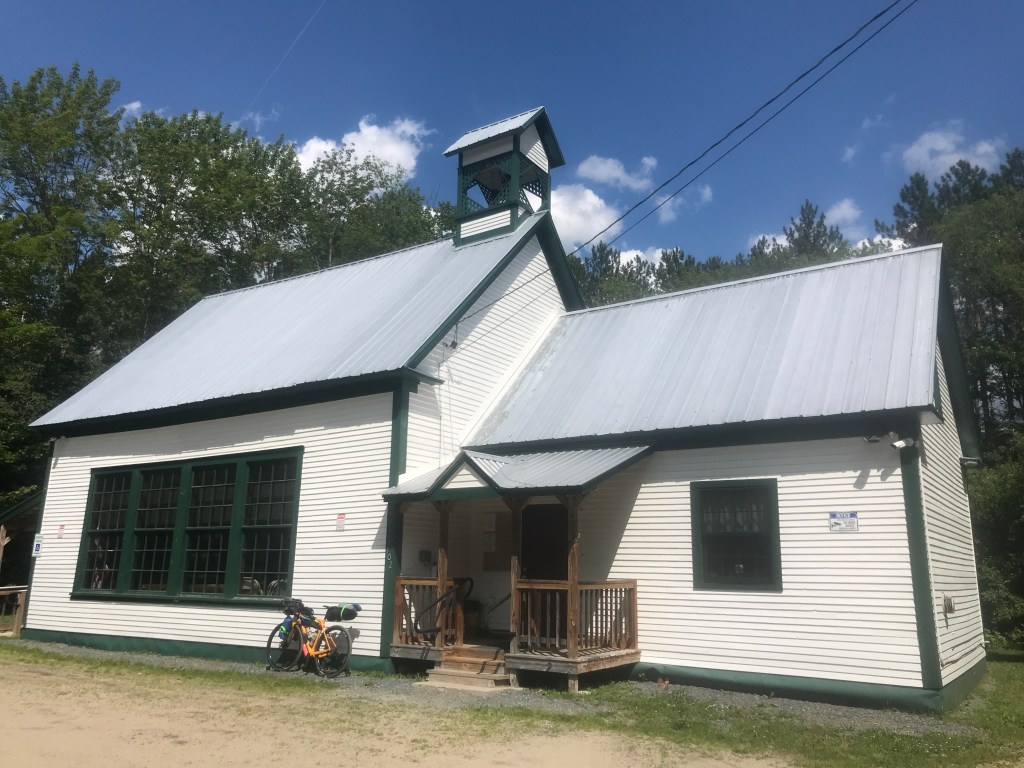
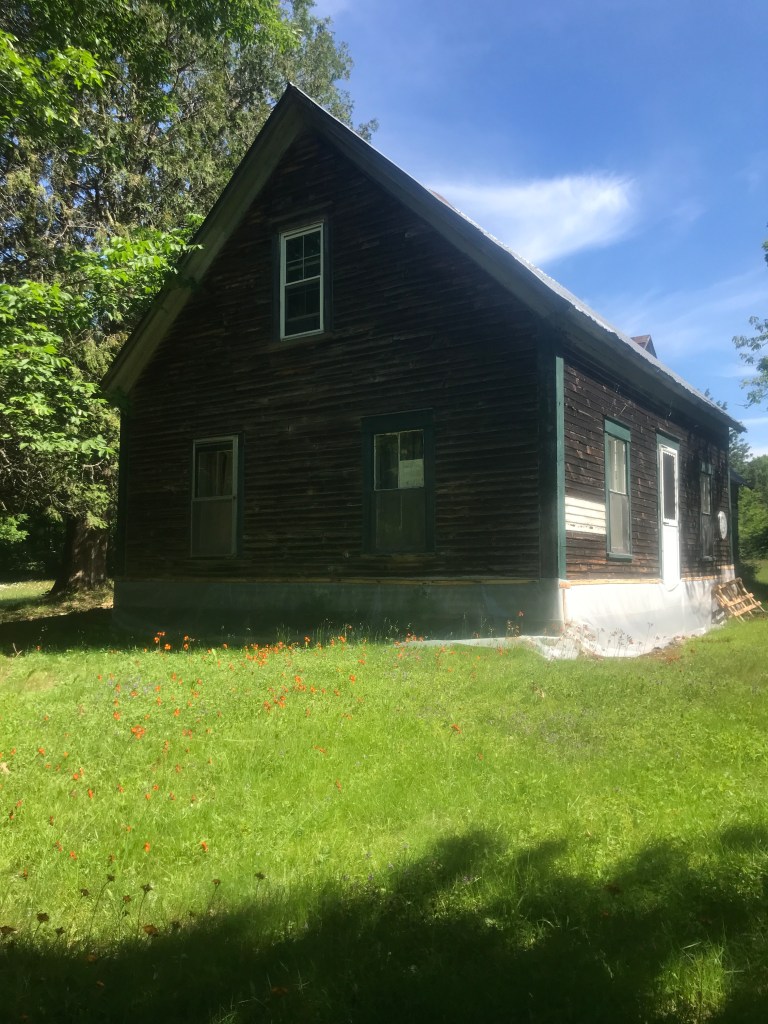
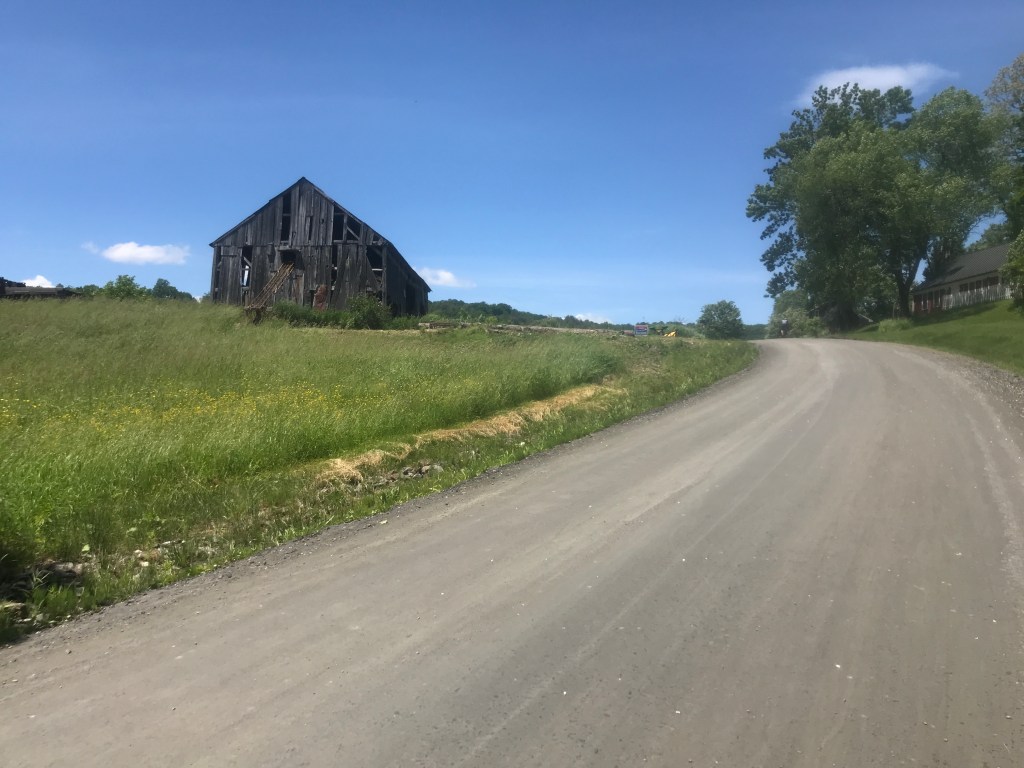
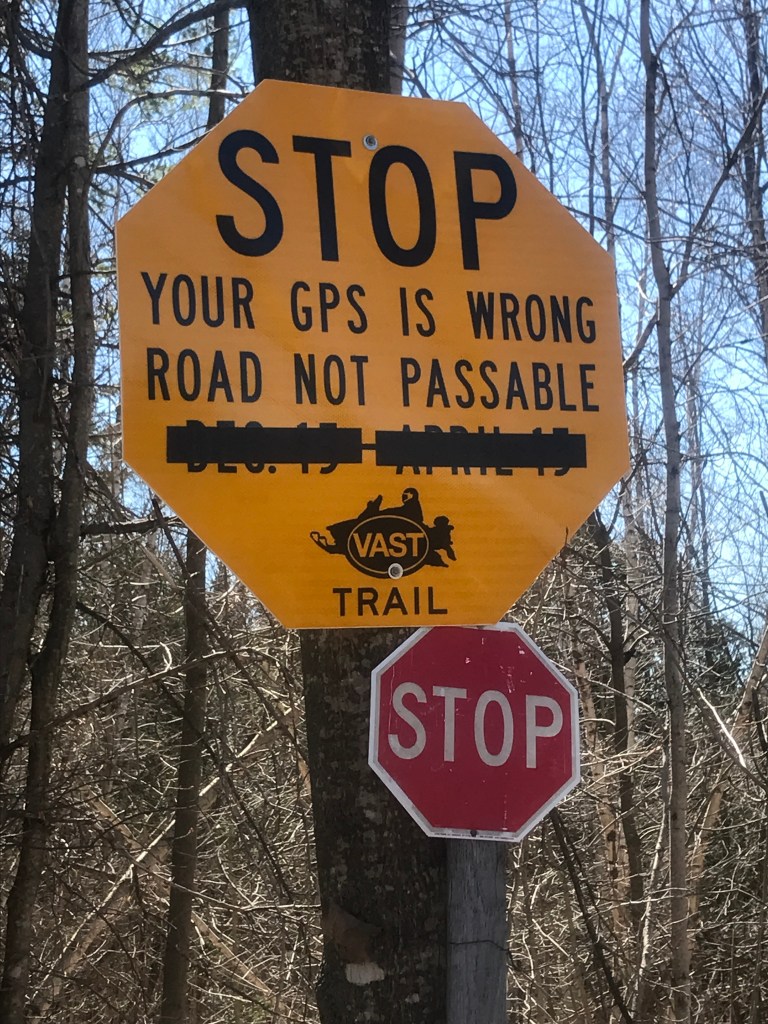
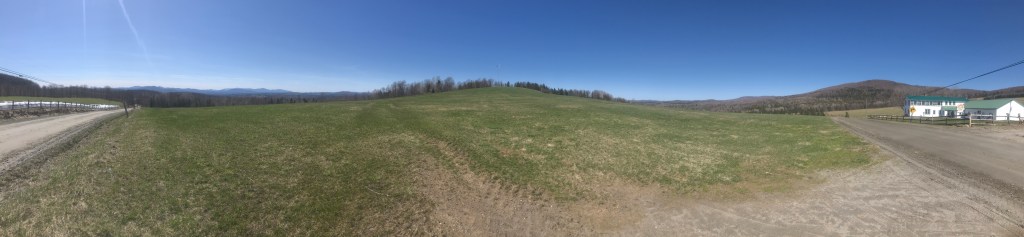
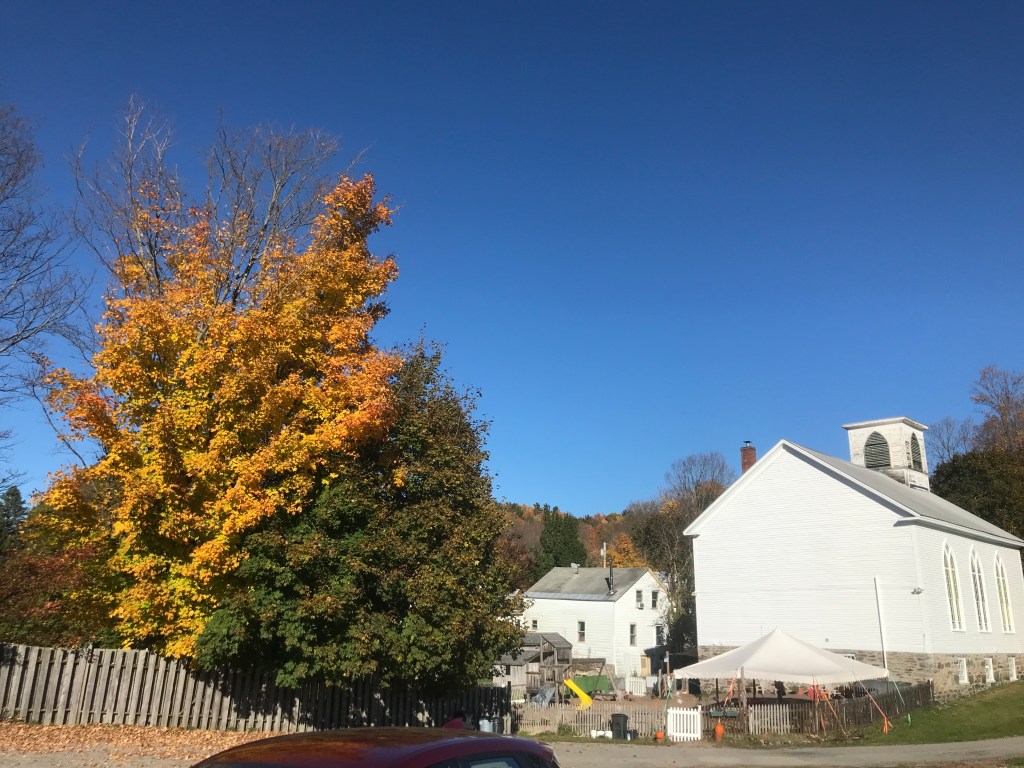
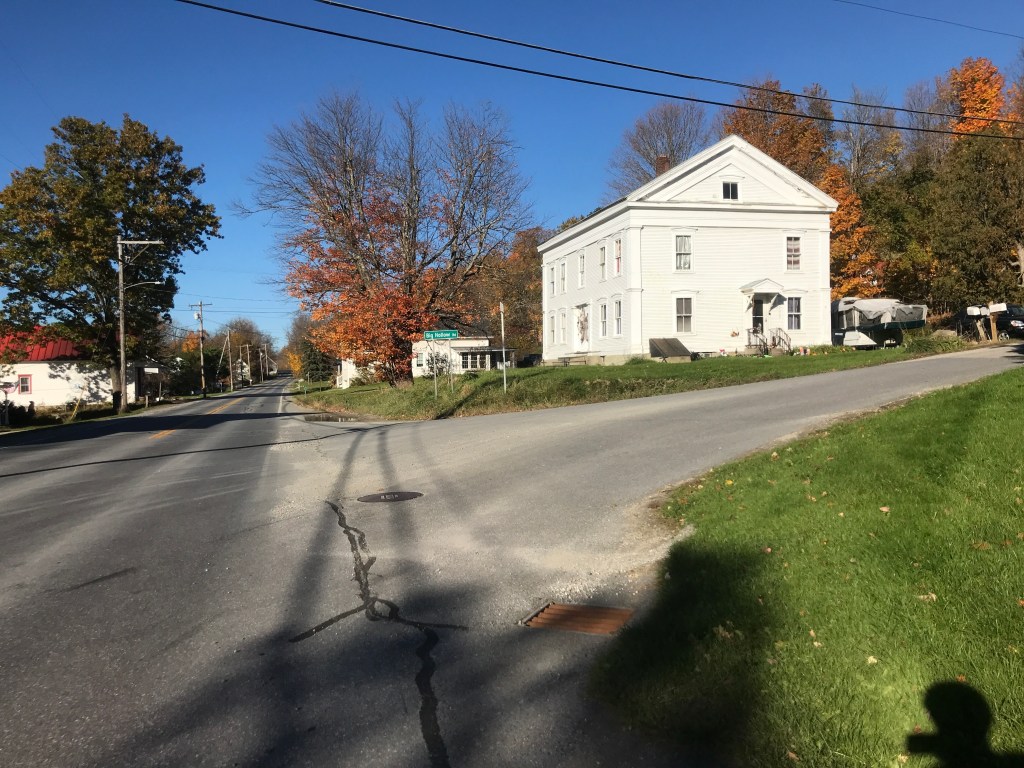
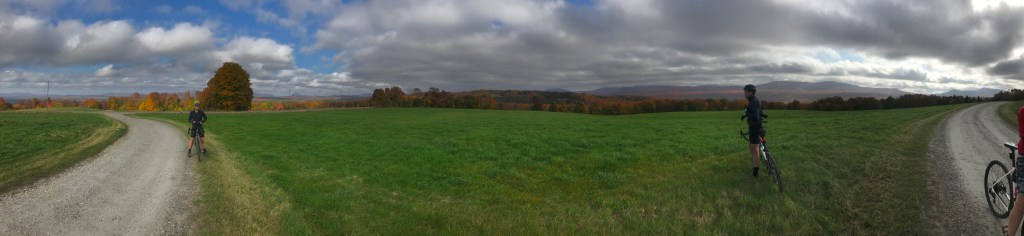
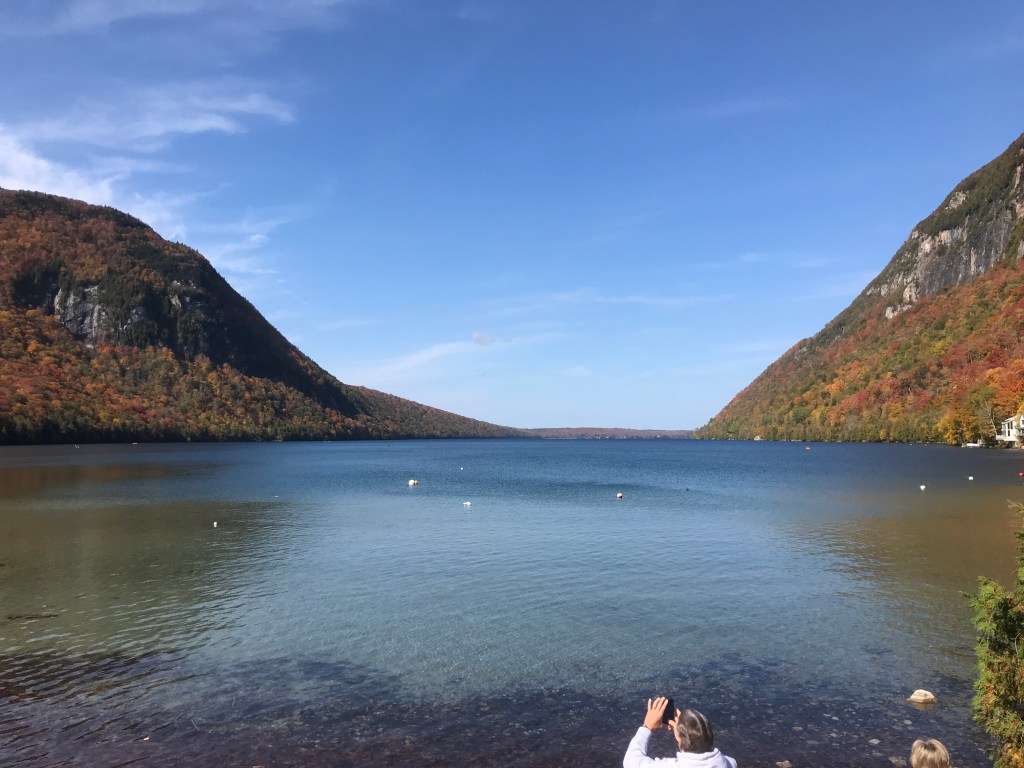
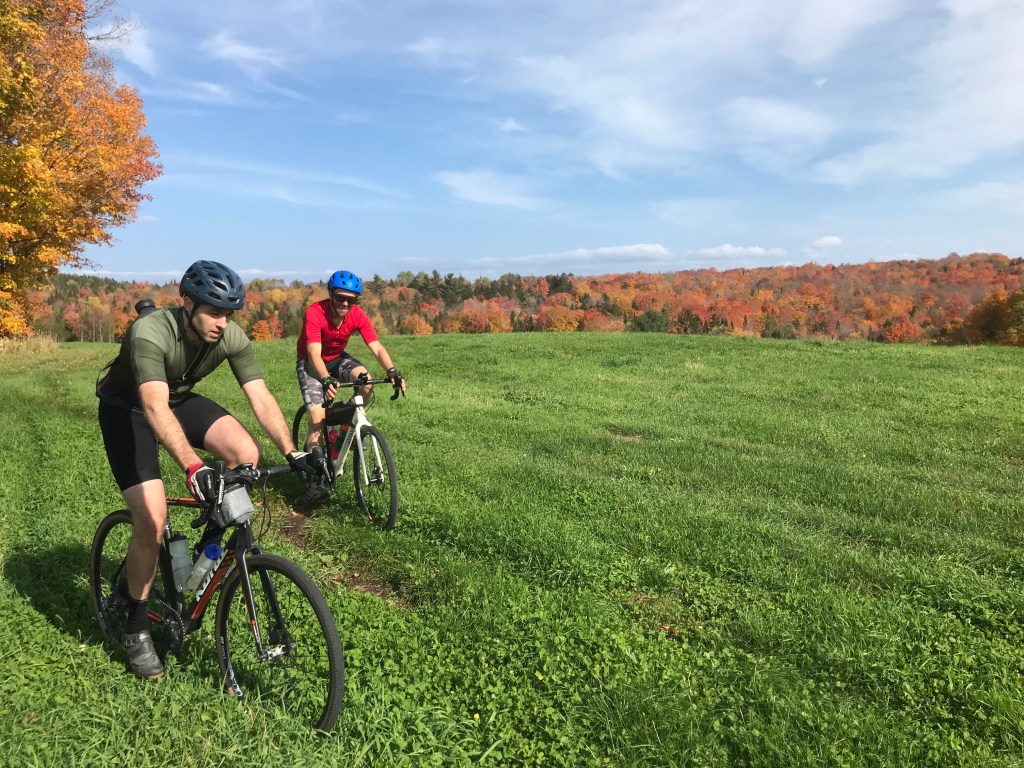
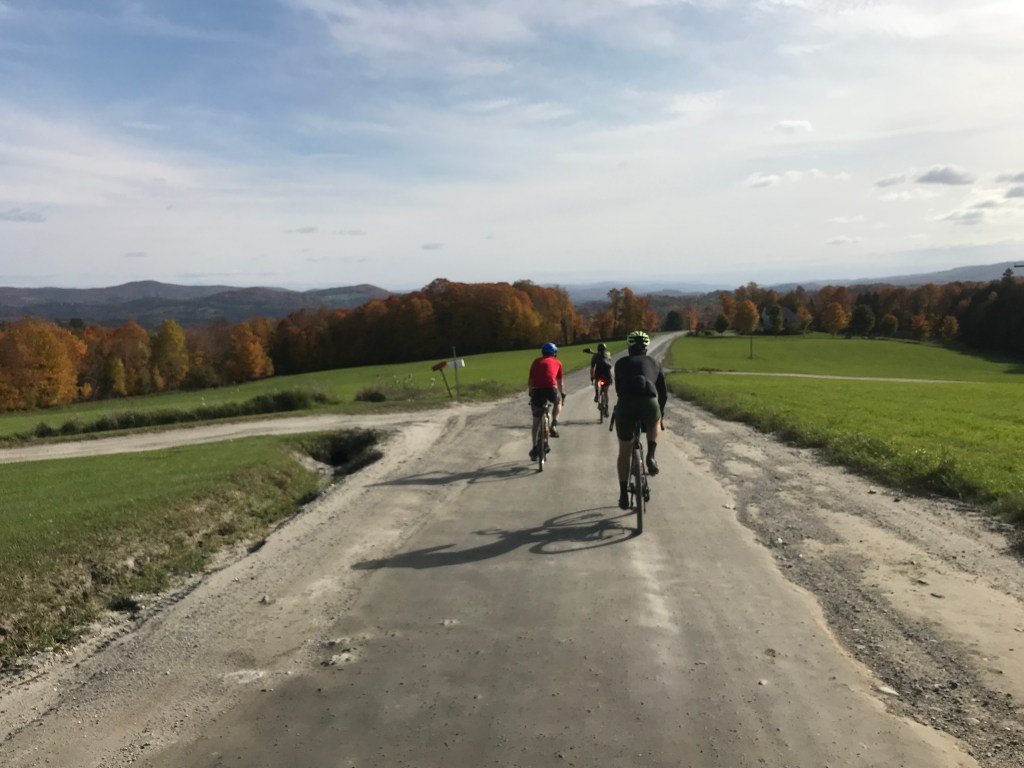
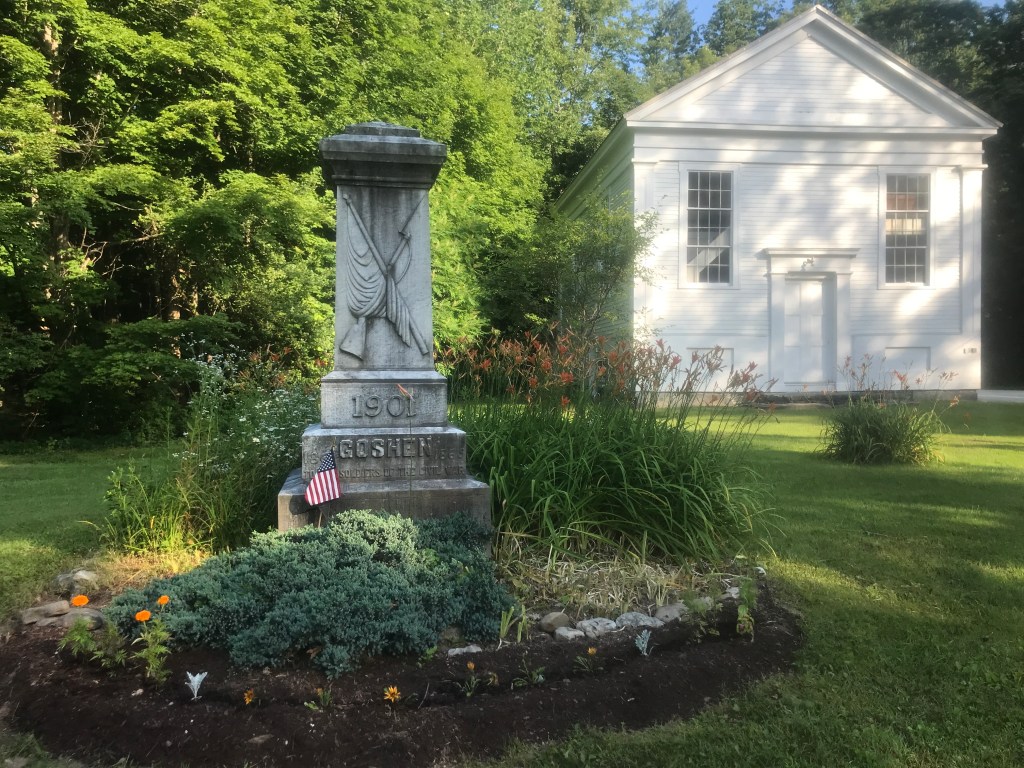
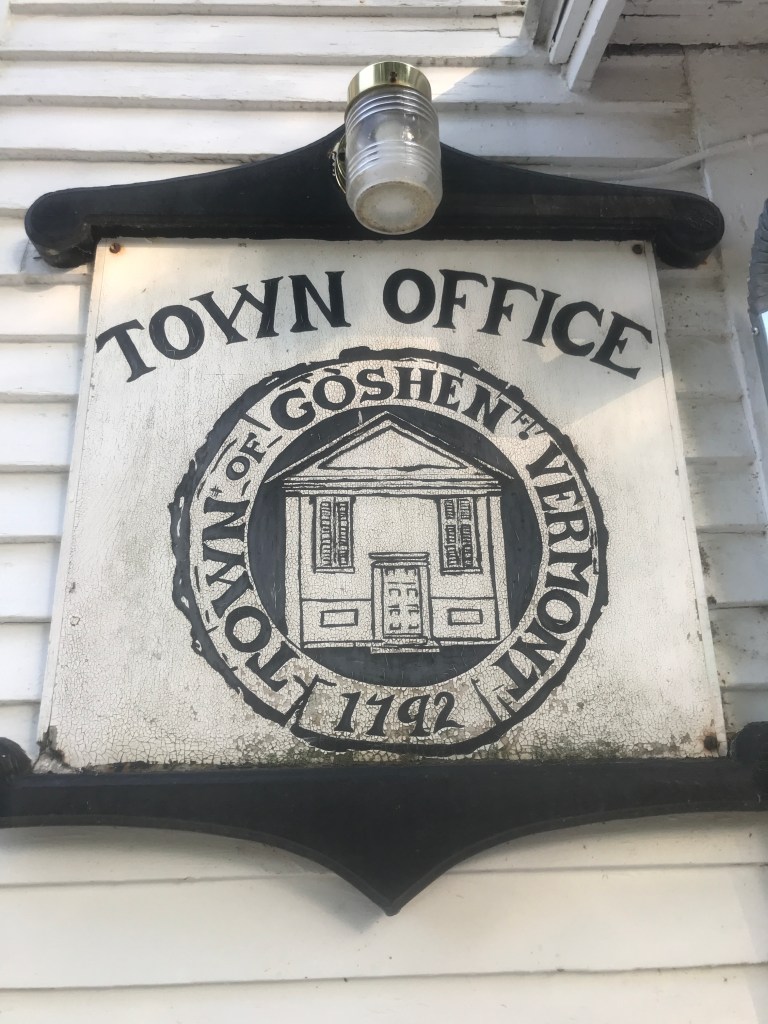
I’d been on a bit of a roll for the past few weekends and Maddie had a 12-hour shift at Rescue, so I figured I’d keep the streak rolling with another 251 ride. The routes left are dwindling amazingly fast and I wanted to do something ambitious, but not too wild, and what I’d planned in the Killington area fit that bill. It was solidly over the golden 10:1 gravel ratio and had some unknown Class 4 sections, but was under 65 miles. It was also supposed to be quite warm, so after waking up around 5:00 or so I got on the road to try to beat the heat. I drove down to Goshen, in the lower slopes of the Green Mountains, east of Brandon. Goshen is a small town in both area (21 square miles) and population (172), but it boasts an amazing national recreation area, a patch of national forest managed for blueberries, great nordic skiing (also blueberry themed) and access to some fantastic gravel riding. I parked at the Goshen town offices, which confusingly are in a small building NEXT to the grander town hall building which is featured on the town seal. 

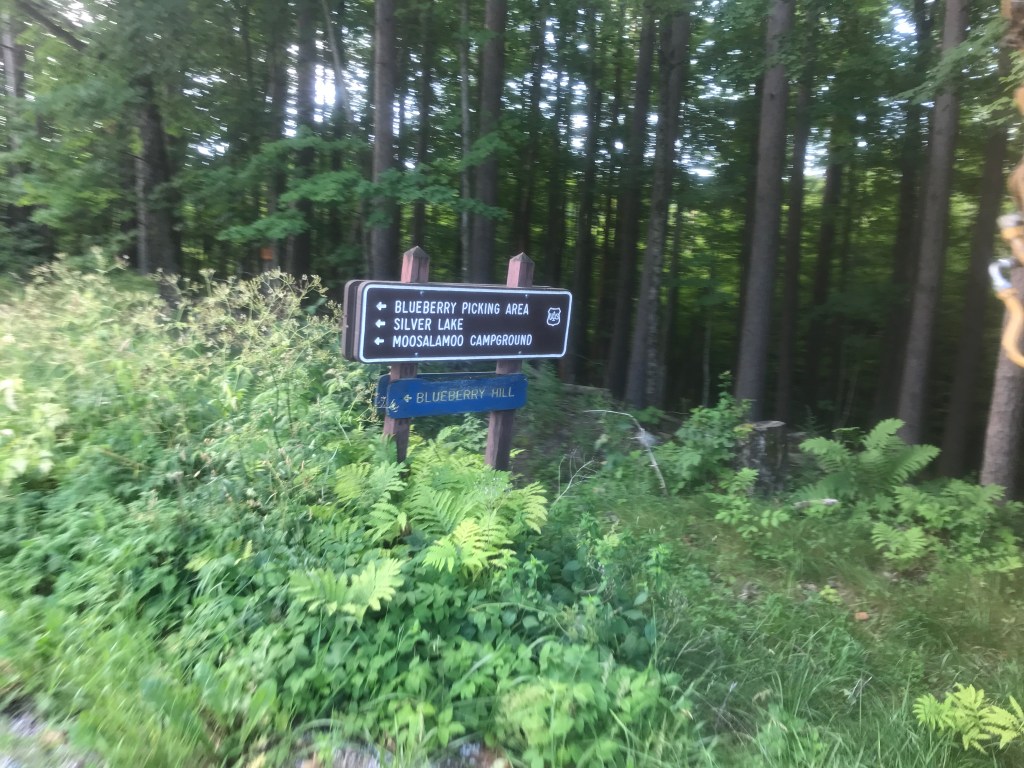
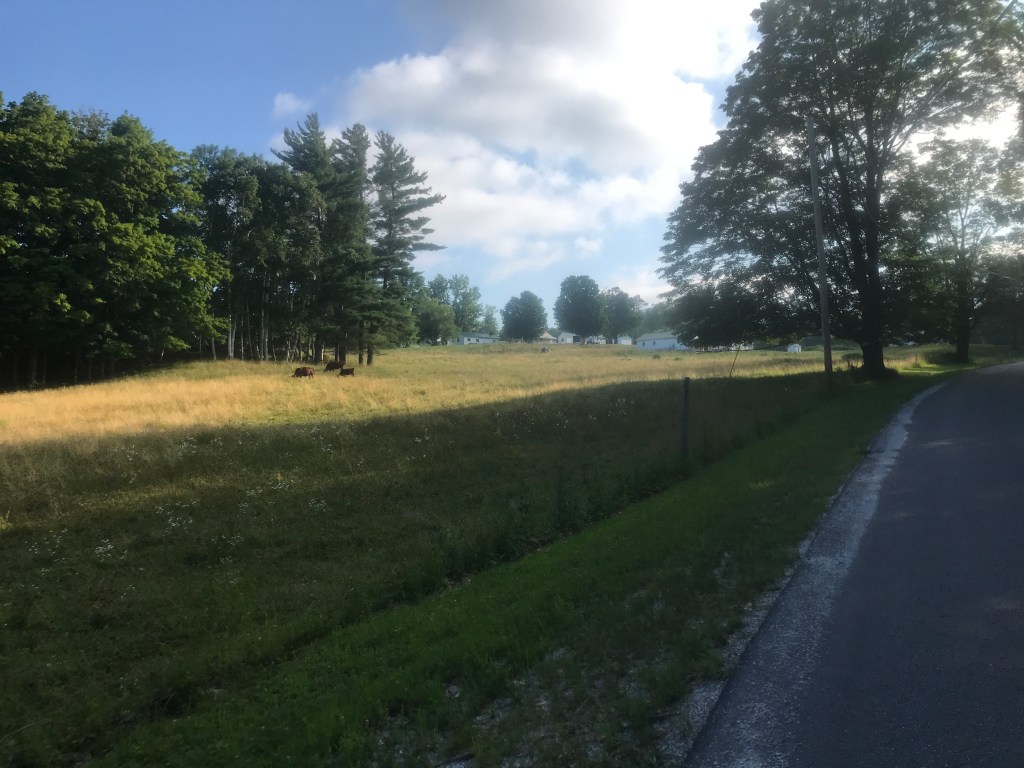
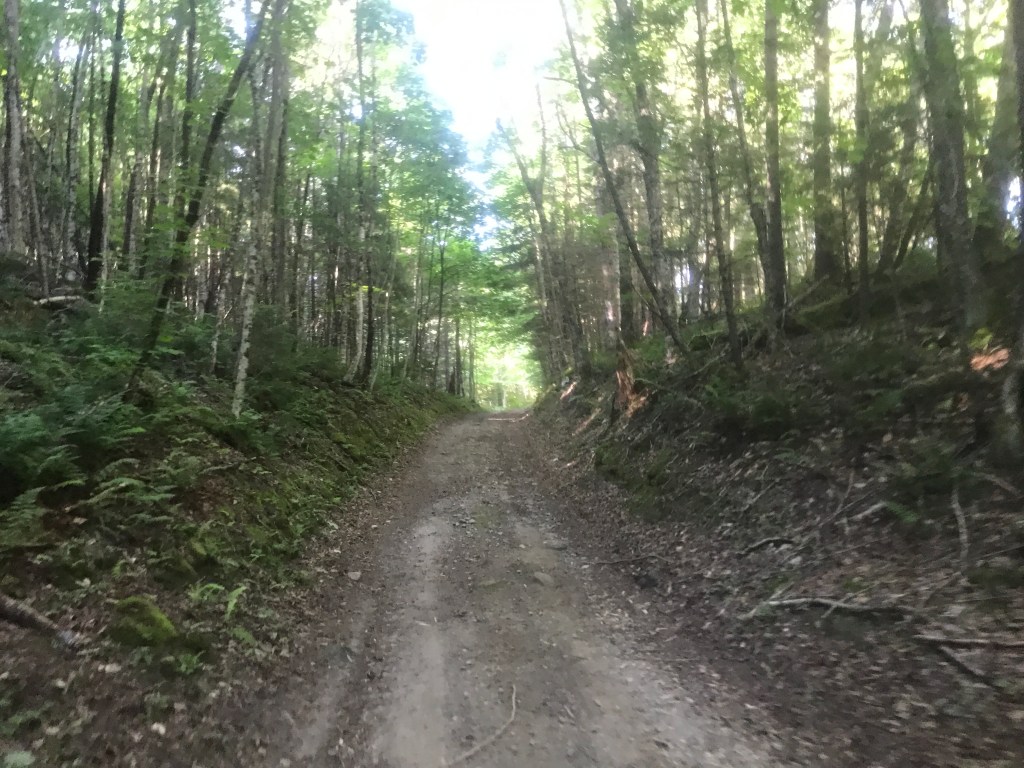
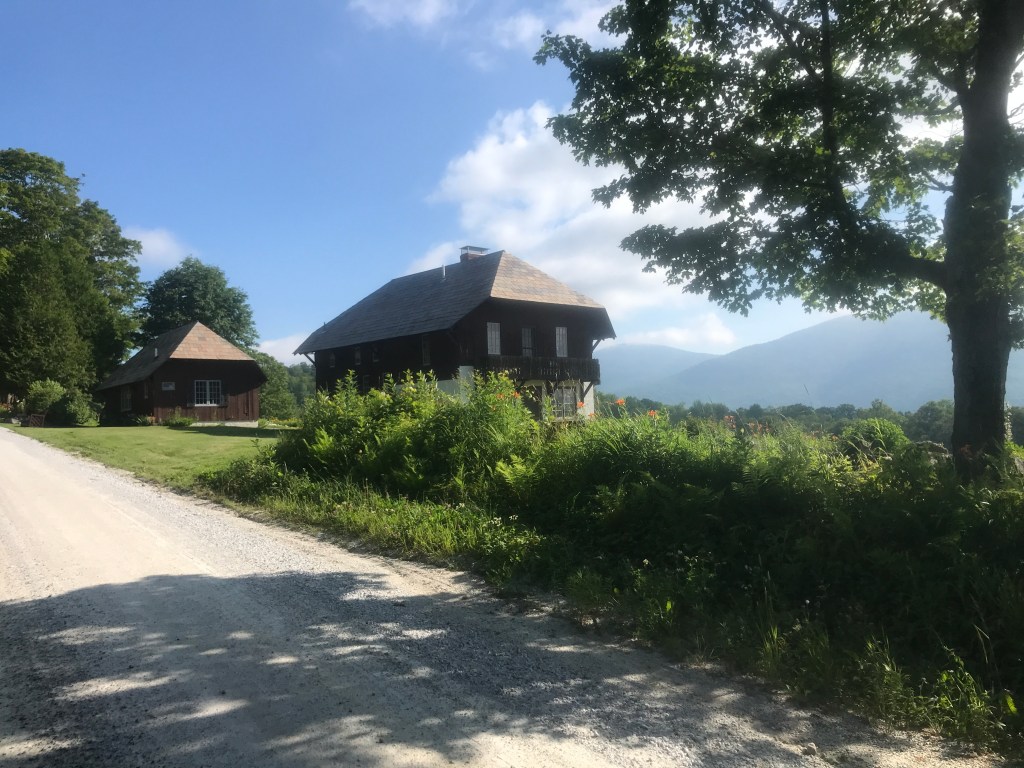
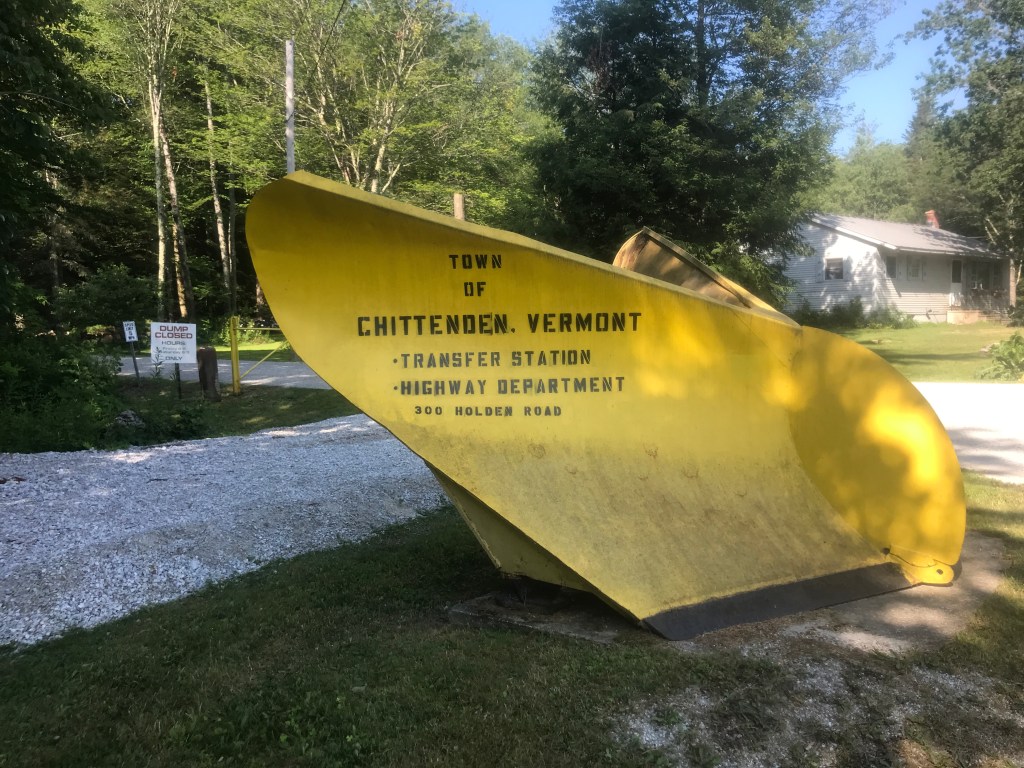
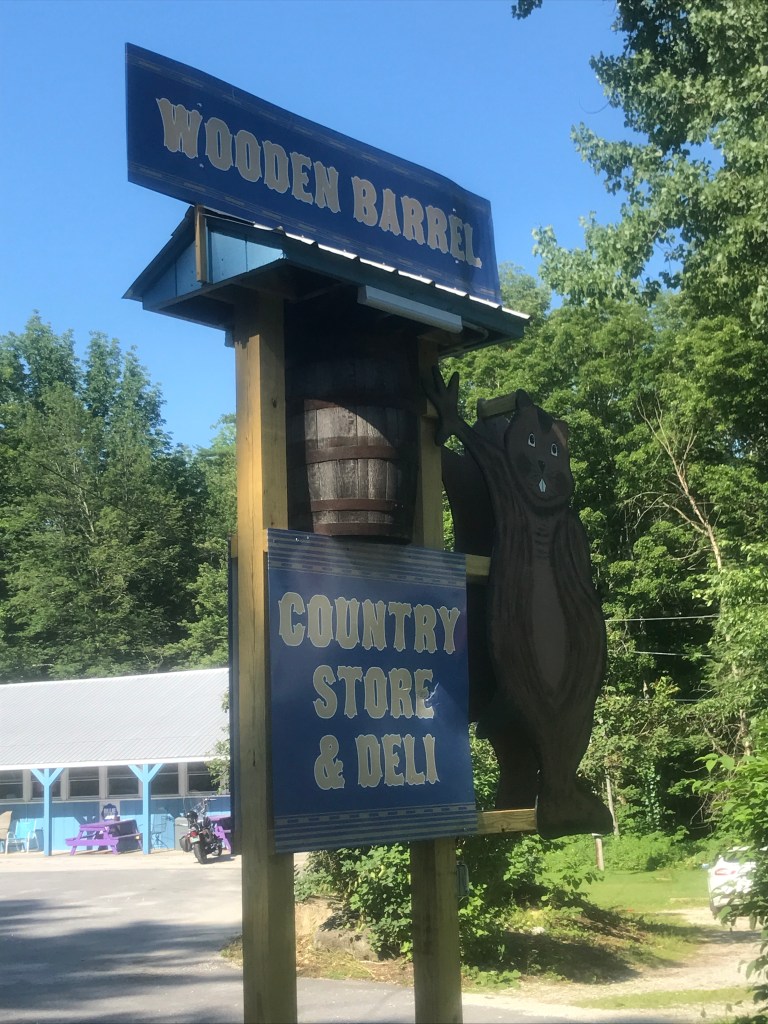
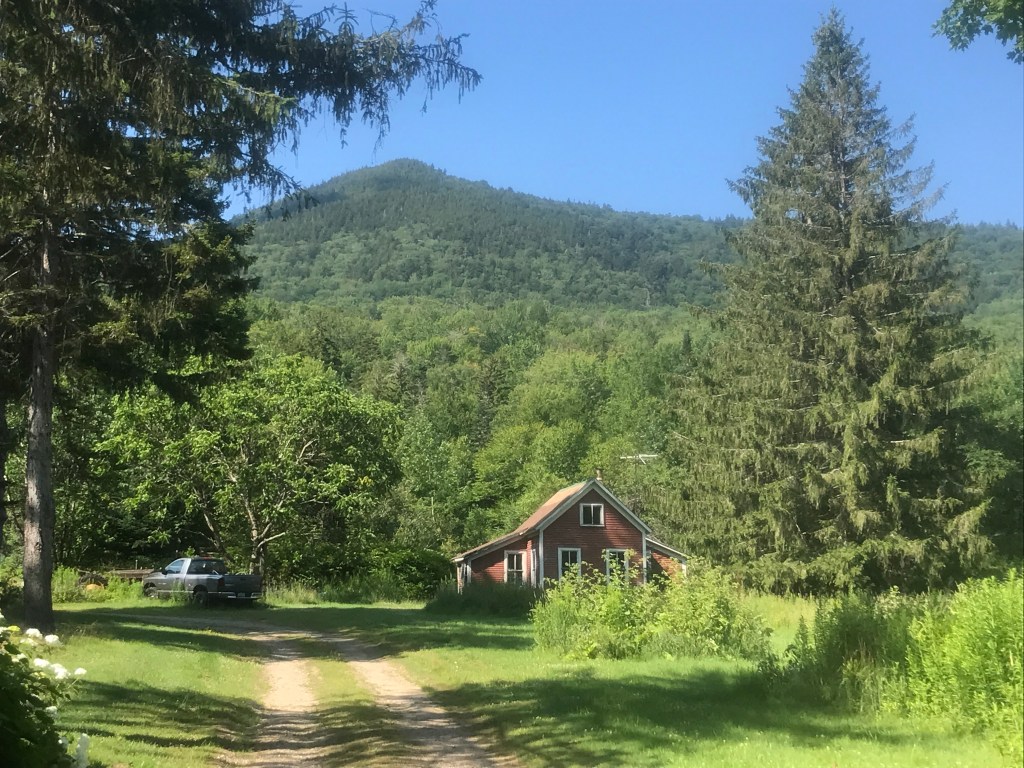
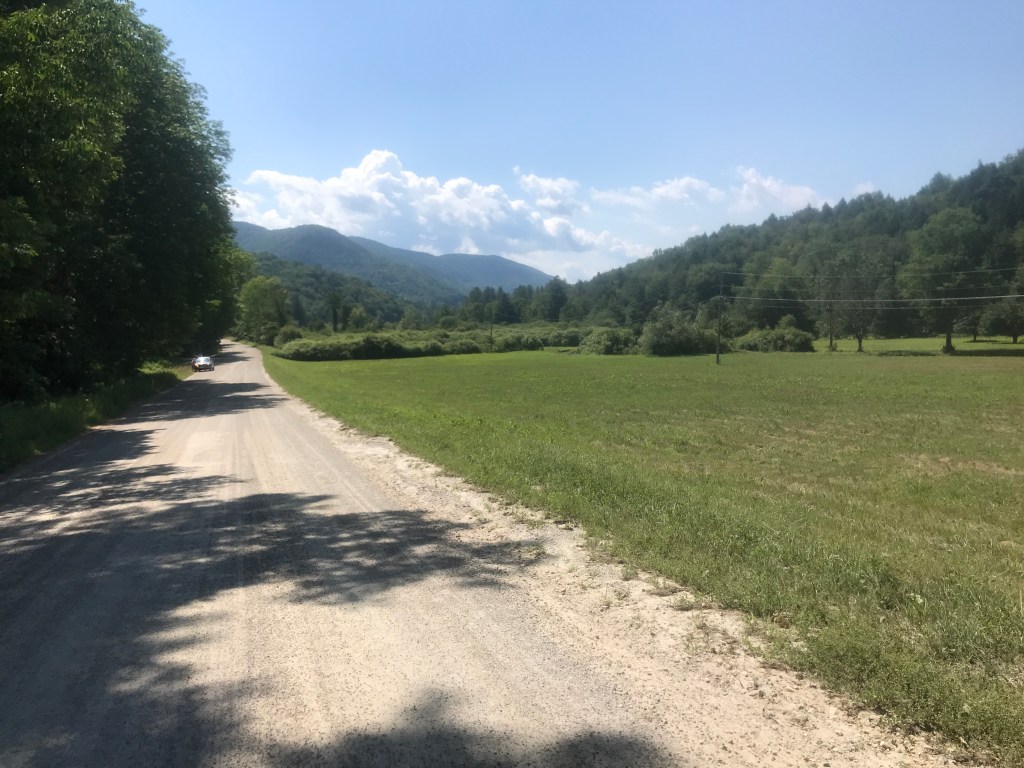
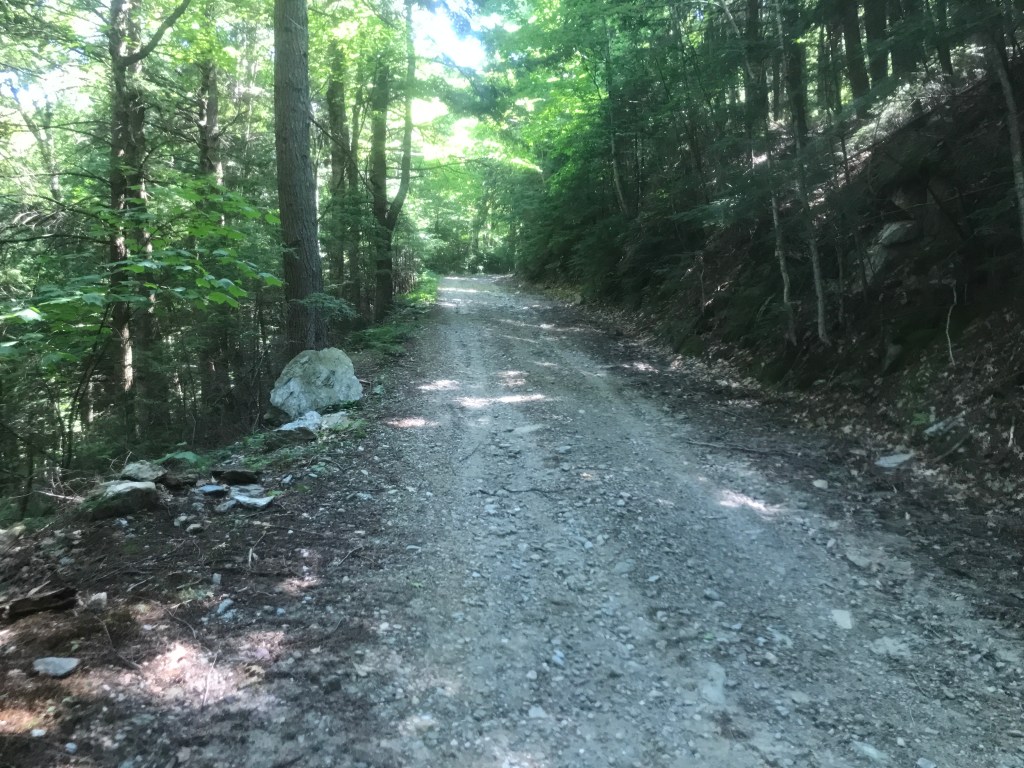
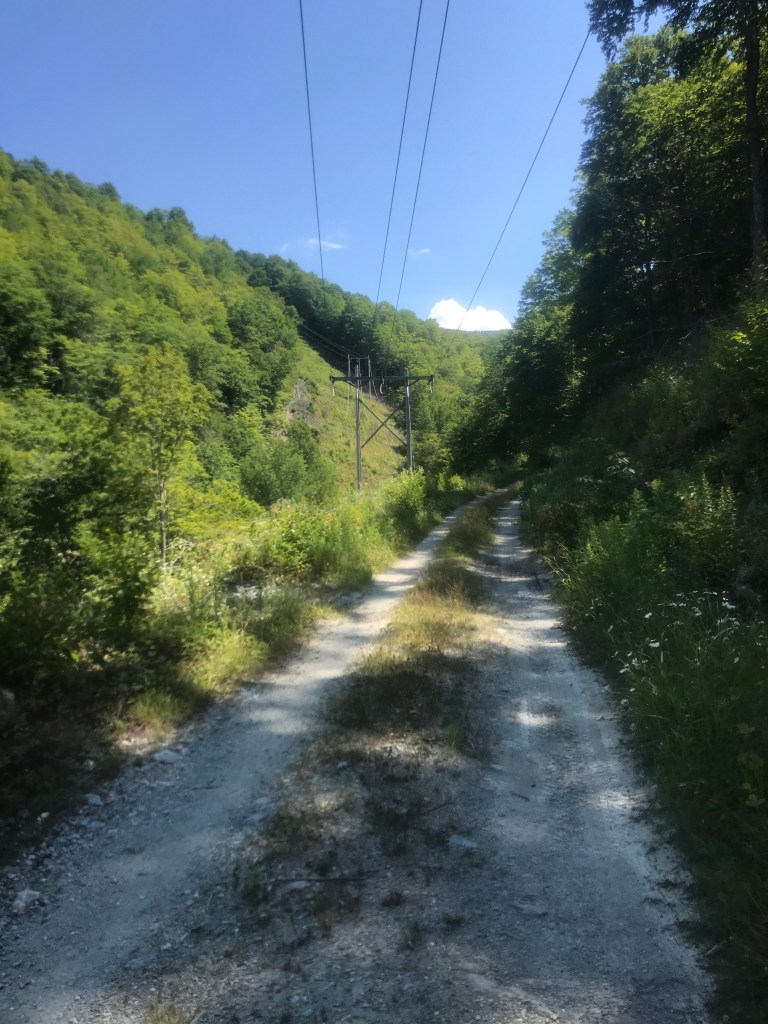
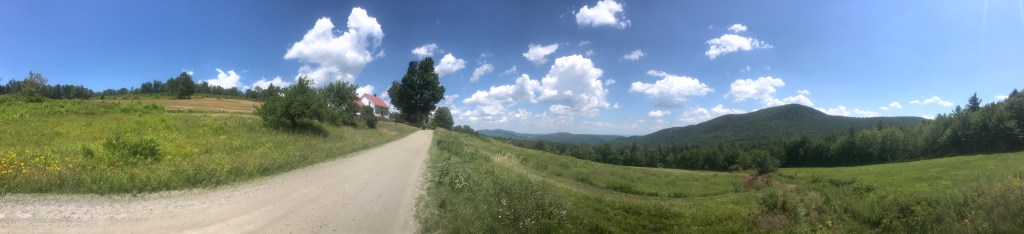
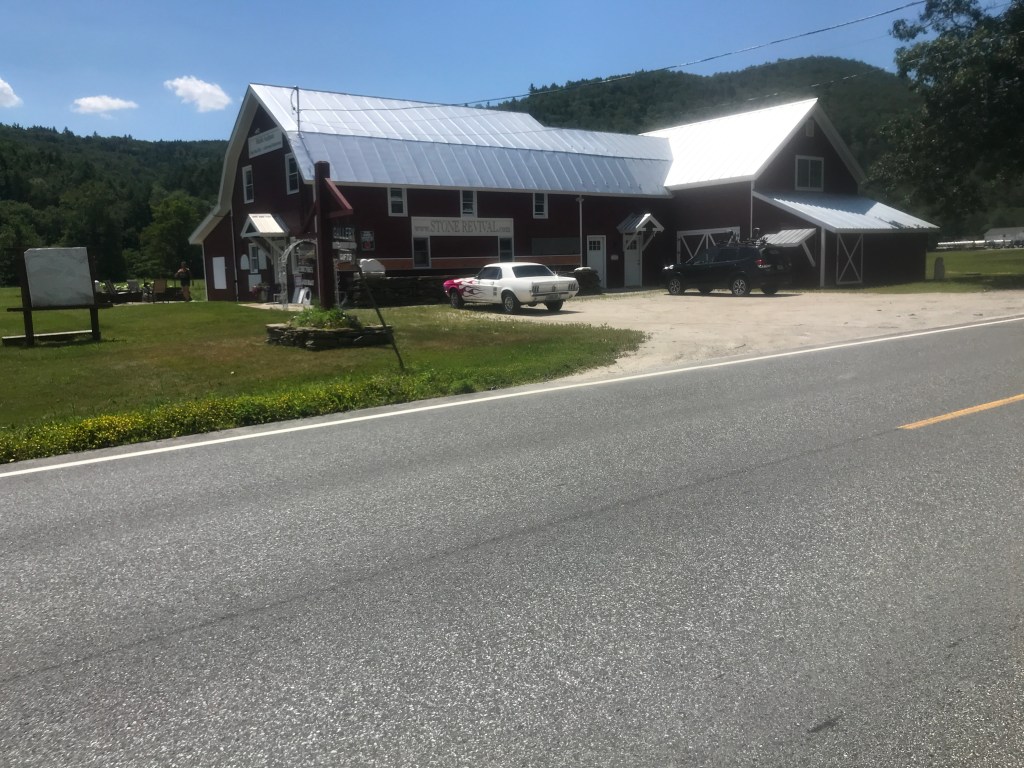
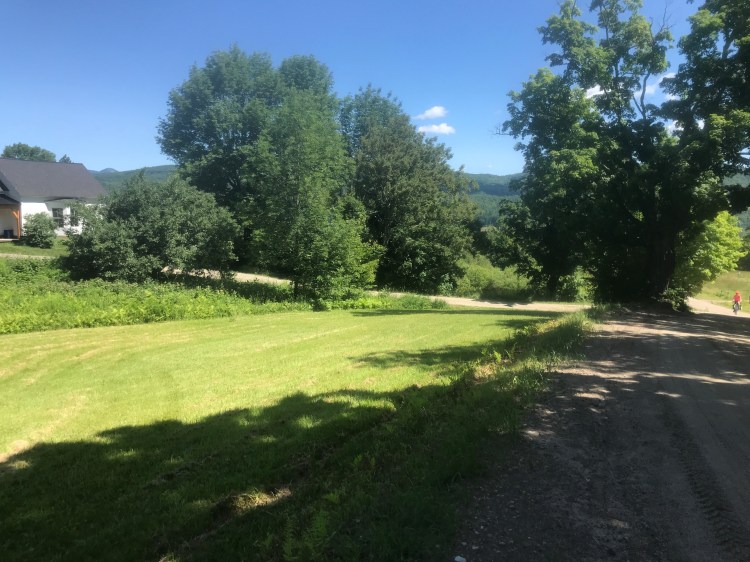
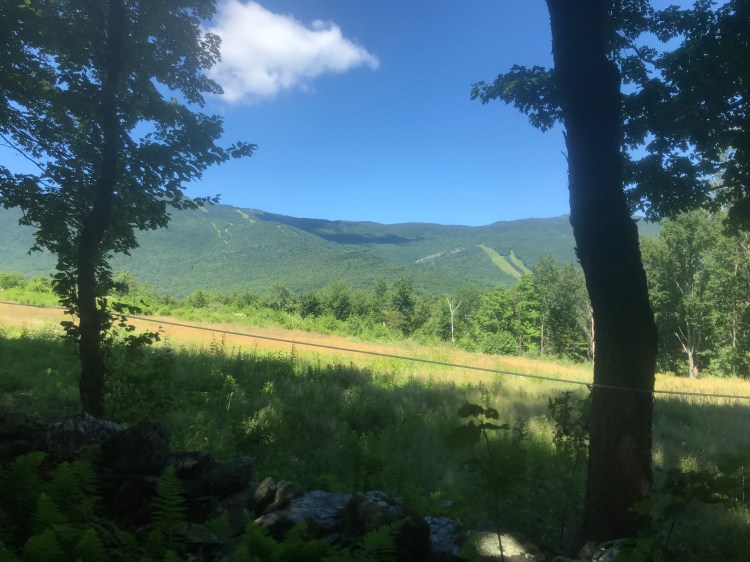
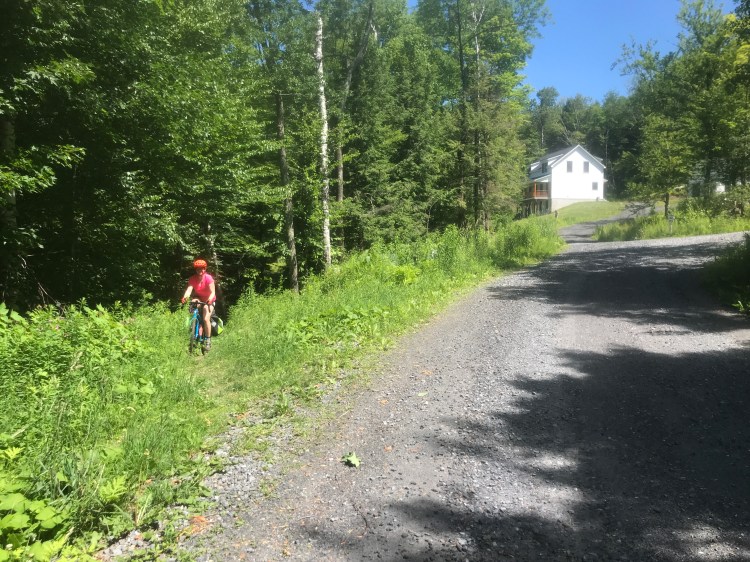
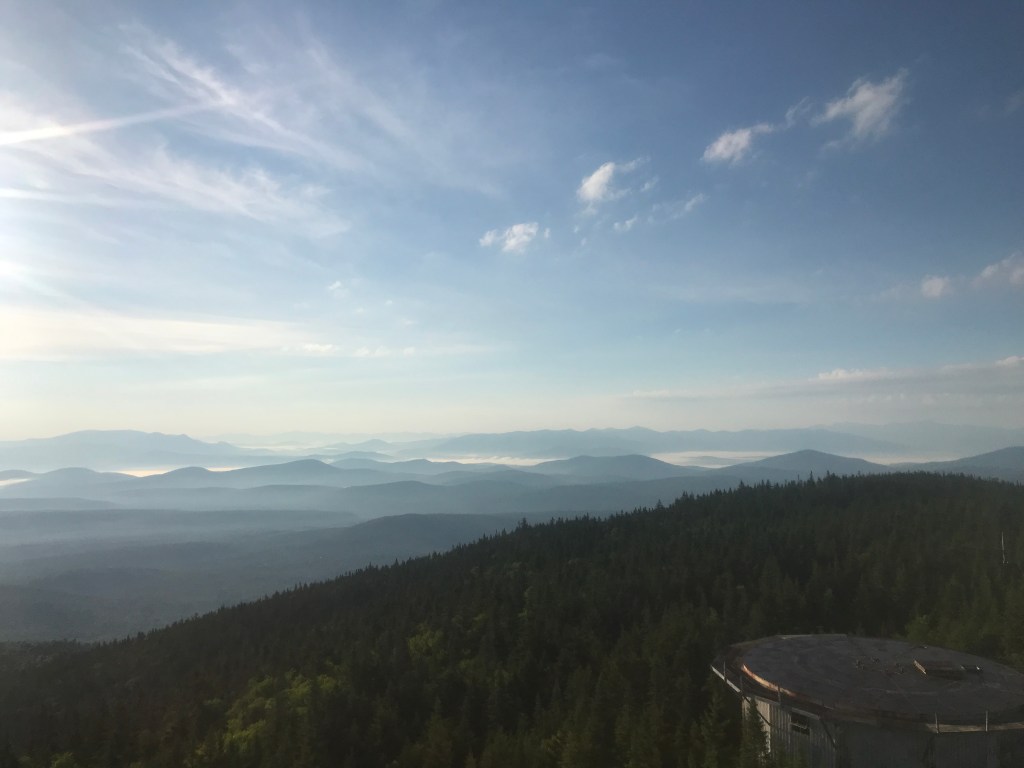
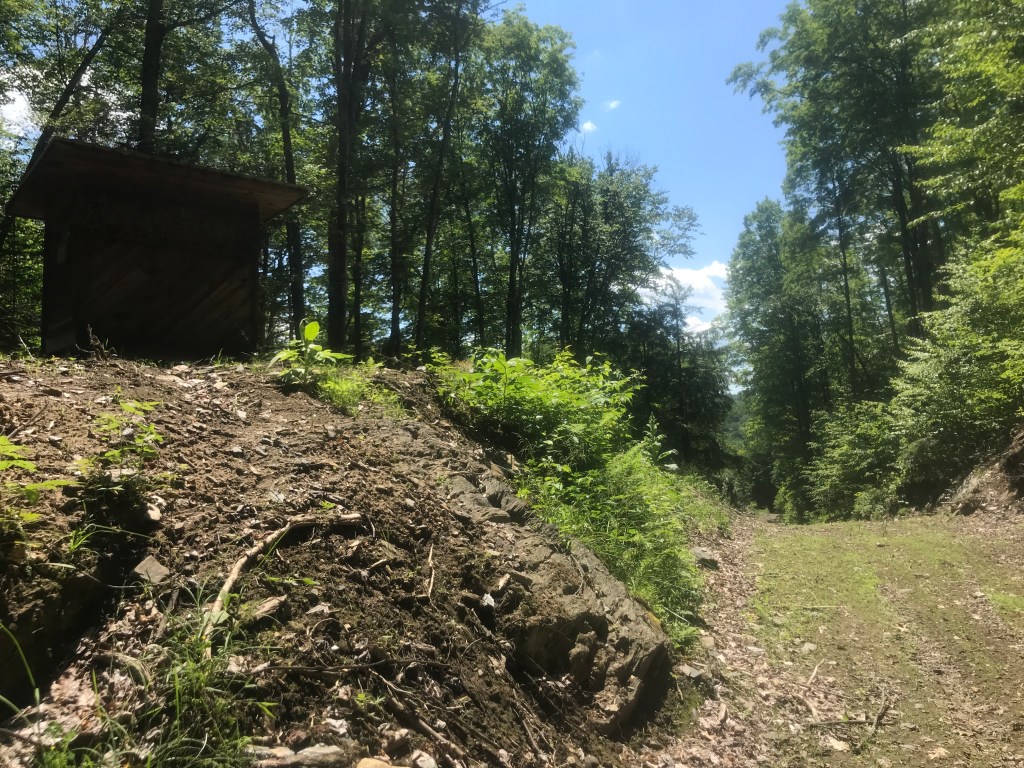
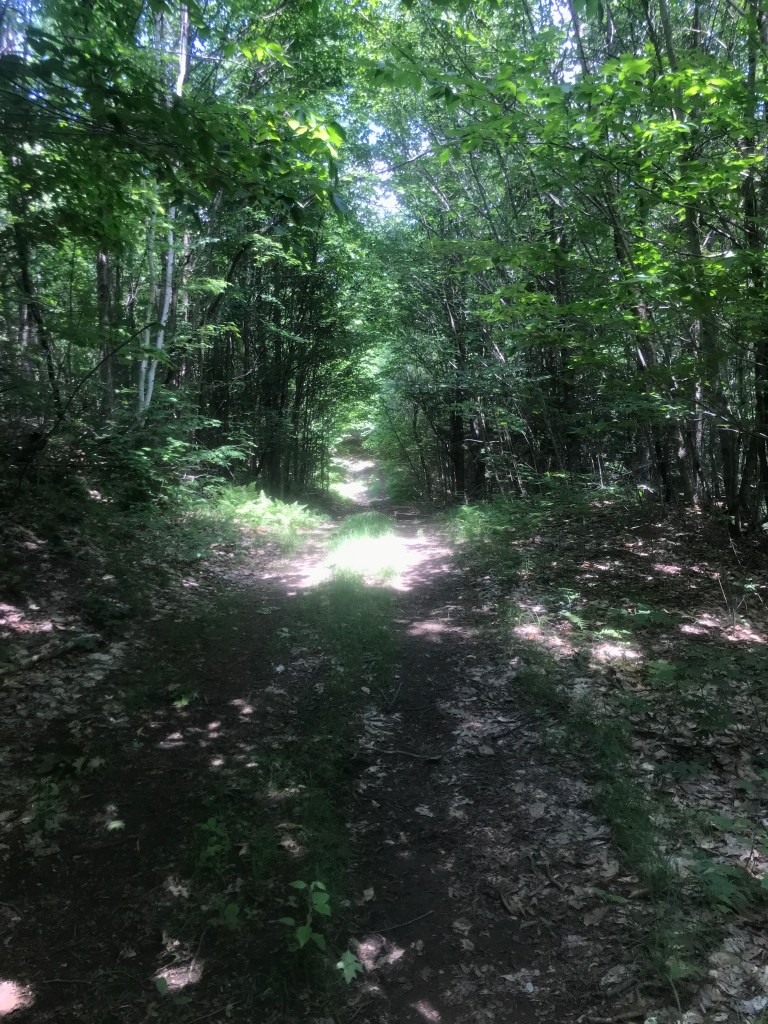
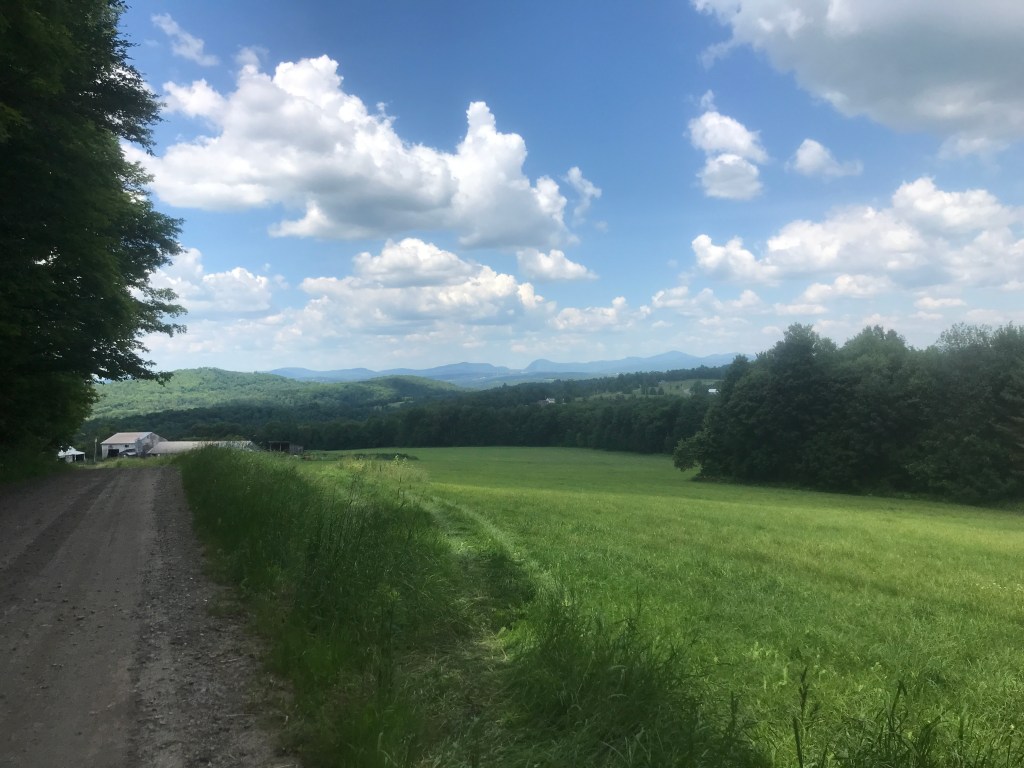
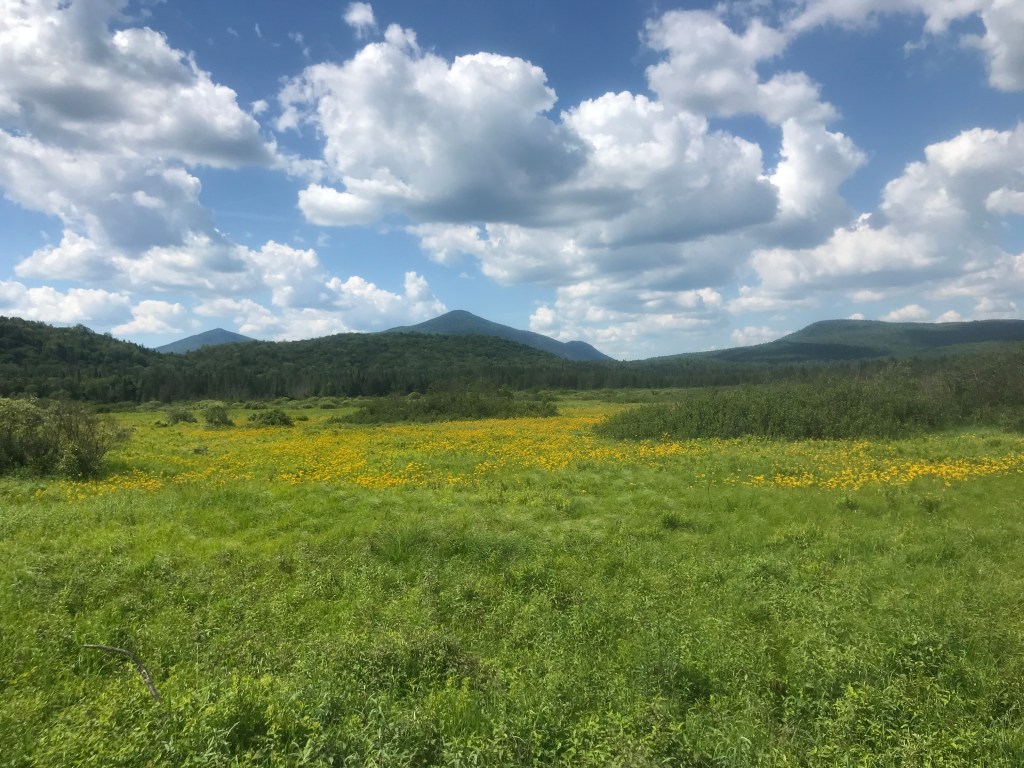
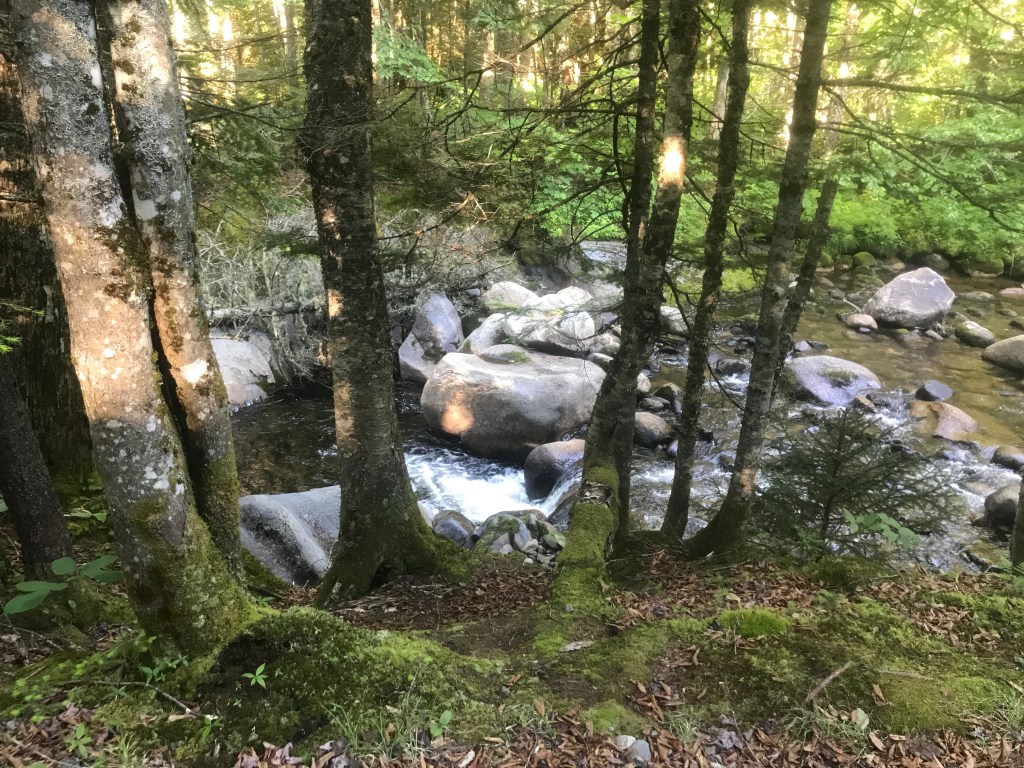
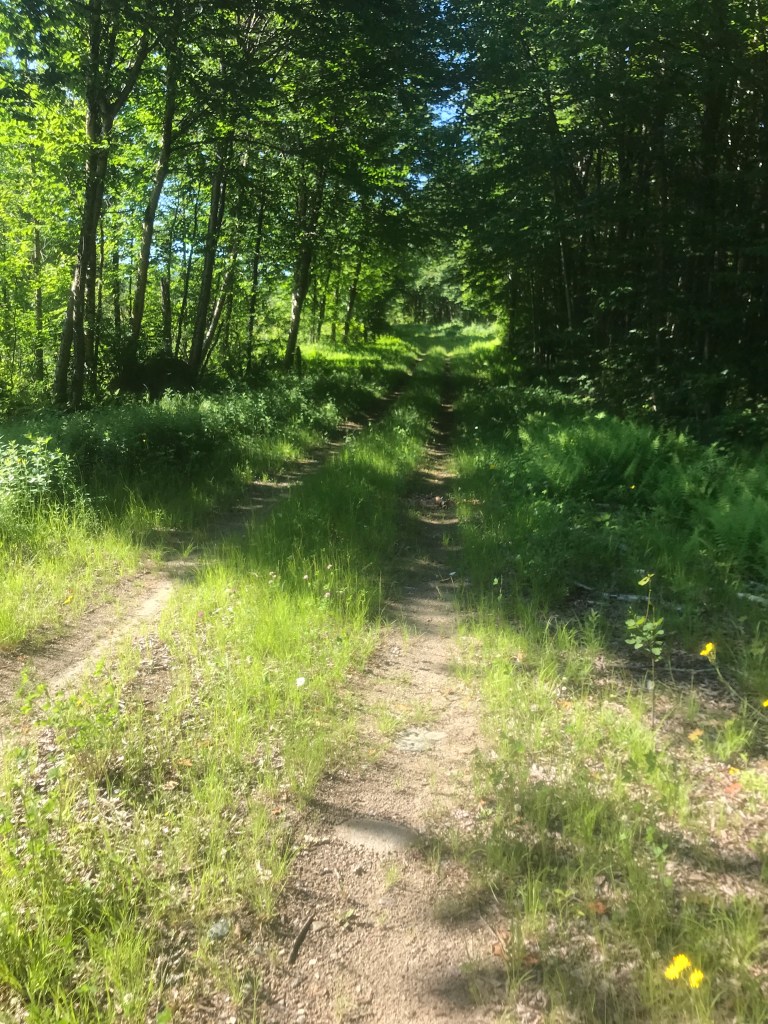
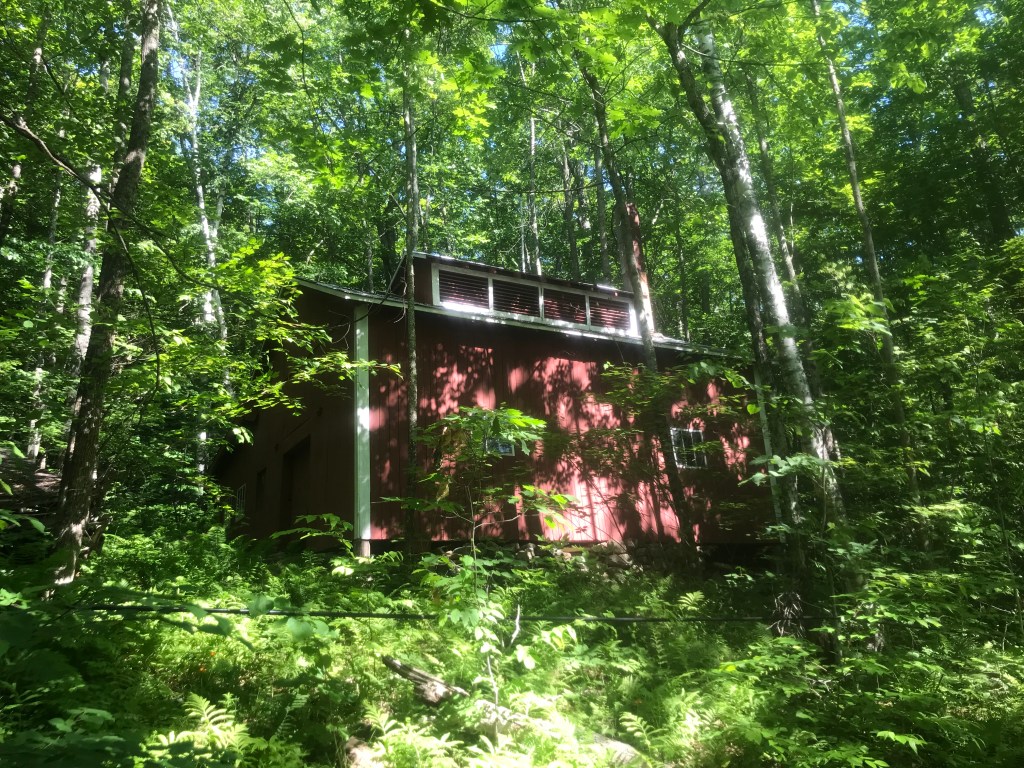
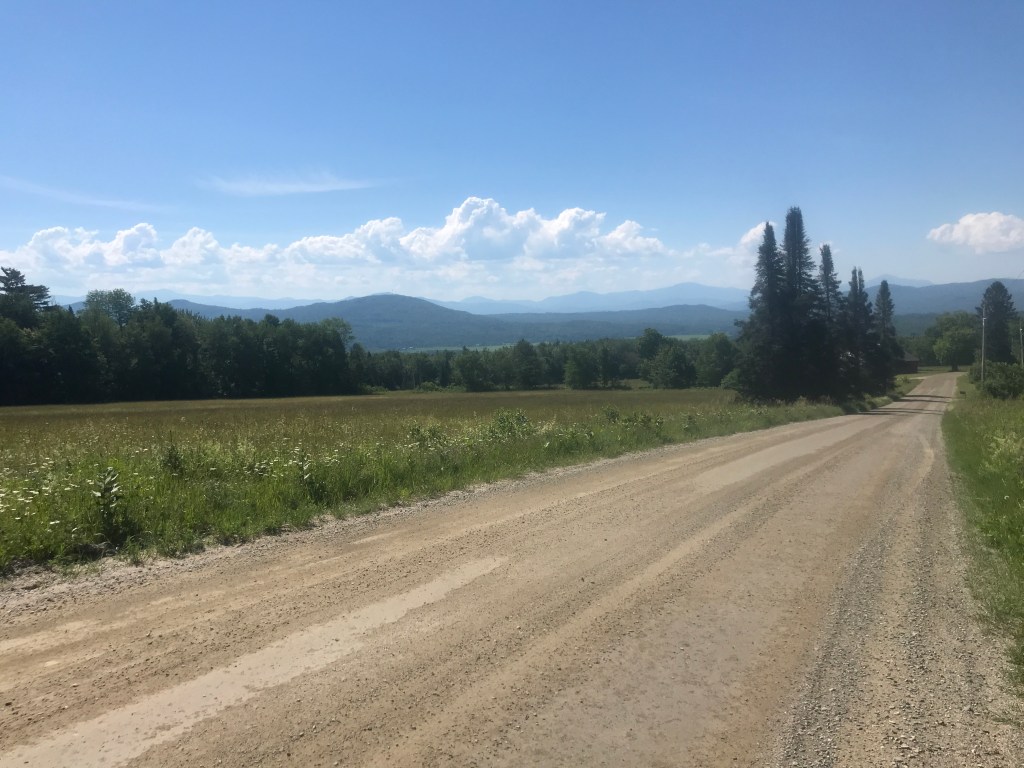
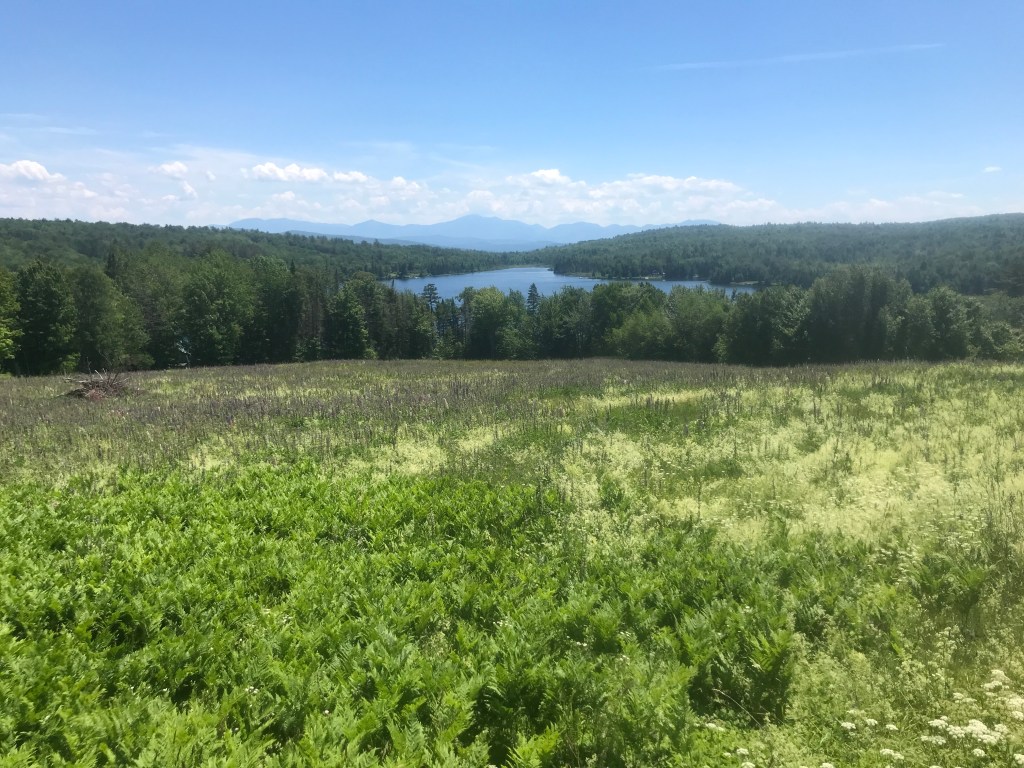
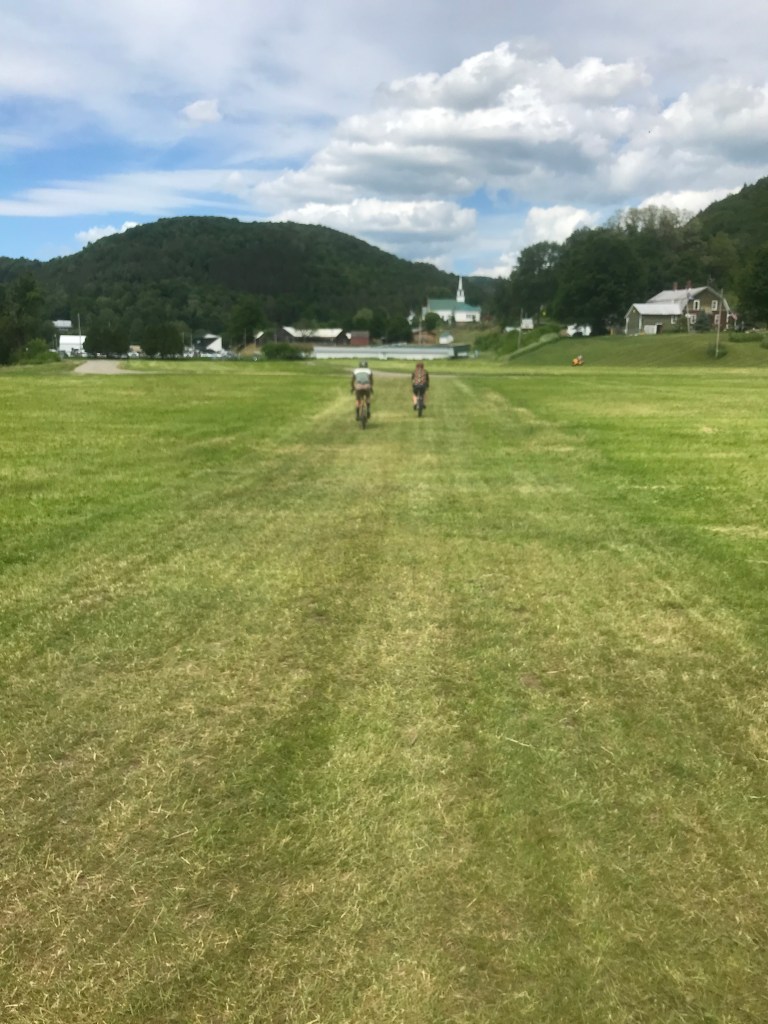
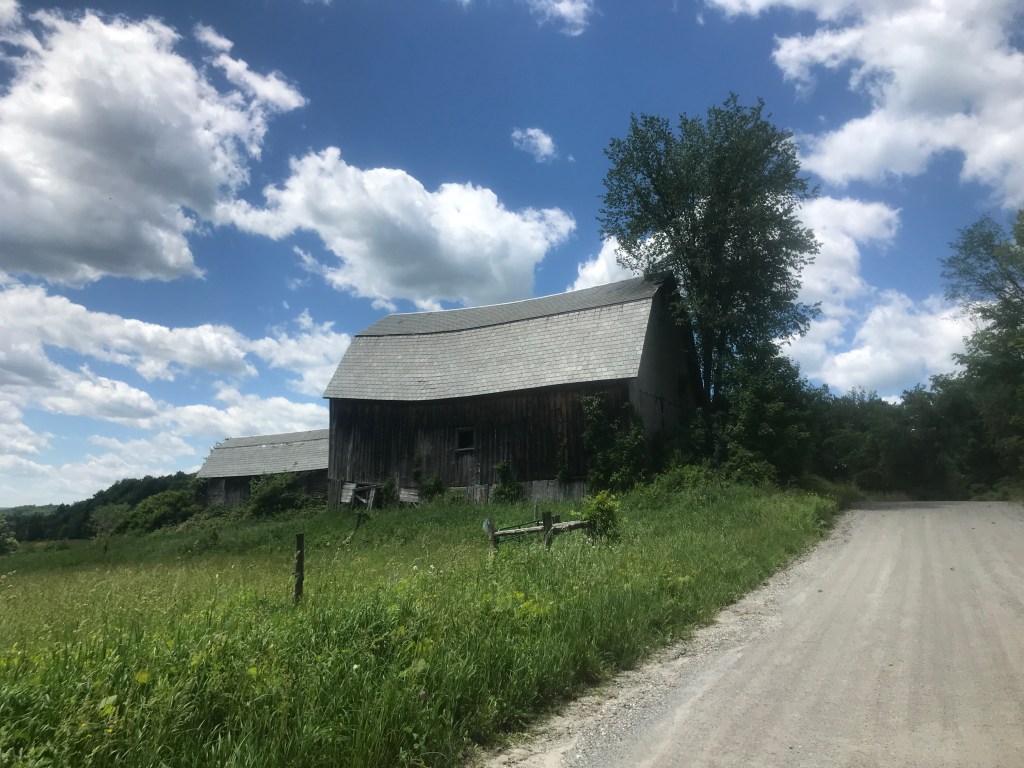
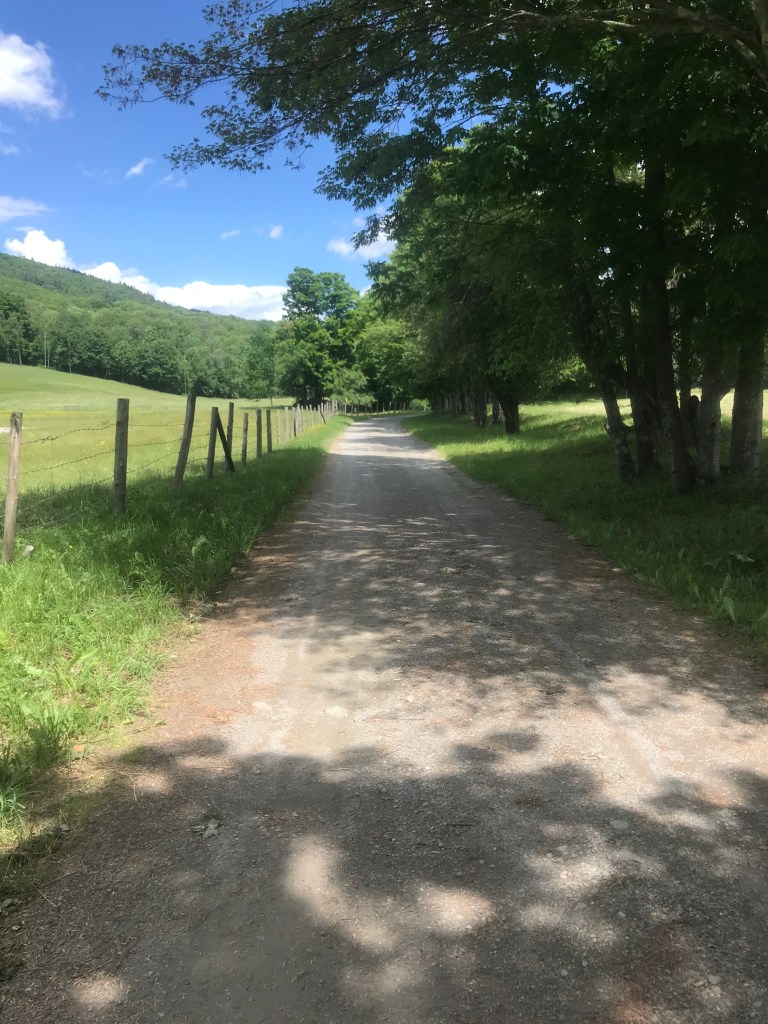
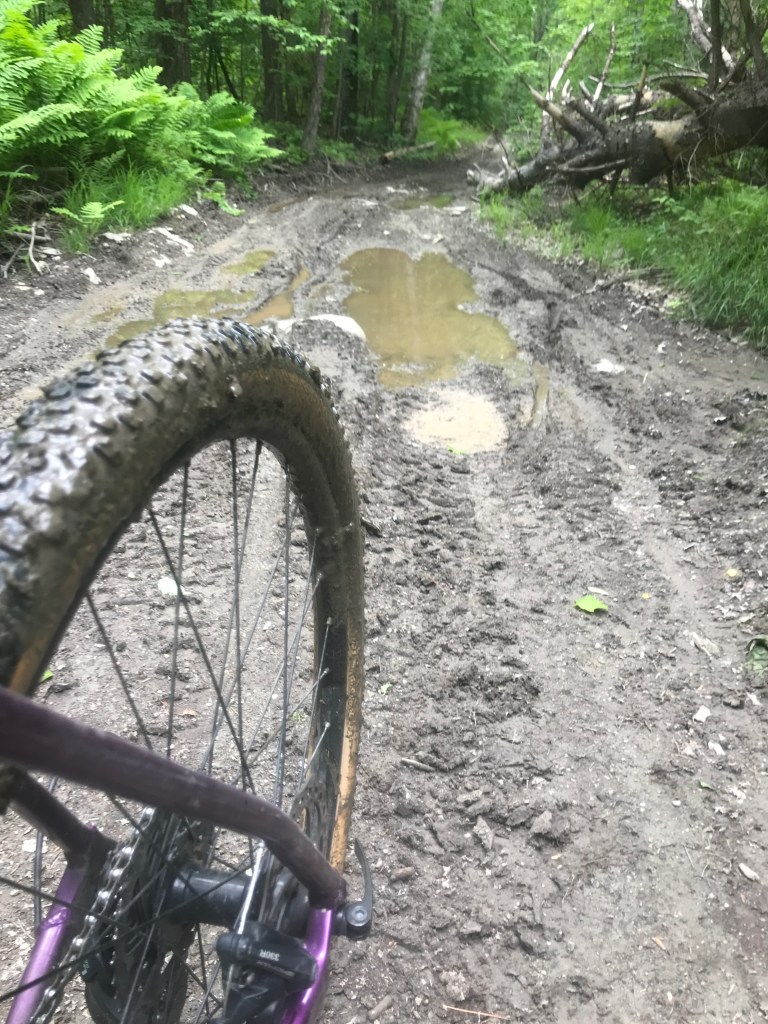
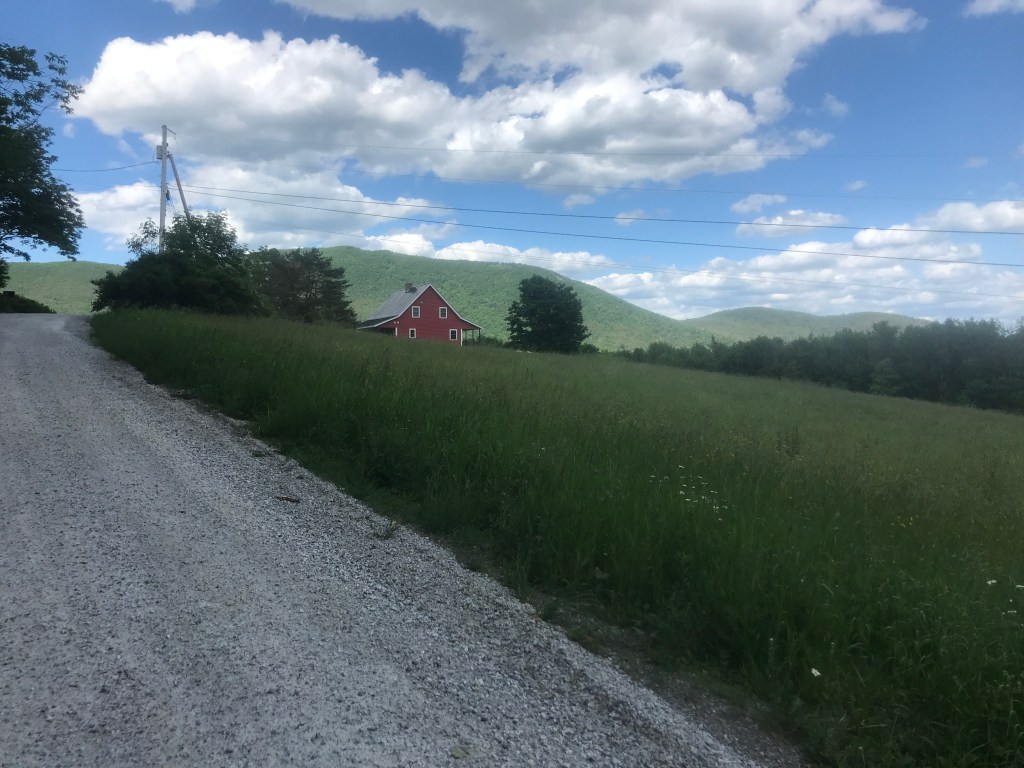
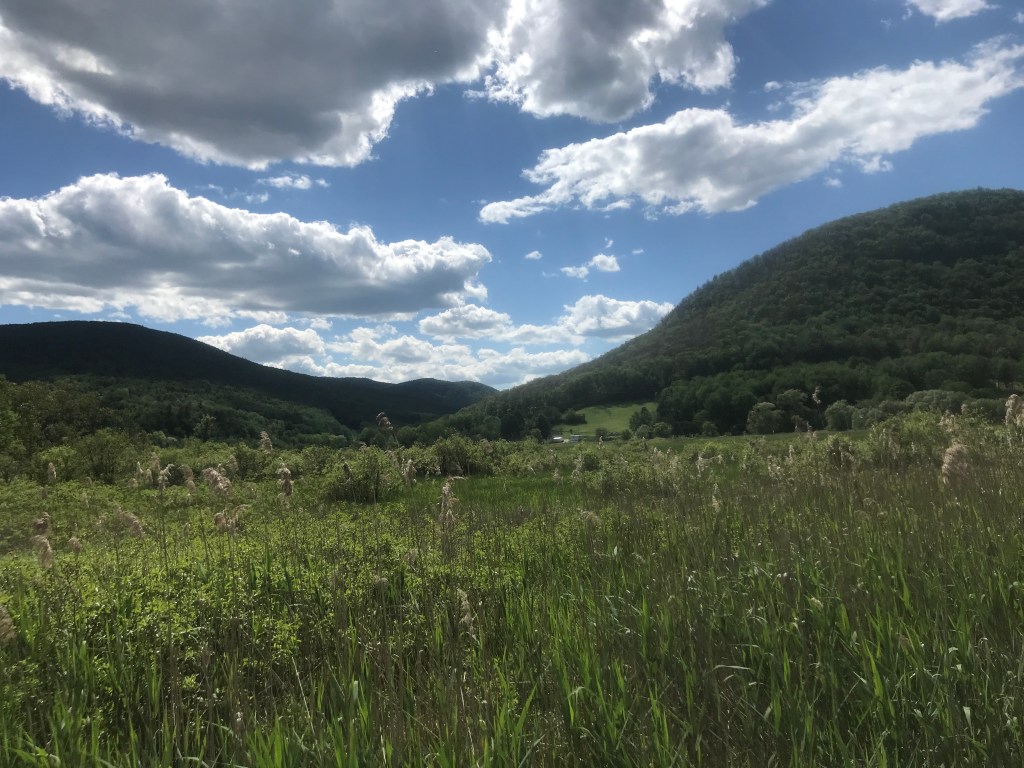
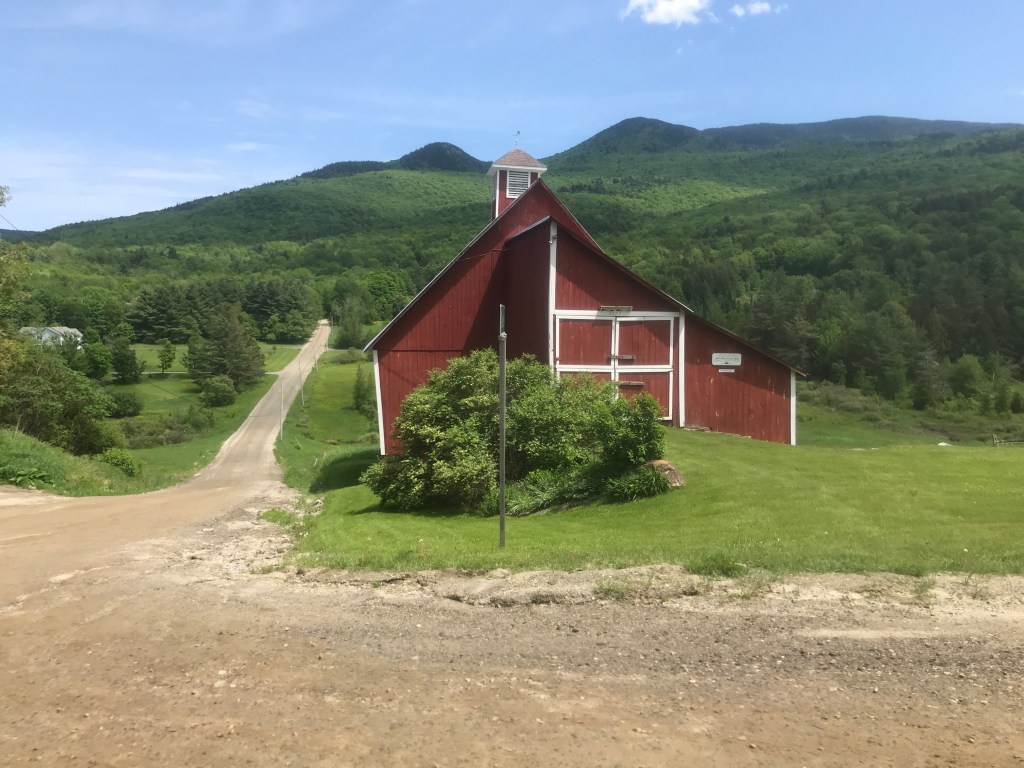
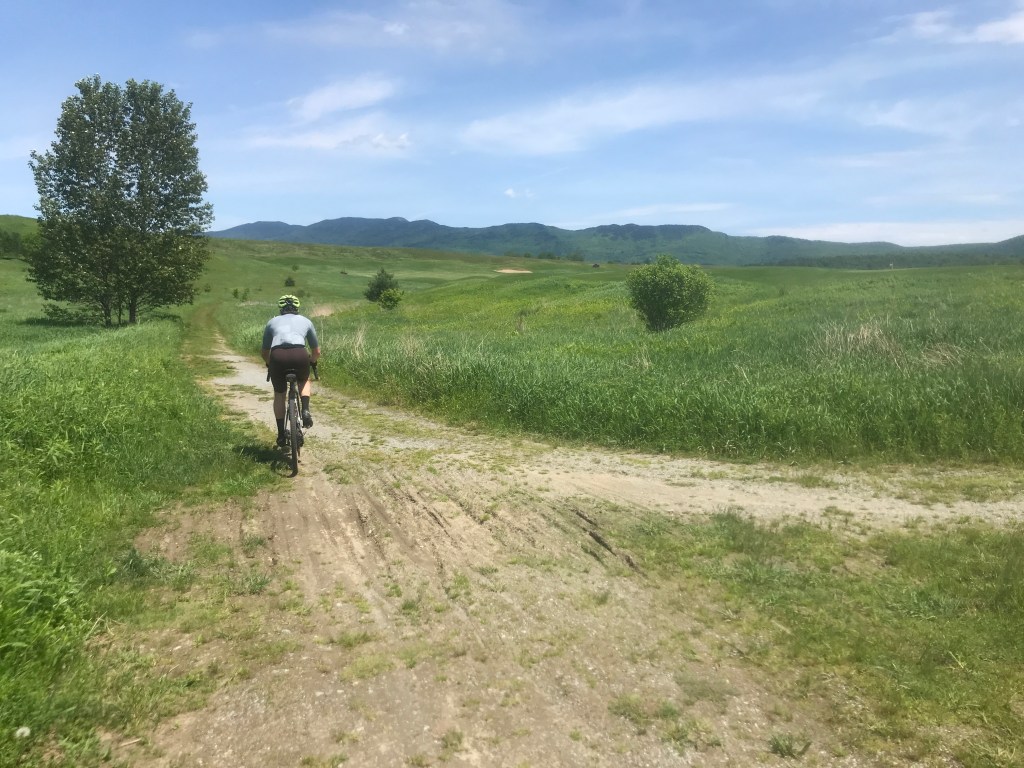
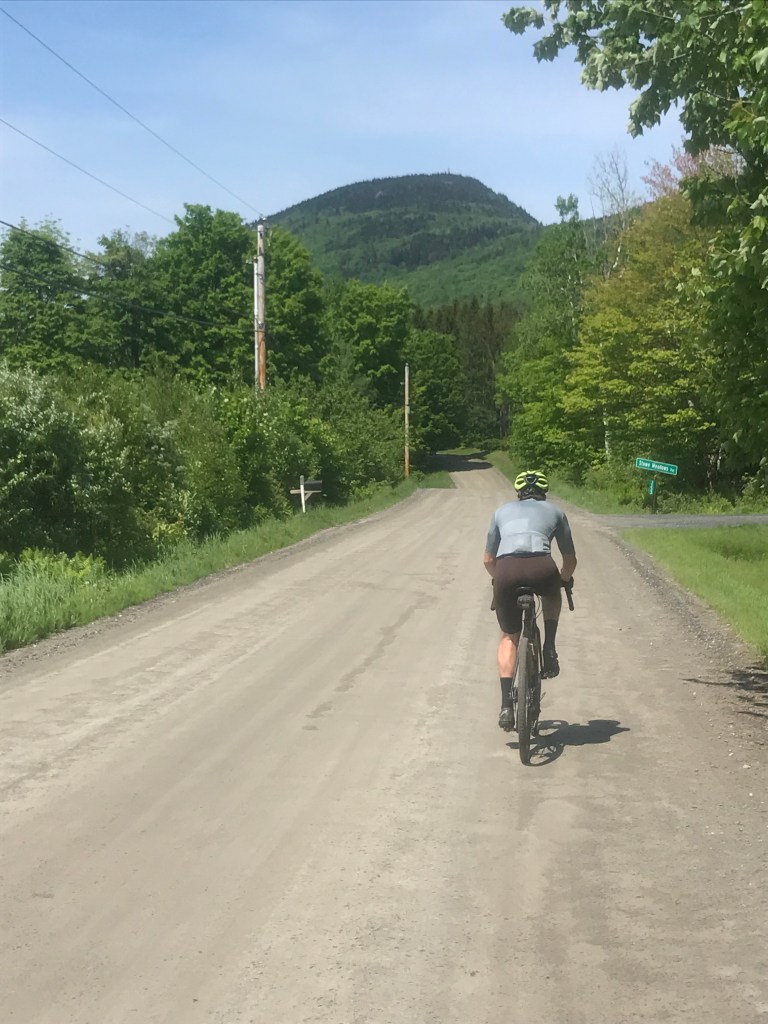
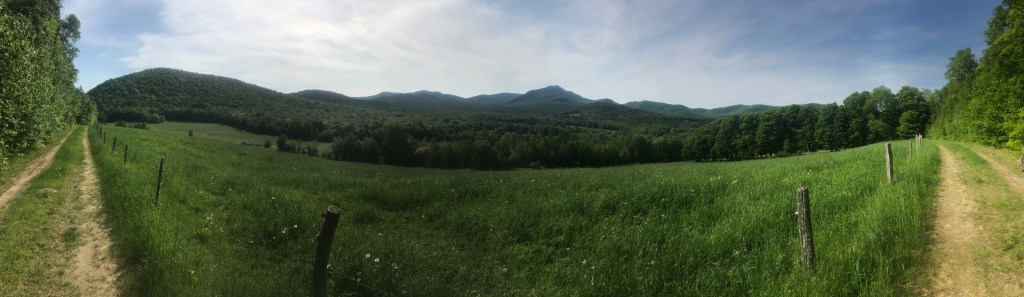
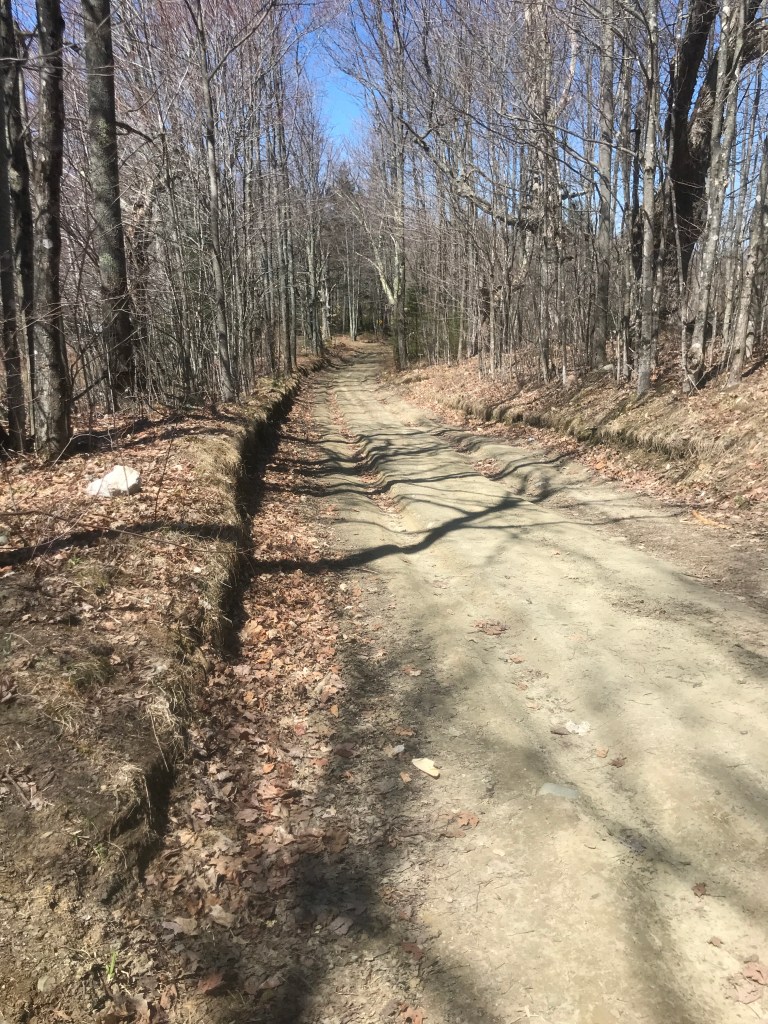
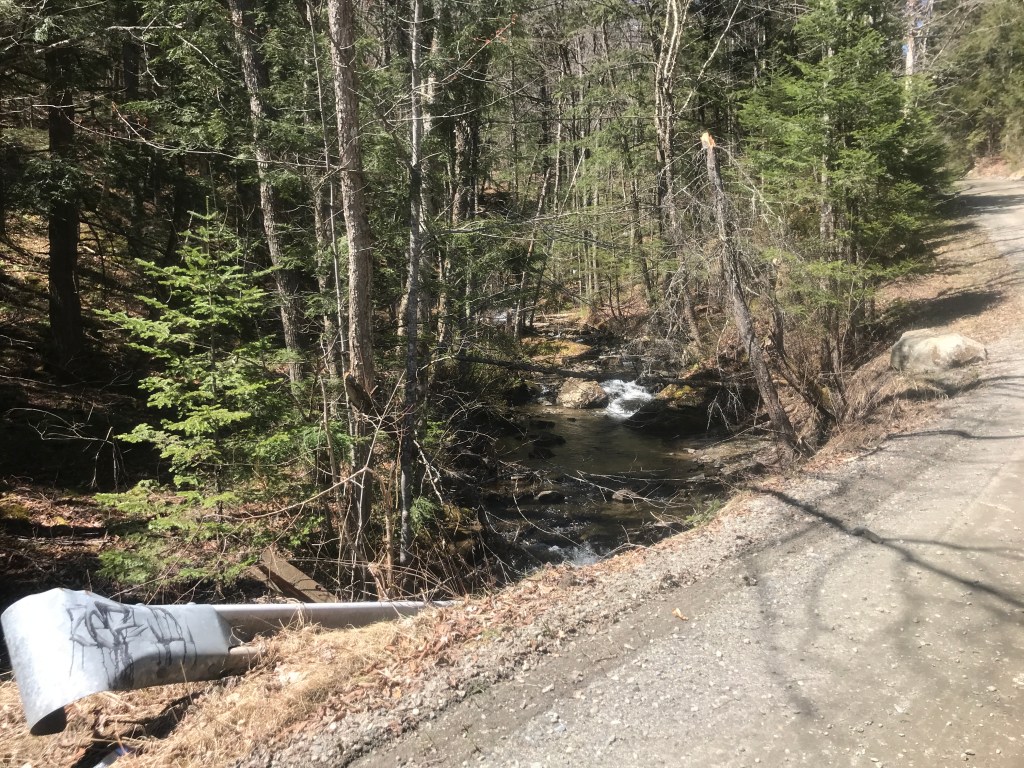
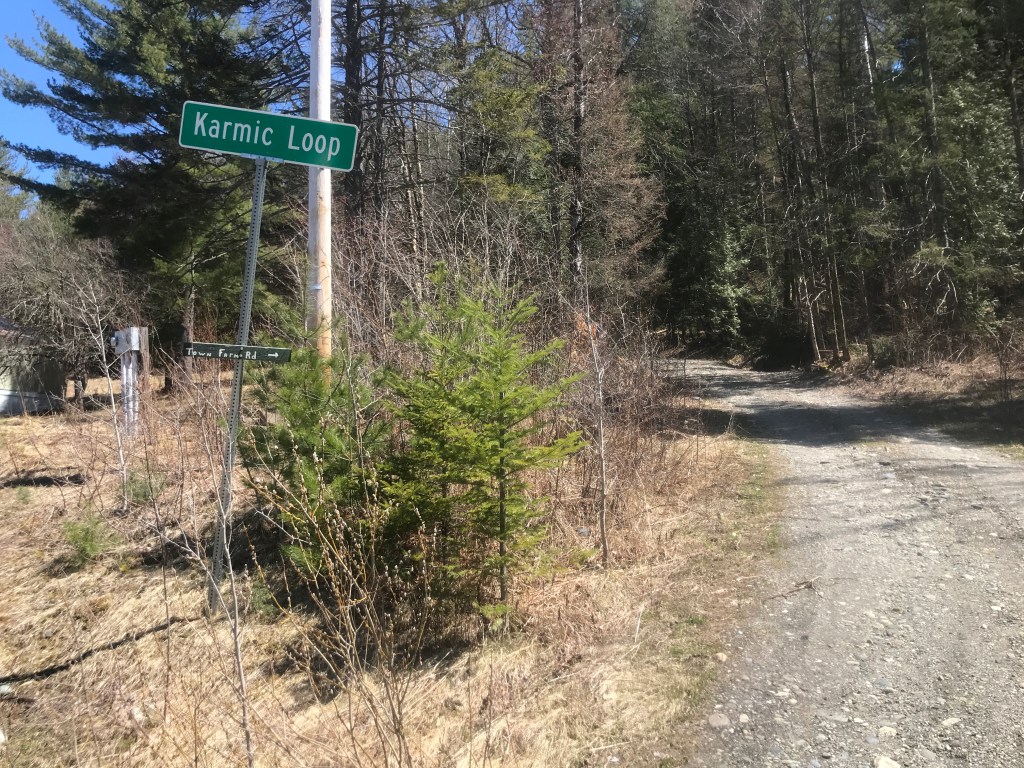
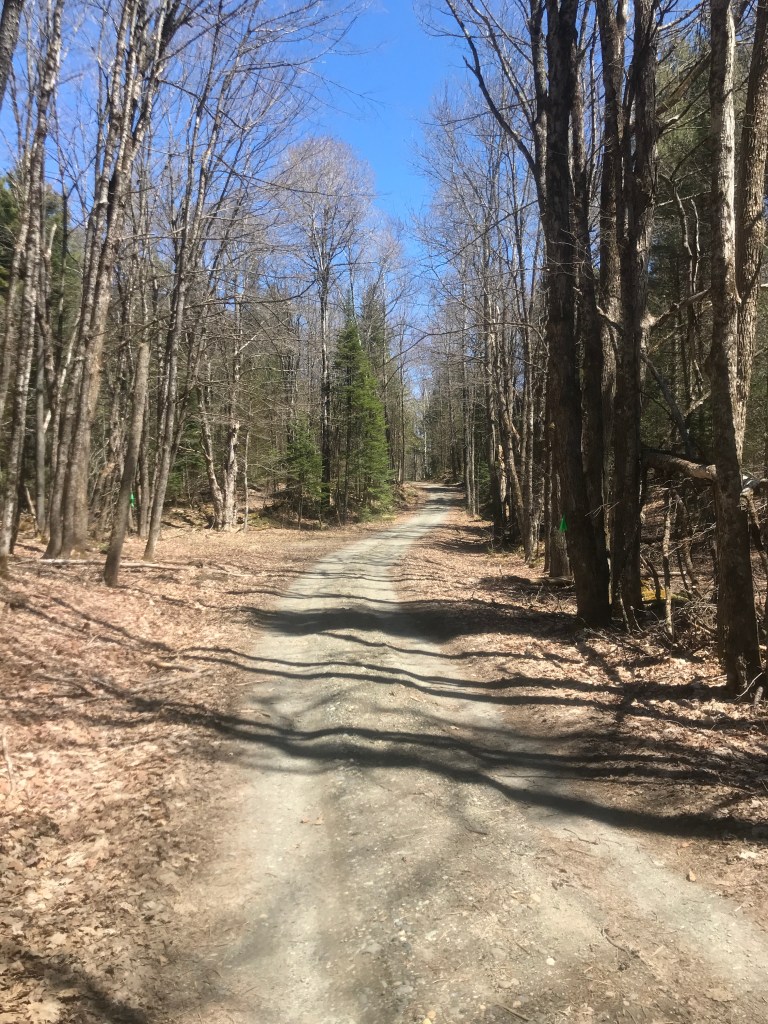
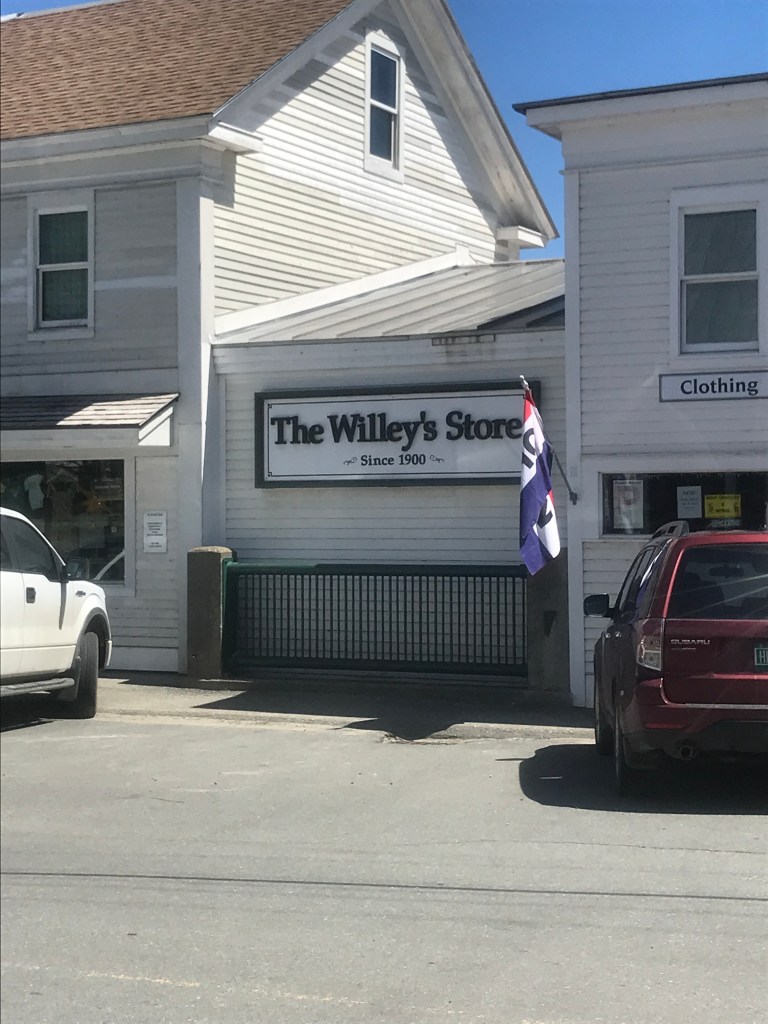
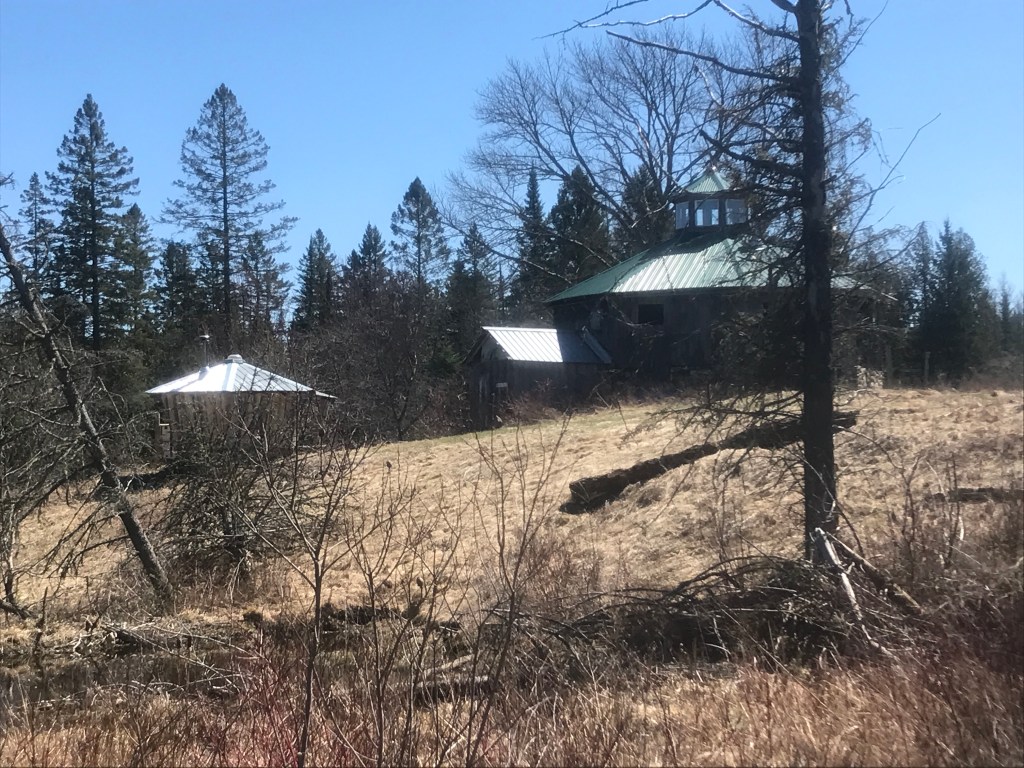
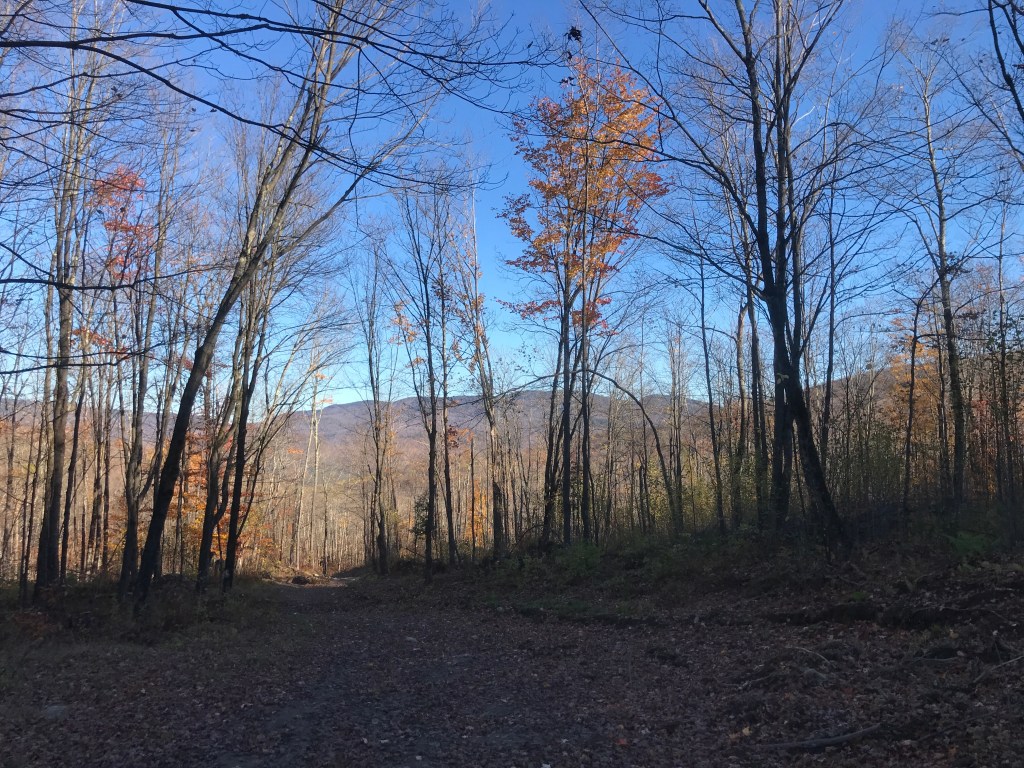
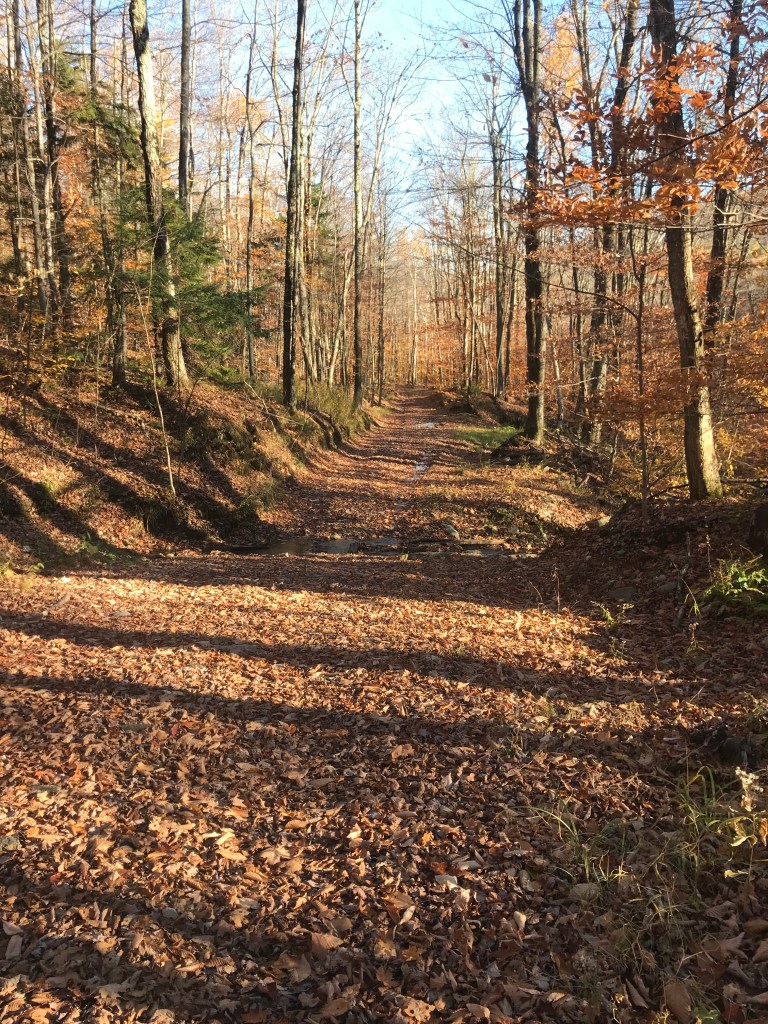
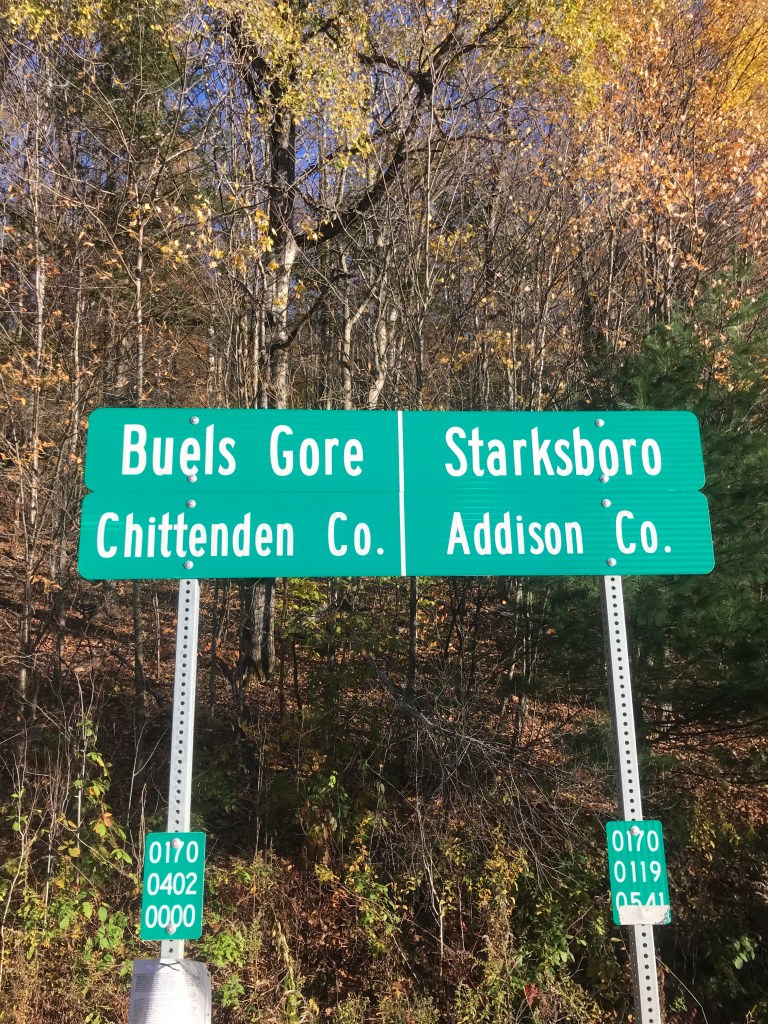
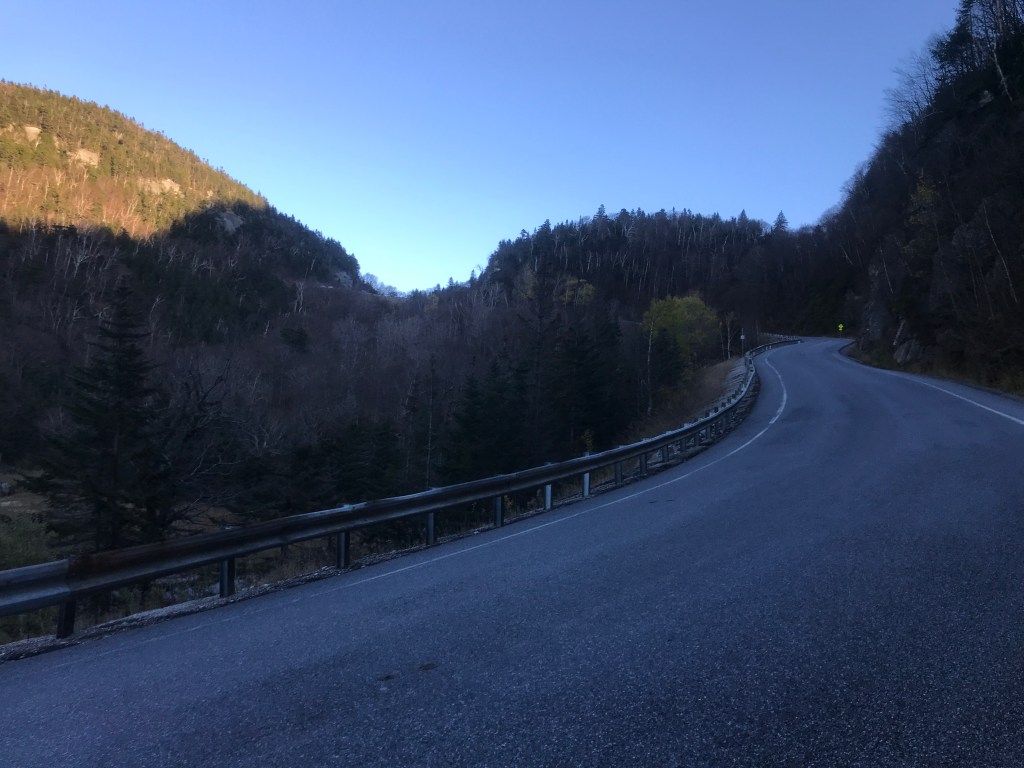
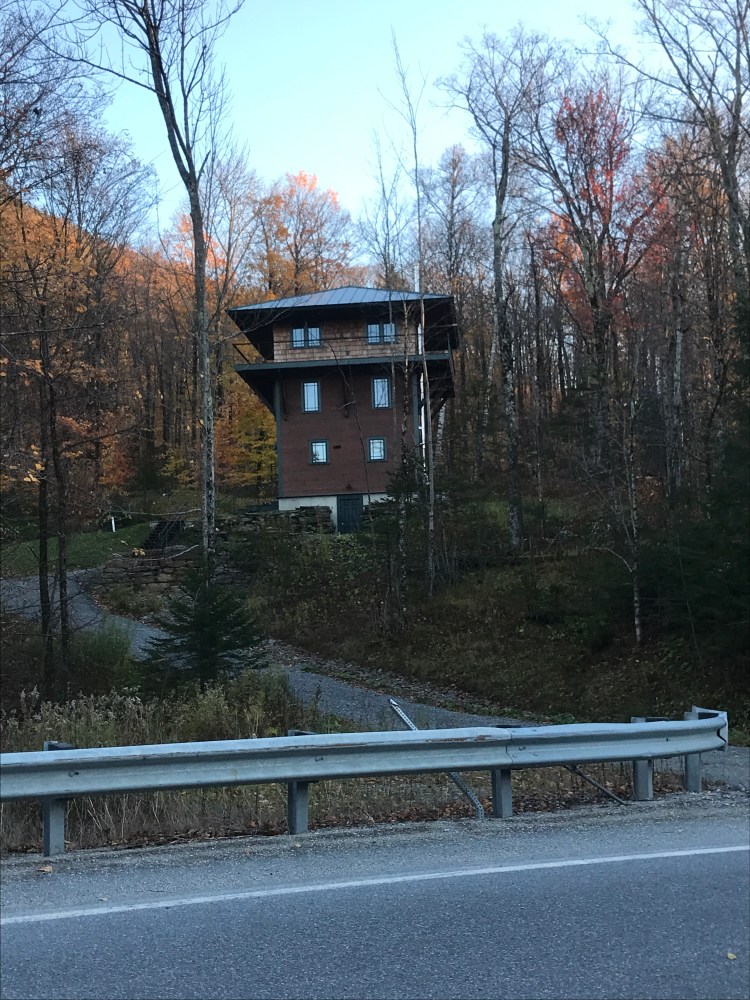
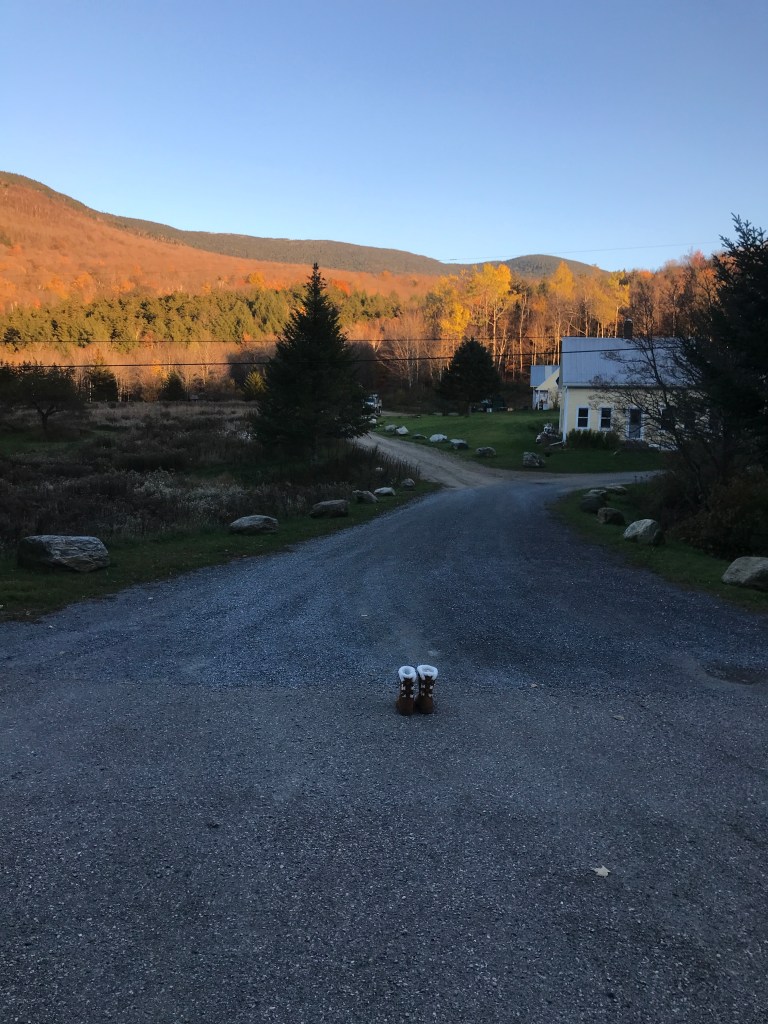
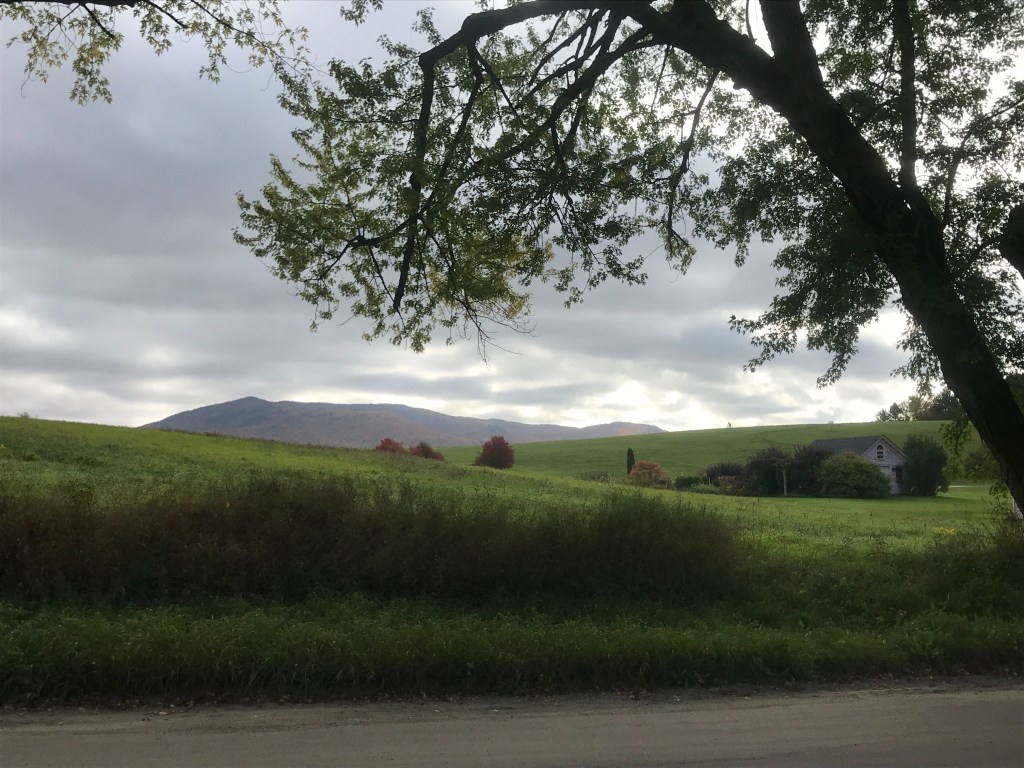
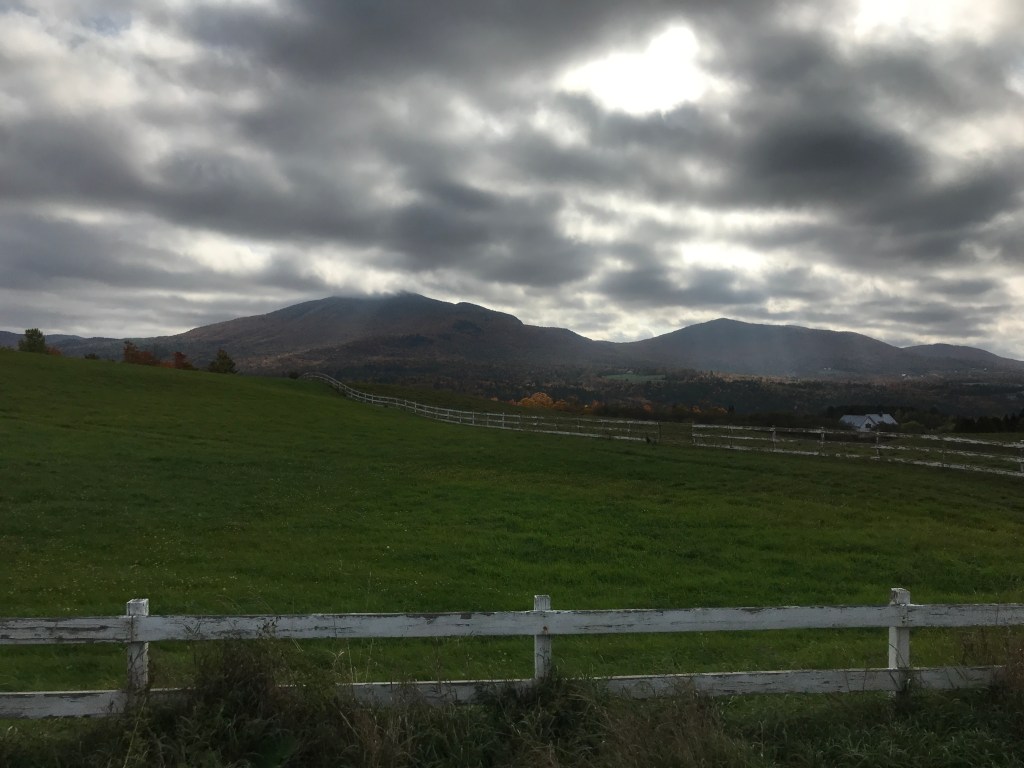
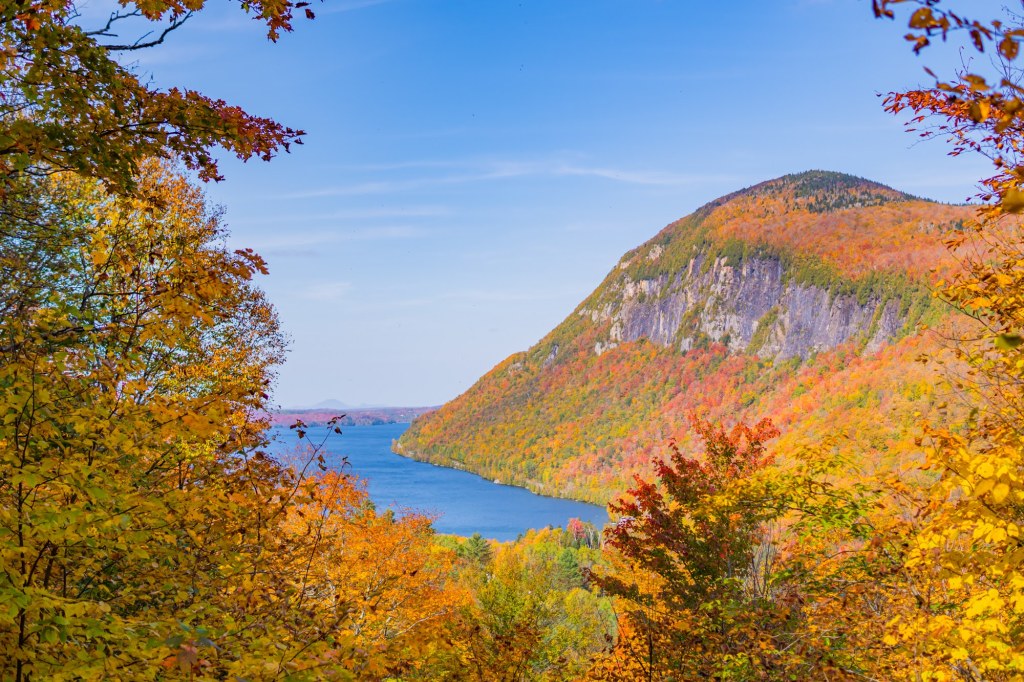
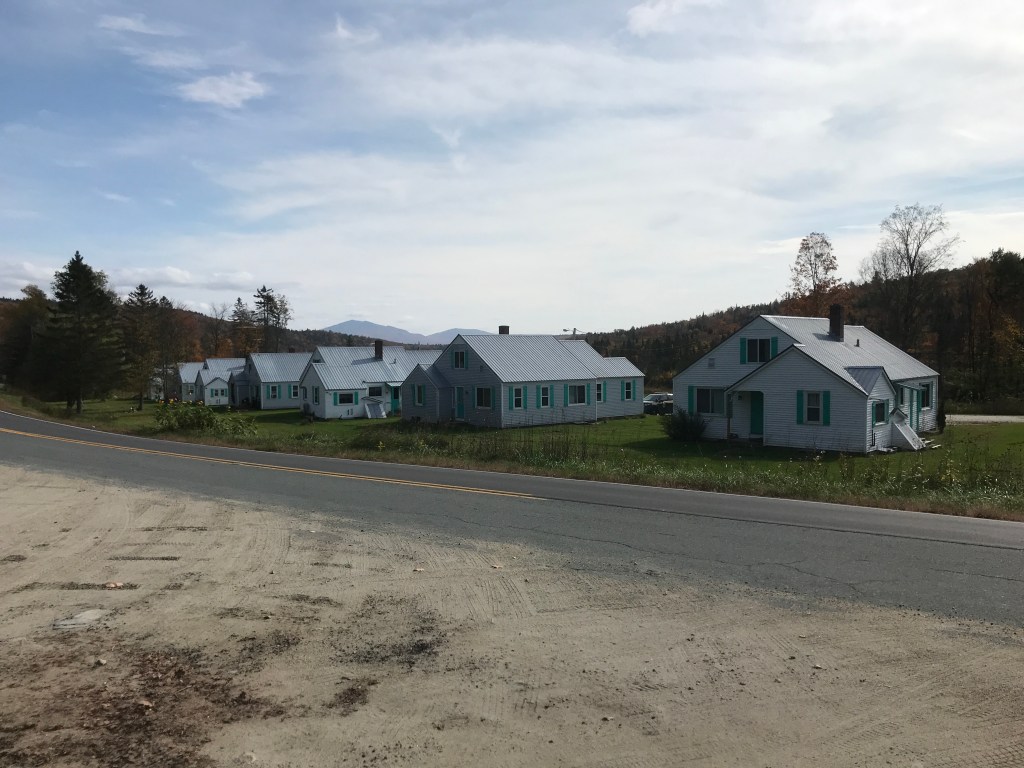
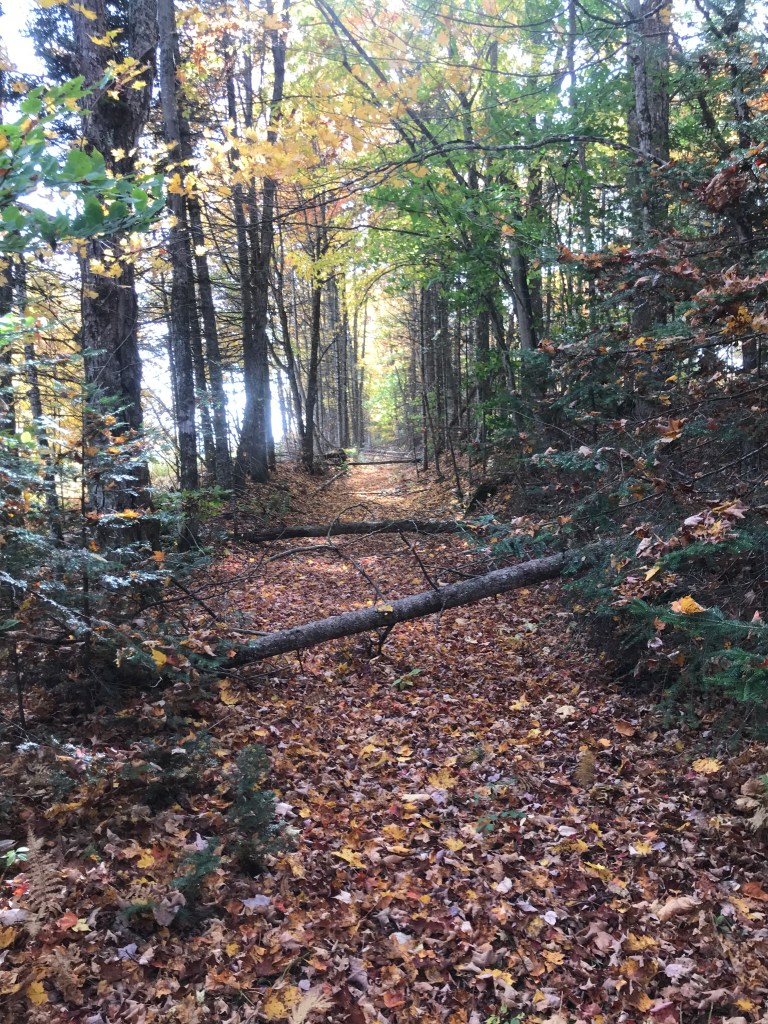
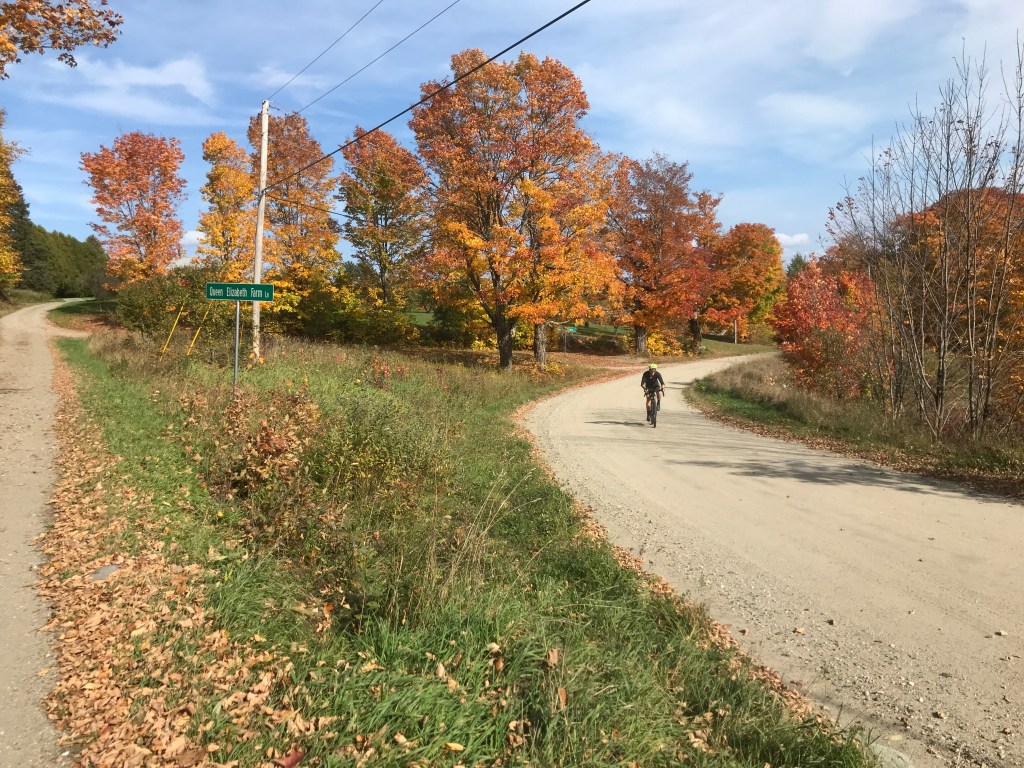
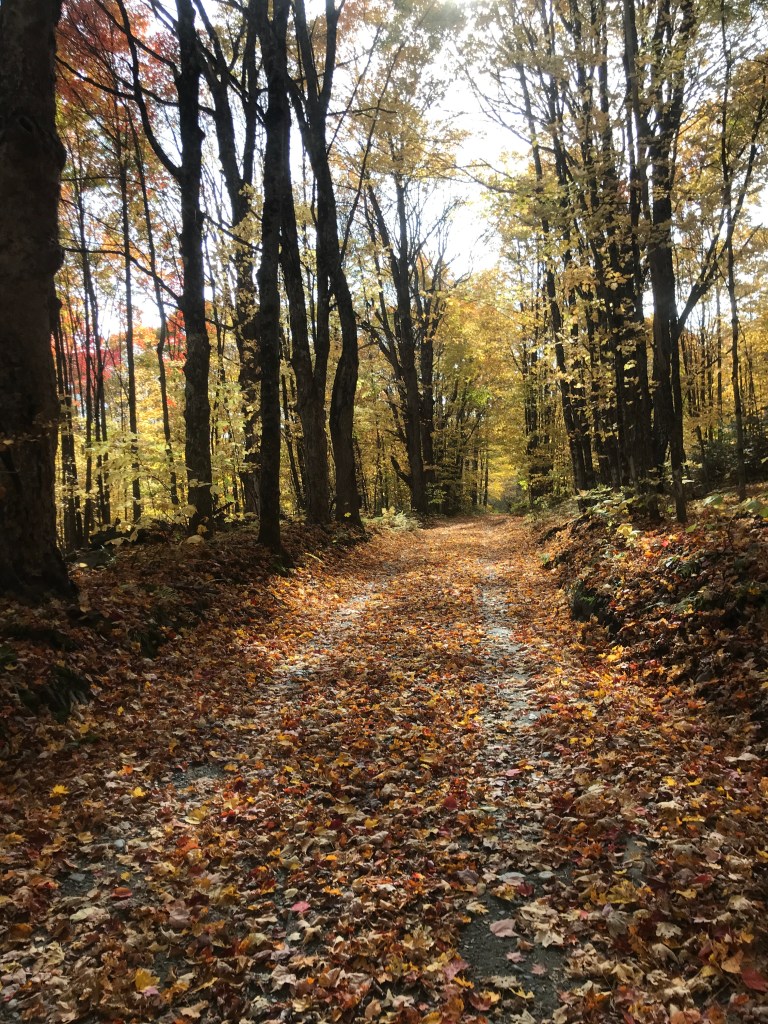
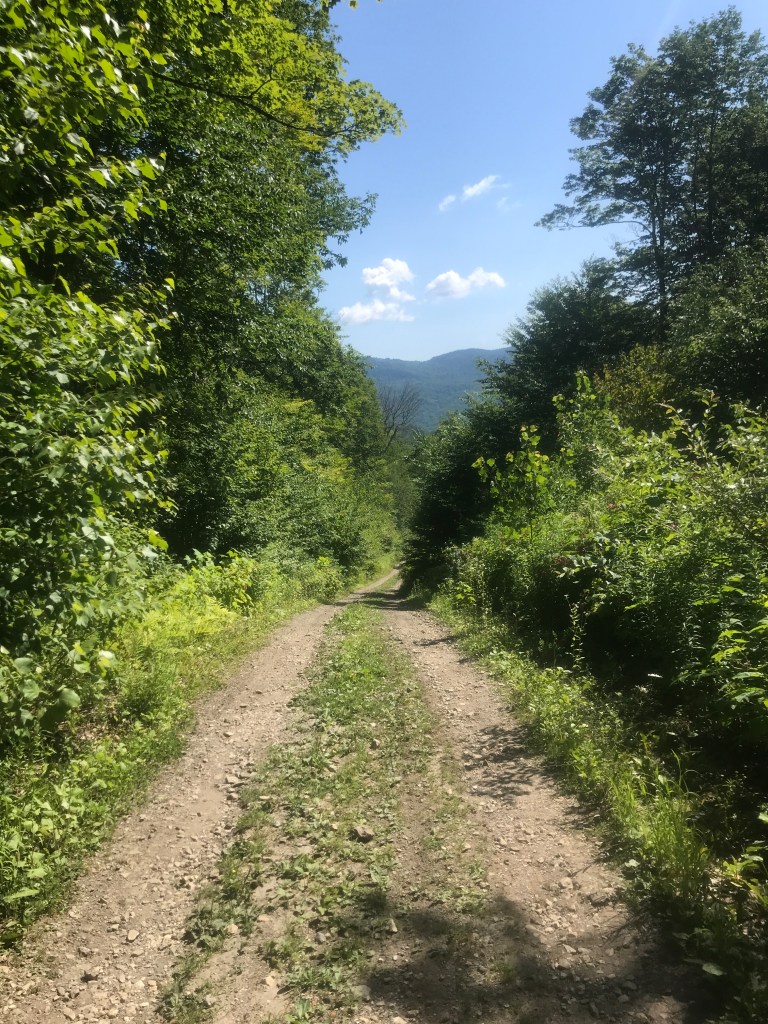
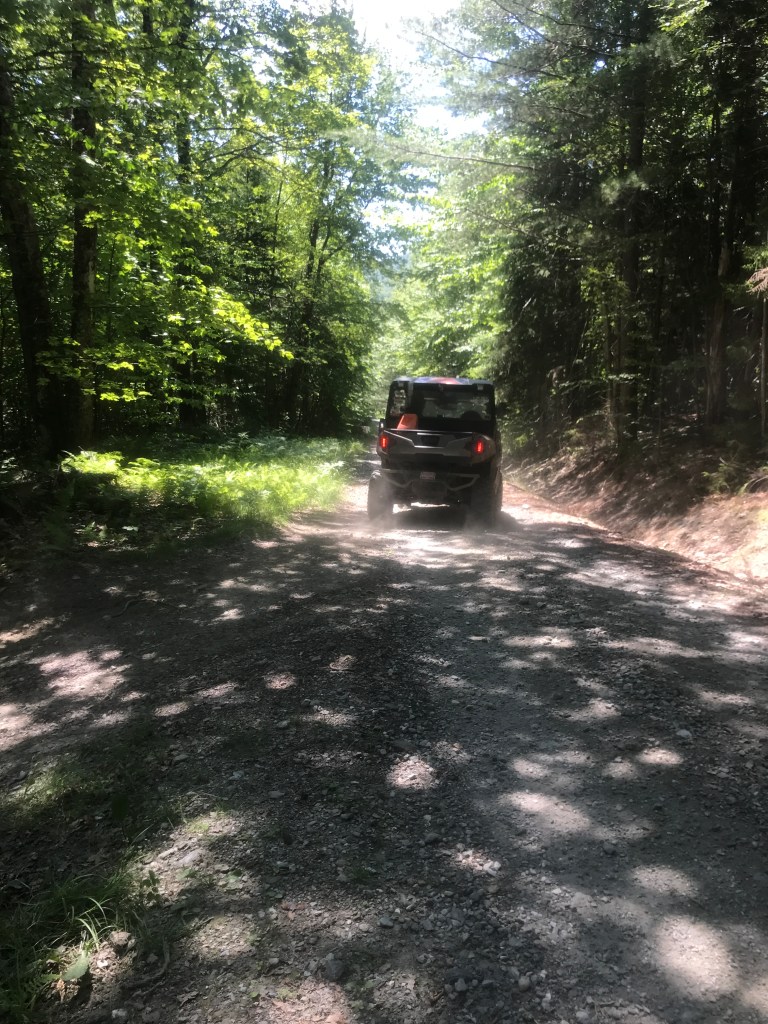
Anyway, I packed up and was on the road by a bit before 8:00. I immediately began climbing up Capen Hill Road. I passed a sign for the blueberry picking area and also passed Camp Thorpe: a camp that has been around for nearly 100 years and provides “positive, successful camping experiences for children and adults…with a variety of physical and developmental needs.” Once I leveled off and turned south on Hathaway Road, the mountains I’d be entering showed themselves, and with the light still relatively low, it was an enticing sight. I crossed over Vermont 73 (my route back) and began to climb on South Hill Road (AKA Forest Service Road 403). This followed typical GMNF road patterns: begin as a typical dirt road, become double track after the last house, have a few deep pools of nasty standing water and a beaver dam assisted stream crossing or two. But all in all it was an amazing road. In fact, it’s likely going to be part of the Eastern Divide Trail, a bikepacking route that will run from Newfoundland to Key West. They’re in the process of finalizing the route and just two days before this ride, Joe Cruz (professor, author and route planner extraordinaire) went through to check it out for the Divide Trail.  The road climbed steadily, but just past a few seasonal camps, I came upon an opening and a view past a couple of slate covered, hip-roofed buildings that was phenomenal. It looked like it belonged in the Alps (though the mountains and the buildings weren’t nearly grand enough). I then had an amazing, steady 3-mile drop down into North Chittenden. I’d actually been in Chittenden for a while now, which isn’t surprising since it’s the largest town in the state by area (73.8 square miles). The town was named for Thomas Chittenden, a “Founding Father” of Vermont and is also the birthplace of the Eddy Brothers, a pair of supposedly psychic twins who performed in the 19th century. I swept quickly through the lovely village past its picture perfect Civil War Monument and down to my first stop: the Wooden Barrel Country Store. I pulled in to refill water and grab a snack and was struck by how much their sign looks like that of the G&L General Store in Benson, about 20 miles due east.
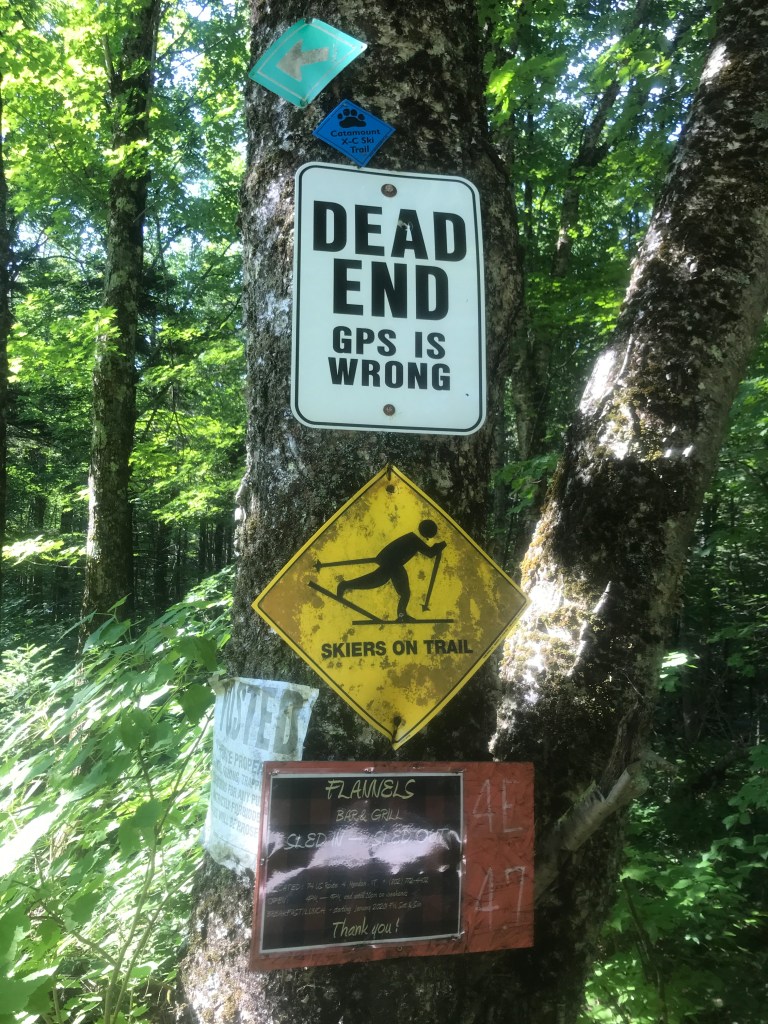
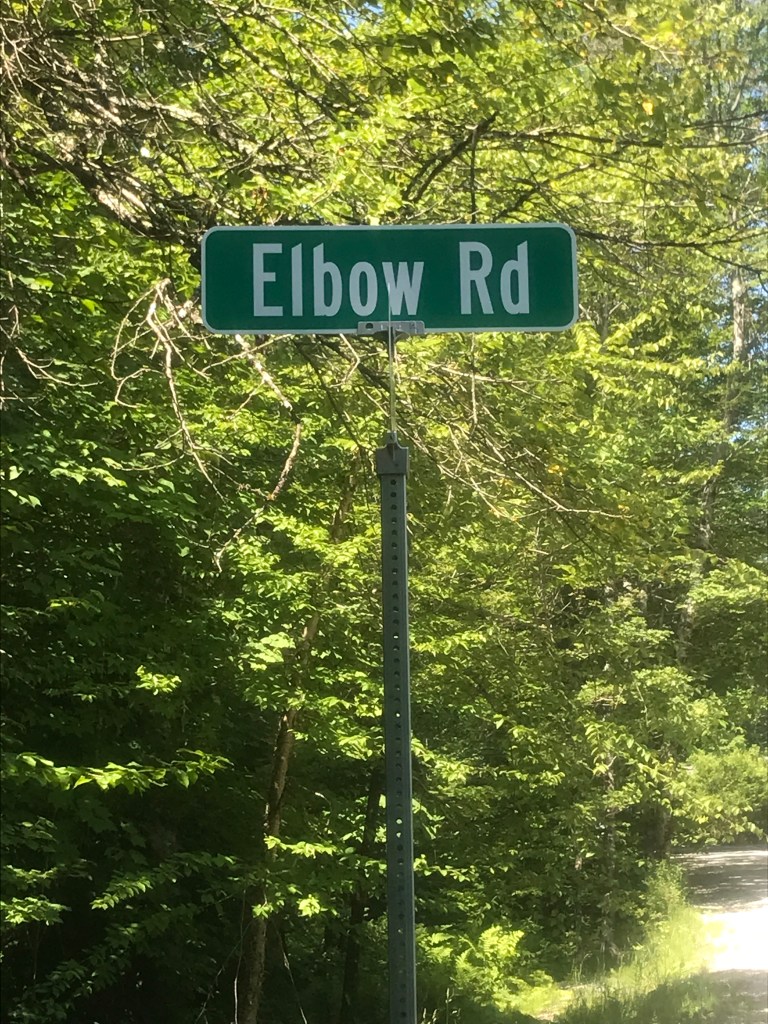
After a brief chat with another two-wheeled compatriot (a motorcyclist) I backtracked to create what would be the first of six small out-and-back spurs off this loop route. I was now going to be steadily climbing up towards the Chittenden Reservoir (which has a surprisingly light web presence, considering it’s on the larger side). I’m not even sure who manages it: Vermont Department of Fish & Wildlife? Green Mountain National Forest? US Army Corps of Engineers? Reservoir Dawgs? Anyway, the climb up was steady, but fine. Once I got onto Wildcat Road, it became quieter and much more pleasant. I pulled over to peek at Lefferts Pond, a connected, shallow section of the Reservoir. The views to the north were great, but the paddling looked marginal. I think it’s only a few feet deep in that whole area (not that you can swim anyway). I soon came to the end of the maintained road and found a menagerie of signs: everything from ATV/Snowmobile wayfinding, to the Catamount Trail to advertisements for Flannel’s Bar & Grill. Beyond lays The Elbow and for an area without town-maintained roads, there’s a lot in there. In fact, during the 1840s there was a proposal to route a train line through the notch! I planned to take advantage of that trail density and steal a bit into Mendon. This second spur of the day into Mendon doesn’t do the town justice: there is much more to the south, but I just couldn’t make it fit with other routes. I rode up an okay Class 4 road, until I reached some camps and a maintained road. Once I reached the hight of land, I decided not to head down to Route 4 and the Inn at Long Trail and Pico, but instead just turn around back towards the Elbow.

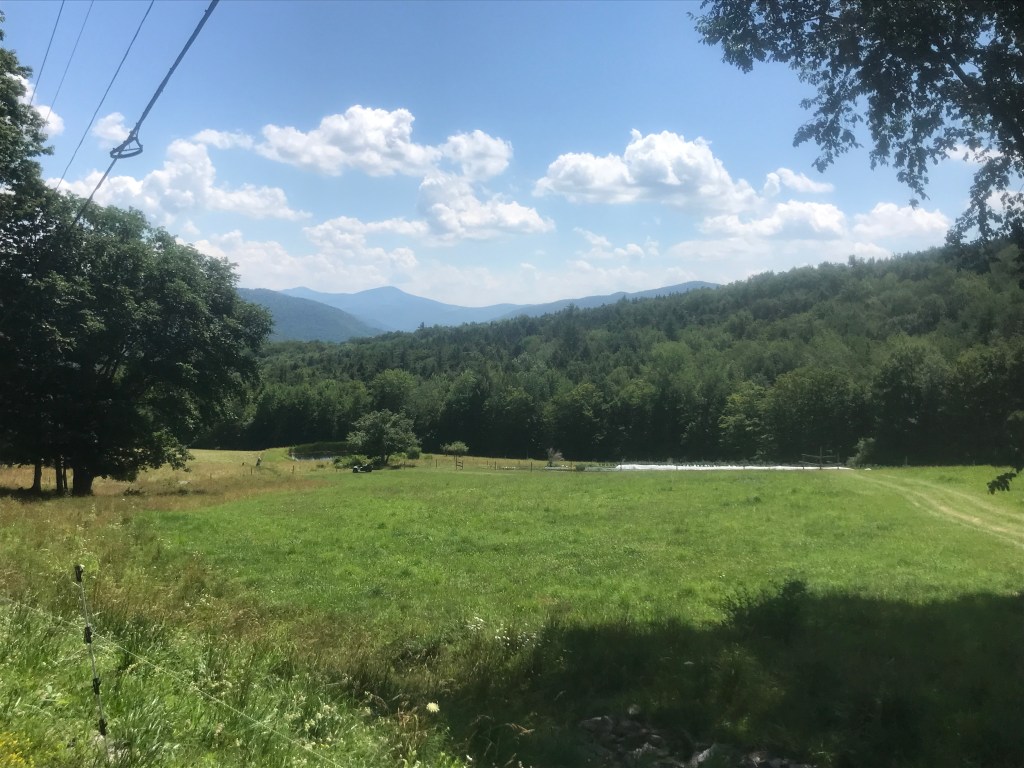
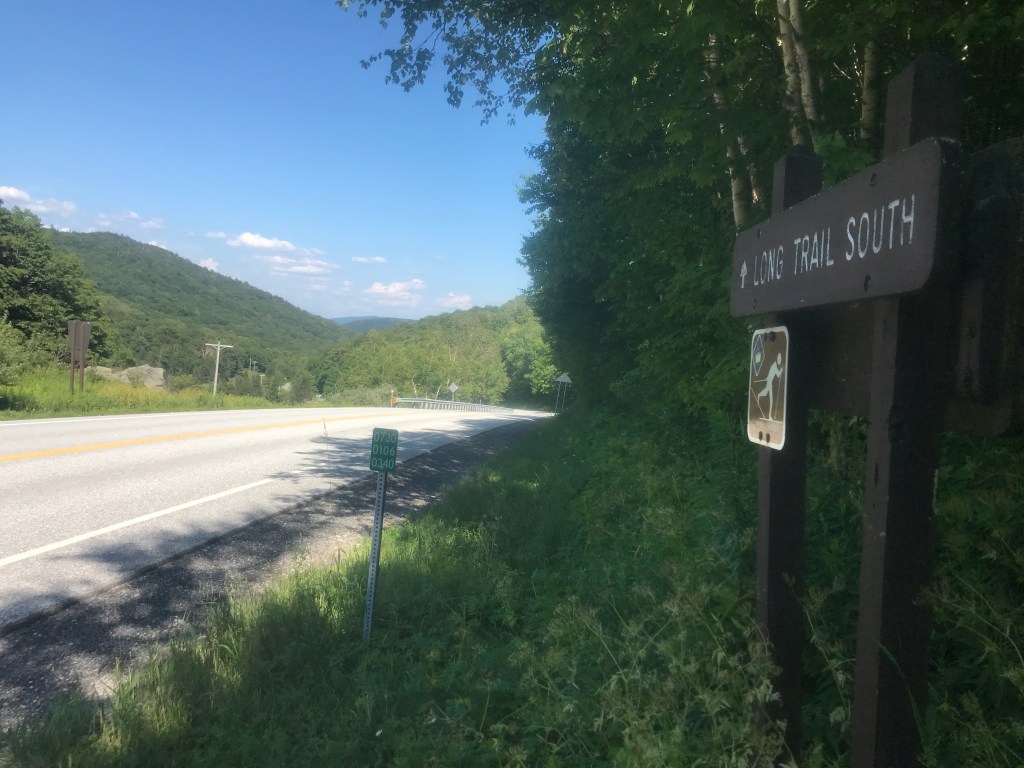
I came across one other biker right at the Long Trail and then had a great descent down towards Green Mountain National golf club. It was certainly a signal that I was now in the land of Killington: the tourist and second home mecca. The eponymous ski area is the biggest draw, and the town relies heavily on the dollars it helps bring in and they’re particular about what their abundant tax dollars go towards. In fact, the townspeople have voted twice to secede from Vermont and join New Hampshire as a way to avoid what they saw as unfair taxation from the state. Killington does have the second highest homestead tax rate in the state (interestingly Pittsfield, just to the north has the lowest) and there are many complicated factors involving the shared funding of schools which are trying to be fixed. I admittedly wasn’t thinking about tax policy, though passing by the dudes playing golf, had me reflecting on the very different ways people choose to spend their free time. After a short stint on Route 100, I turned onto River Road which follows the town’s main valley. I passed over the Long Trail again at Thundering Falls, then pulled over to rest at the Town Hall and its associated recreation area. I had a very steep climb up Quimby Mountain Road ahead of me and needed a snack and water refill. Luckily, the public pool was just opening, so I filled bottles (from a fountain, not the pool) and prepared for the steep slog ahead of me. The area I was entering goes by a few different names: Chateauguay and Notown (ironic, eh?) among them. It’s an area of Killington, Stockbridge, Barnard and Bridgewater that is especially remote timberland and mainly only accessible on logging roads via ATV. When planning the route, I found a segment that showed only 17 people ever had been silly enough to make this climb, so it’s very rarely biked. As I began the climb, the bugs came out and it also became clear I’d be hiking a fair bit. I was able to pedal in spots, but it was incredibly steep: the percent grade averaged in the mid to high teens for a good portion. I was able to reach the end of the really terrible stuff and take a rest and prepare for some continued rougher trails, but they mercifully trended down.

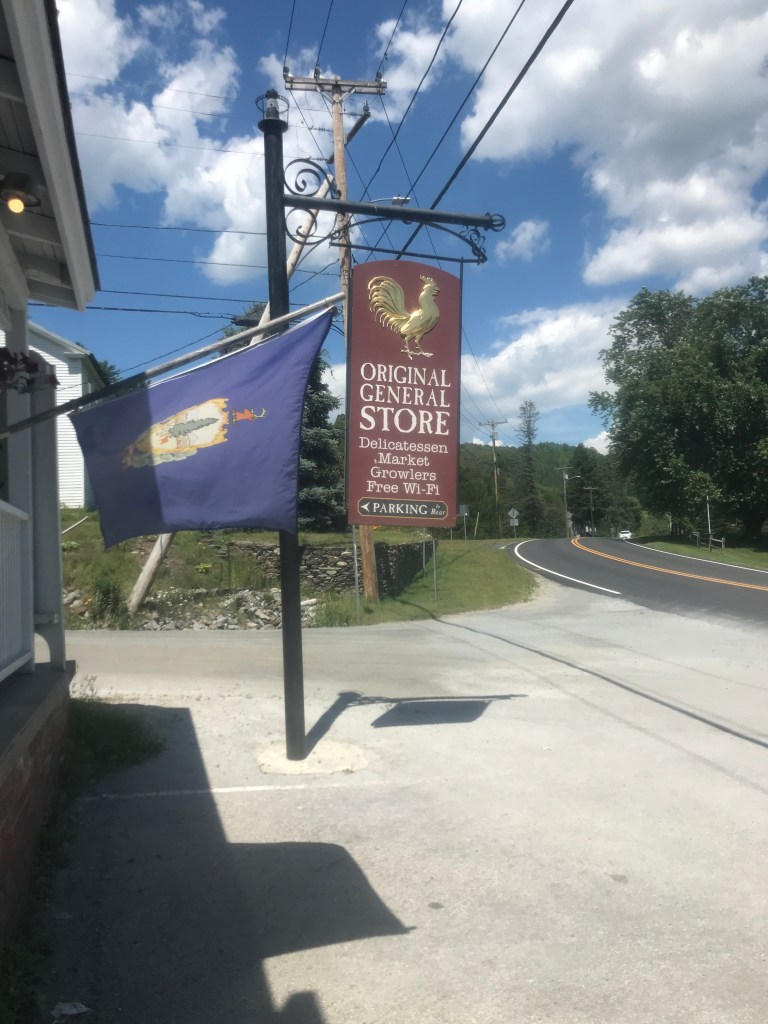
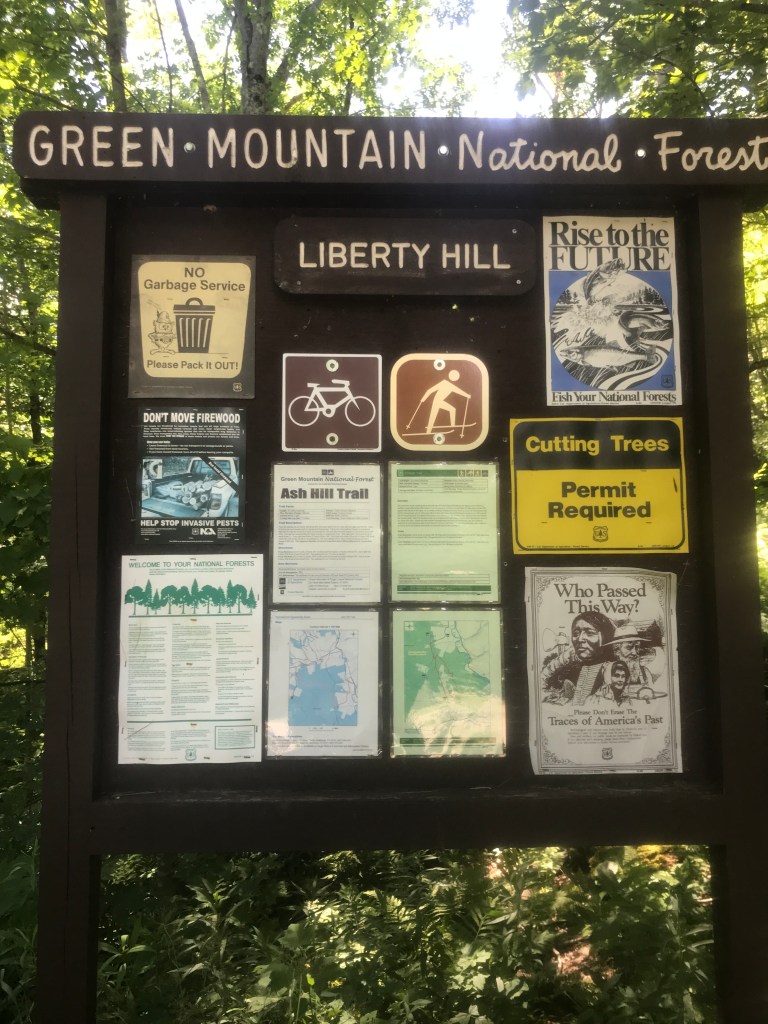
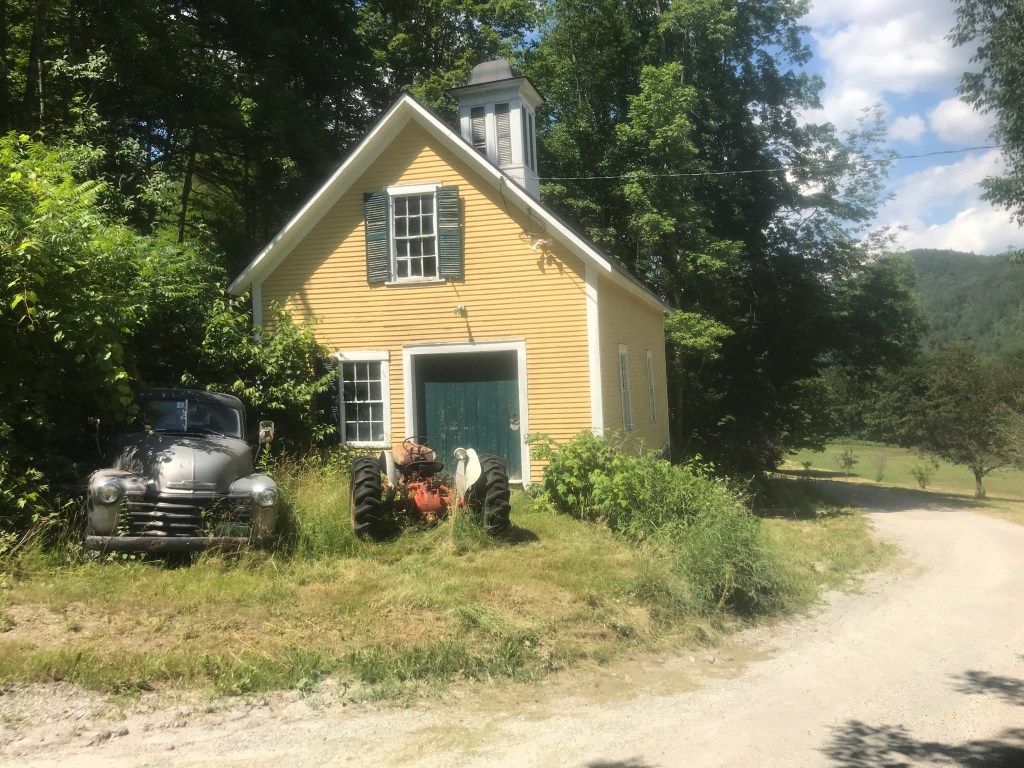
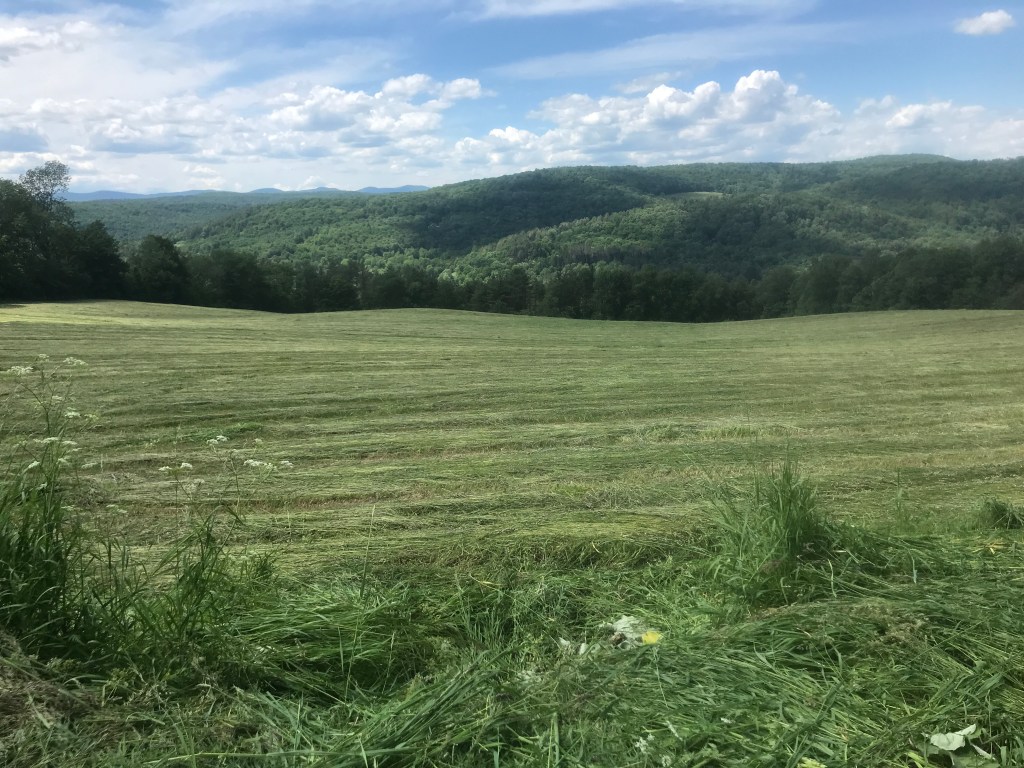
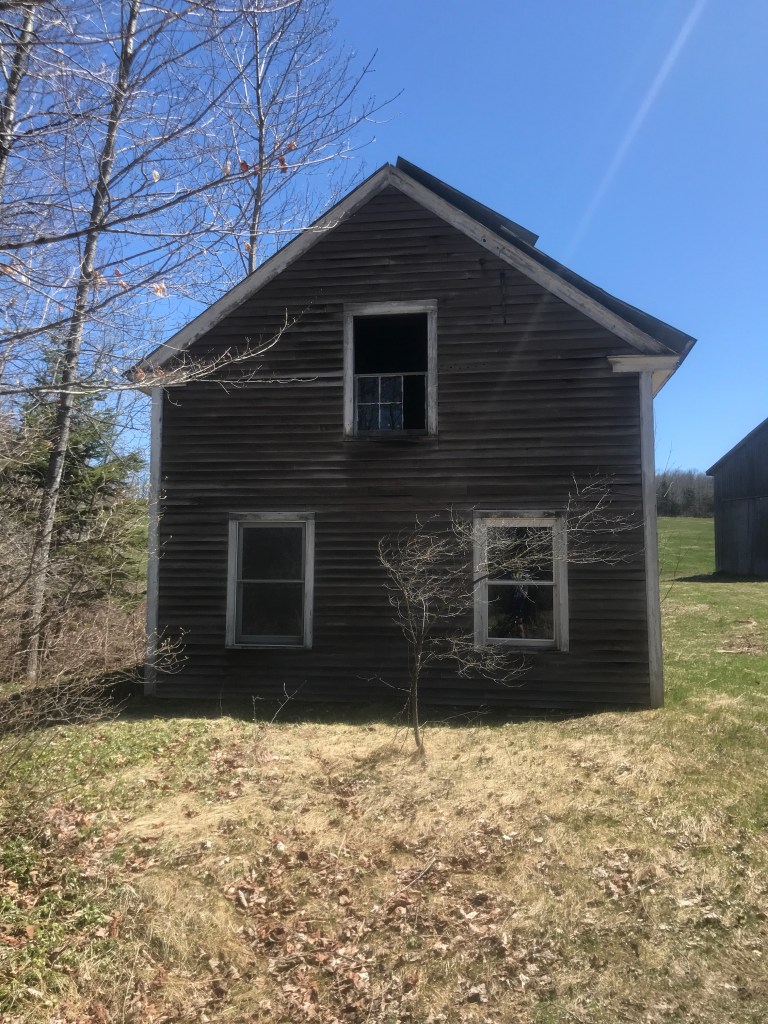
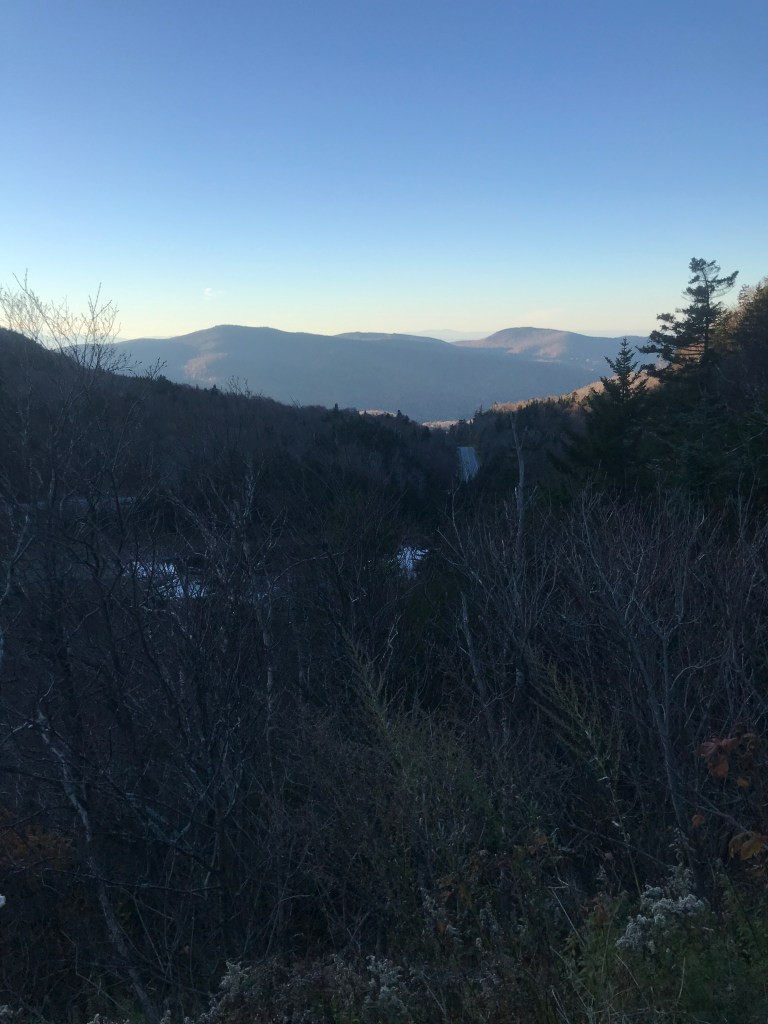
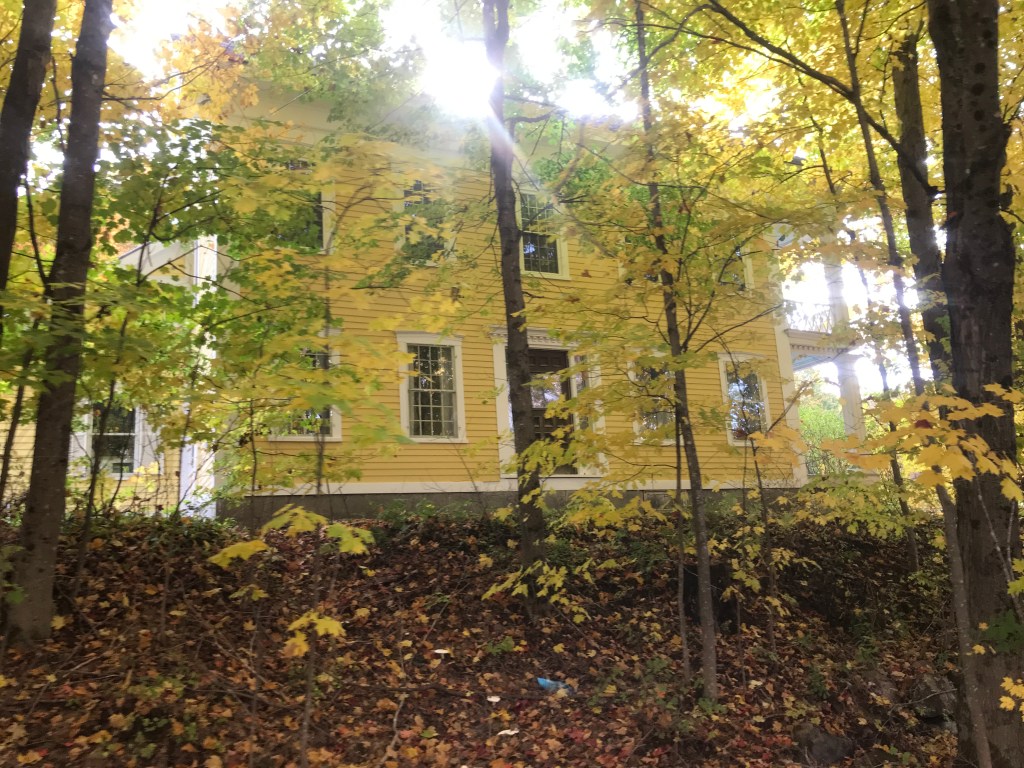
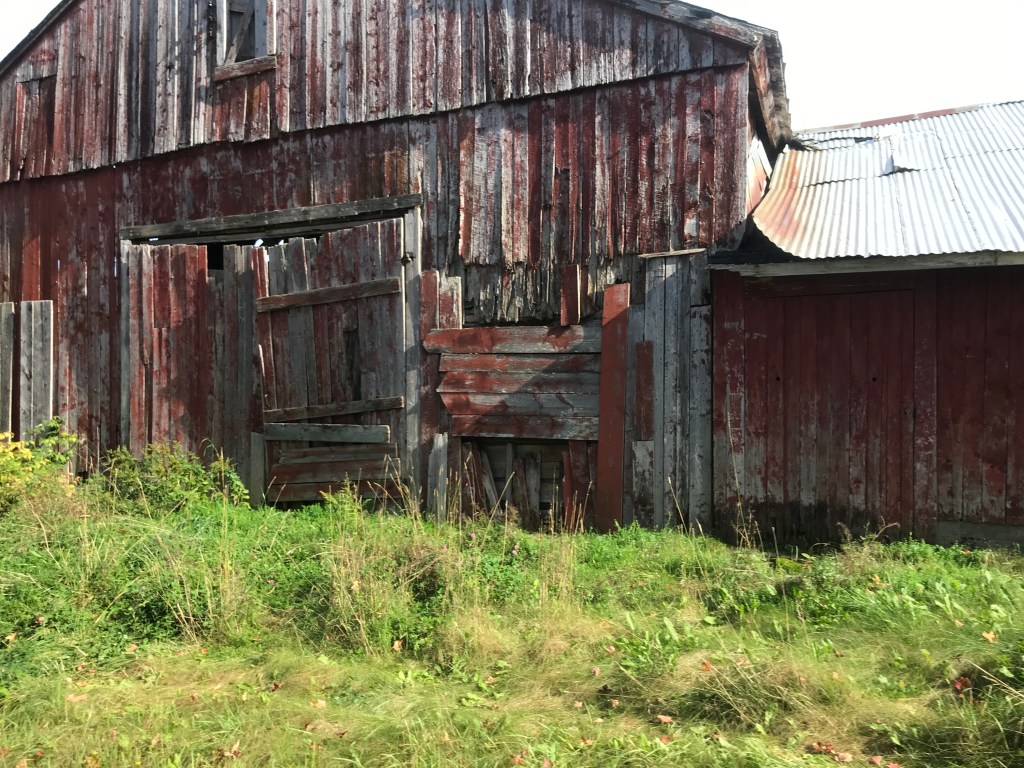
At this point, I was into the fifth town of the day: Stockbridge. Supposedly named after the Stockbridge next to my childhood town, the main portions of town fall along the banks of the Tweed and White Rivers. In fact Stockbridge used to have two main villages, but Gaysville was virtually washed away during the flood of 1927 and Irene obliterated Route 107 again in 2011. Stockbridge, Pittsfield and Rochester were all particularly hard hit during Irene and in fact were only accessible by helicopter for over a week. My ride was still above the river valleys, but I was making my way down quickly. I passed a few groups of folks out in side-by-sides enjoying the trails like me. There are certainly many more miles of trails to the east to be explored, so I’ll be coming back for sure. I popped out at a beautiful vista overlooking the Tweed River valley before a screaming downhill onto Route 100. From here, I took a left over into Pittsfield to grab lunch. I actually lived in Pittsfield (also reportedly named after another neighbor of my hometown) 13 years ago. It wasn’t the best of reasons why: I was hired by the Vermont Youth Conservation Corps to staff a new program working with schools, but somehow they’d forgotten to confirm who would be paying my salary (them or the school). So a week and a half into my training, my co-leader and I were given two weeks of work building mountain bike trails while living out of our cars instead of a long-term position in the school program. It was better than being summarily fired, but it wasn’t a happy time. It did lead to some solid trails (especially Stone Wall) and eventually to me meeting Maddie, so in the long run, it was a positive. I made spur number three of the day by heading to the Original Pittsfield General Store. I’m not sure why they had to clarify “Original”. I doubt anyone would think the grocery store across the street is older. Anyway, I got a delicious turkey sandwich and luxuriated in their air conditioning. From there I backtracked on 100 and climbed up Liberty Hill Road. This was a completely optional climb, as I could have continued on 100 back to the north, but I really do try to get on dirt in every town, and despite the steep up and steep down nature of this climb, I was glad I did. There were some solid views at the top and the Class 4 section that connected me over to Forsha Road was fun. The area towards the top is actually managed for mountain biking and it seemed like there may be a way to cut down to Route 73 part way up the gap climb, but at this point in the day, I wasn’t up for that level of exploring. I cruised down towards 100 and toward the bottom was awed by a Greek revival house that’s being subsumed by weeds and vines. It and its yellow barn were breathtaking. I pushed on past Liberty Hill Farm & Inn, preparing for a lot more time on pavement.
I was now in Rochester and interestingly enough, I had some trouble finding dirt roads to include in the route. Don’t get me wrong, there are plenty around (especially north and east of the village), but those didn’t make sense to include since I had to get back to Goshen. I figured out an option which I’ll explain shortly, but first I went north into Rochester, creating spur number four of the day. Rochester is a pretty happening town. They have really embraced outdoor recreation as a driving economic force. In the wake of Irene, a group (now called Ridgeline Outdoor Collective) was formed. 

“It was really a way to rebuild these communities that were hit by this storm. We hoped it would give folks something to look forward to and would help some of the struggling businesses. But at the core of it, we’re doing it because we want to create more opportunities to recreate in these small towns.”

-Zac Freeman, a Ridgeline Founder in Outside Magazine

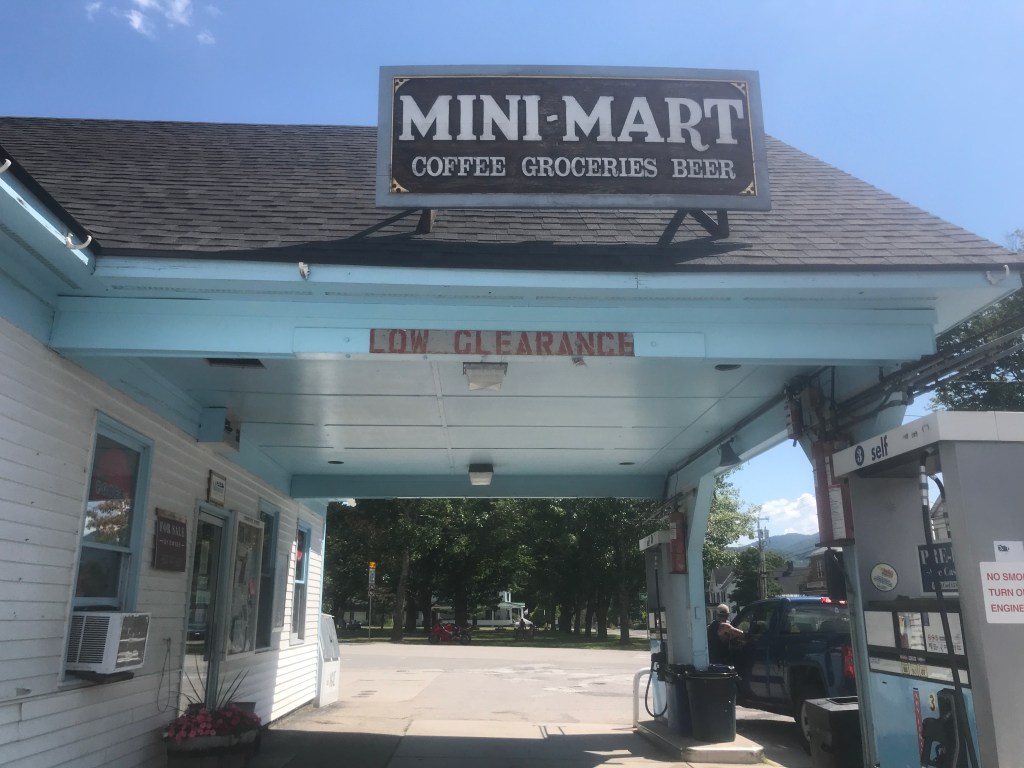
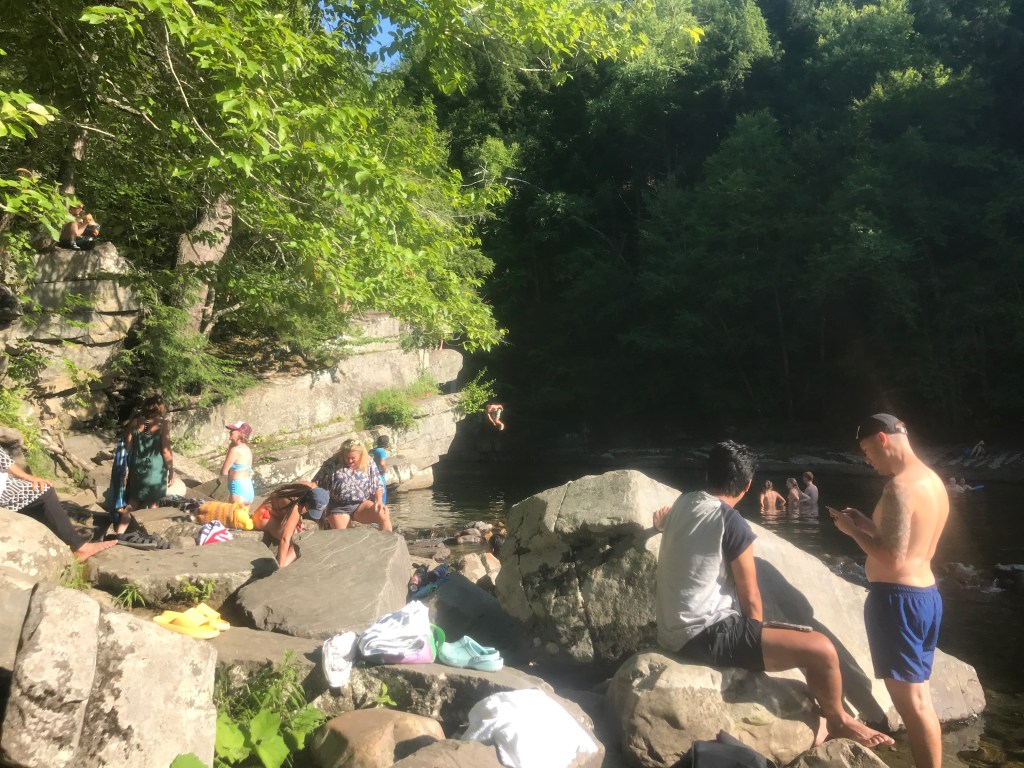
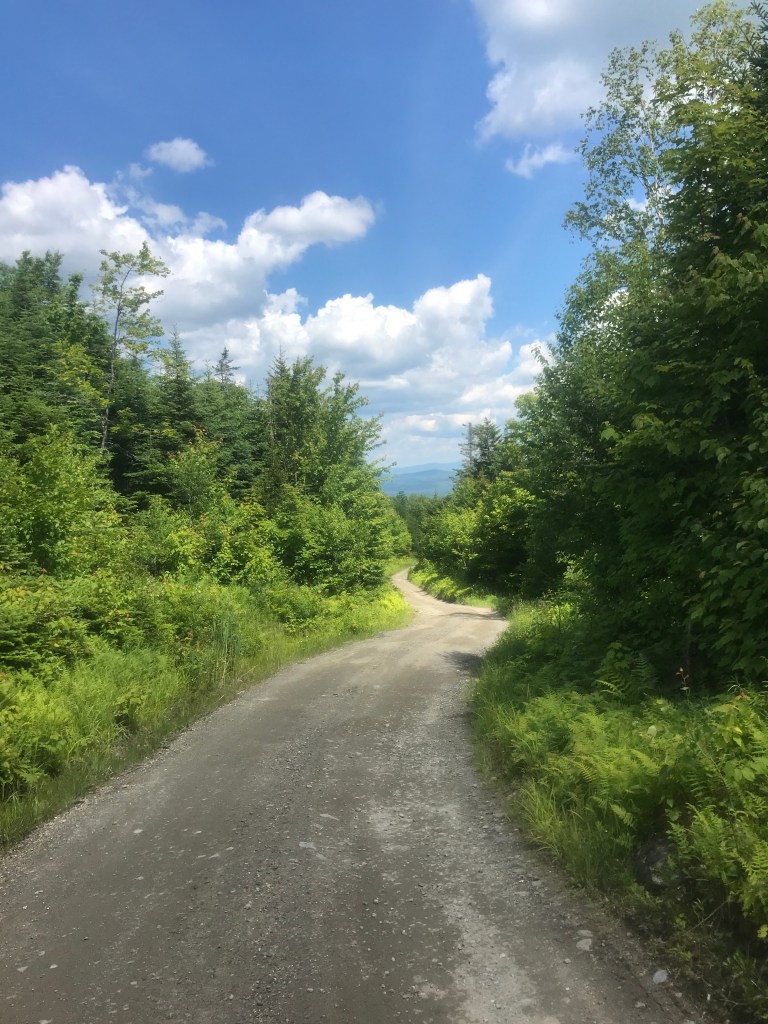
The town seems to be doing well and was hopping when I rolled in. I sat on the town green for a bit eating a snack before heading over to the Mini Mart to refill water. I would need the energy and hydration for the next section, because it was basically the crux of the day. The steep climb out of Killington was tough, but relatively short, but I now had a 9 mile 1400 foot climb ahead of me. I began in earnest and the lower stretches aren’t so bad, but the other tricky thing about this climb is that the gradient slowly increases as well, until by the top you’re contending with about 10% – not enormous, but after 8.5 miles it’s not great either. So I strapped in and tried to get into my best climbing cadence and enjoy the scenery. There were some nice mountain views and a funny roadside sight here and there, but mostly I just spun. About ⅓ of the way up, I did take a slight detour (spur 5) onto Bingo Road to get some dirt in. This long dead end road has a number of free campsites and would be a good candidate for a stop in a longer overnight tour. The road itself is nearly 6 miles long, but I only went about ⅔ of a mile down, but it was still dirt! I got back into climbing mode and continued up. At one point I was passed by four bikers zooming down from Brandon Gap and it turns out they were on the tail end of a 131 mile 12,000+ foot 6 gap ride! Oh and one of the guys is 63! I hope I’m still doing things half as hardcore at that age. Luckily, I didn’t know that demoralizing information at the time and I kept chugging uphill. I eventually reached the top of the gap and had an interesting thought pop into my brain. On the Long Trail, gaps like this are typically a low point with a climb coming afterwards and it’s the opposite for us cyclists: they’re the nexus where these two recreational sine waves converge. I paused there to collect myself for the fast descent, then flew down the steeper side of the gap having to hit the brakes to turn right back onto Hathaway Road. I made the brief climb, passed Camp Thorpe and returned to the Goshen Town Hall, completing my last spur of the day and this ride. I packed up and began to drive home, stopping at Bristol Falls for a refreshing dip before heading home.
The Details:

https://www.strava.com/activities/7486126758

https://ayvri.com/scene/gdkz16el5z/cl5qqyi8900023b6uyuwmcvev

Ride 33: Waitsfield, Fayston, Warren, Granville & Hancock

After my first overnight adventure on the Canyon on Ride 31, the bug had really bit me. We had a great opportunity coming up with the holiday weekend, so Maddie and I decided to do a bikepacking overnighter together. It also just so happened that a route I’d planned as a possible day ride had some National Forest camping spots pretty much smack dab in the middle AND one of the best Fouth of July parades would be happening as well. The Mad River Valley is also a place that’s pretty near and dear to both me and Maddie. I lived there during the summer of 2009 as an intern with Center for Whole Communities, which was then located at Knoll Farm. I helped support the land, facilities and participants in retreats that focused on environmental and social justice topics. It was a really magical summer. Maddie worked at Gaylord Farm in the valley from 2011 to 2014 living in a few different places in Waitsfield including a bunk in an awesome pseudo-collective called Freedom House . It’s also where we got engaged: Maddie got me all full of Mad Taco and popped the question looking out over the valley from Knoll Farm’s namesake outcropping. So we were happy to return and also excited to explore a bit further south into the mountainous parts of Addison County

After getting some house chores done on Saturday, we drove down to Waitsfield on Sunday July 3rd and parked at a picnic area in a funky grove of trees that I think gets much more use in the winter as an access point to VAST trails. But we got all packed up and began south on Route 100 (AKA the scenic Mad River Byway). Right away I was struck with memories of driving the electric “Sun Buggy” from Knoll Farm down to Kenyon’s to buy some sort of hardware and barely having enough power to make it back up the hill. We took a swing onto Old Country Road which is a nice quiet road that parallels Main Street. Towards the end, we passed a large field that the next day was holding a Polo match. That gives you a little flavor of the valley: tourism is its lifeblood and there are folks with deep pockets sprinkled throughout (with some lovable weirdos as well). Speaking of both lovable weirdos and deep pockets, we soon passed Bridge Street and the quirky Madsonian Museum. It’s the brainchild of architect Dave Sellers. Sellers is best known for being one of the drivers of the “Prickly Mountain” architecture movement in the 60s and 70s which stressed a design-build ethos and led to some amazing structures. We continued past The Big Picture, a great movie theater and cafe which was slinging donuts. It was tempting, but we had a day’s worth of climbs ahead of us. After passing more shops and the bottom of Bragg Hill Road (the location of Knoll Farm, go there for unreal views and steep gradients) we made a right onto Route 17. This is the same state route from Ride 22 and Ride 26. It begins relatively tame before jumping up steeply past Mad River Glen to App Gap. We pushed on for about a mile before making a left onto Marble Hill Road. It averages over 9% grade which is pretty darn steep for an average grade. We weaved back and forth, took a break or two, but made it up to a homestead that was being built: a small cabin and a few pigs mainly. 

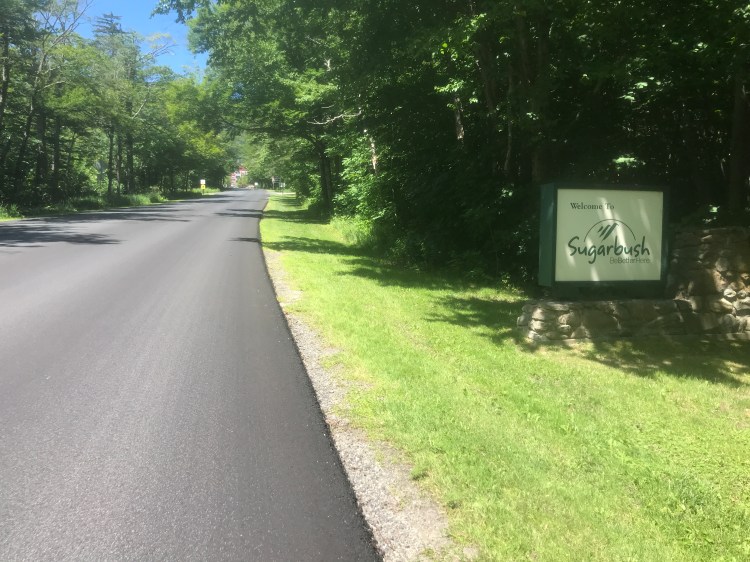
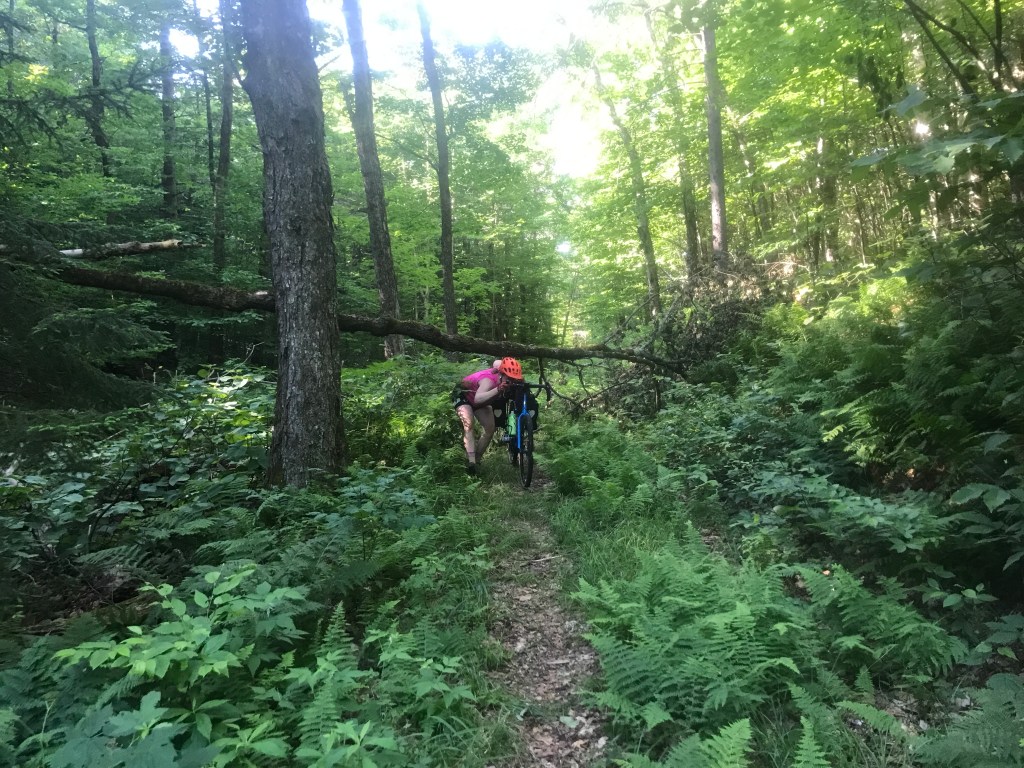
At this point, I knew we’d be contending with a Class 4 section, but I wasn’t quite sure what to expect. It was doubletrack that had essentially overgrown into singletrack. We climbed a bit more and got views over to Mount Ellen, the former standalone ski resort, but which is now part of Sugarbush. We crossed paths with a section of much more commonly ridden singletrack that’s part of the Mad River Riders network. We saw two mountain bikers who were probably wondering what these two doofuses on fully-loaded drop bar bikers were doing up there. We had a nice descent down onto German Flats Road which took us all the way to the Sugarbush Access Road. We were now clear of Fayston, and there’s plenty more riding to be had in that town, but it’s just situated in such hilly terrain, it would have been too much to add. We rested in the shade within sight of the Sugarbush base lodge’s faux silo and barn motif, then had one more punch up Inferno Road, then it was a steep cruise down to 100 with Warren Village and lunch waiting beyond.

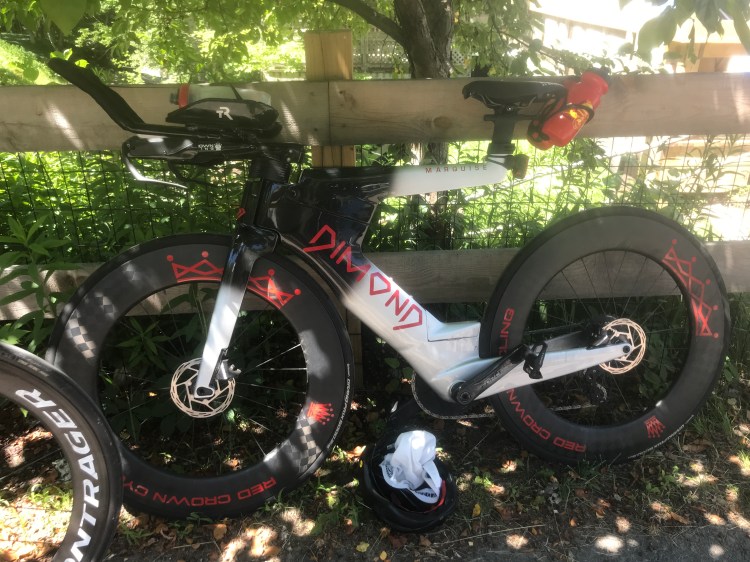
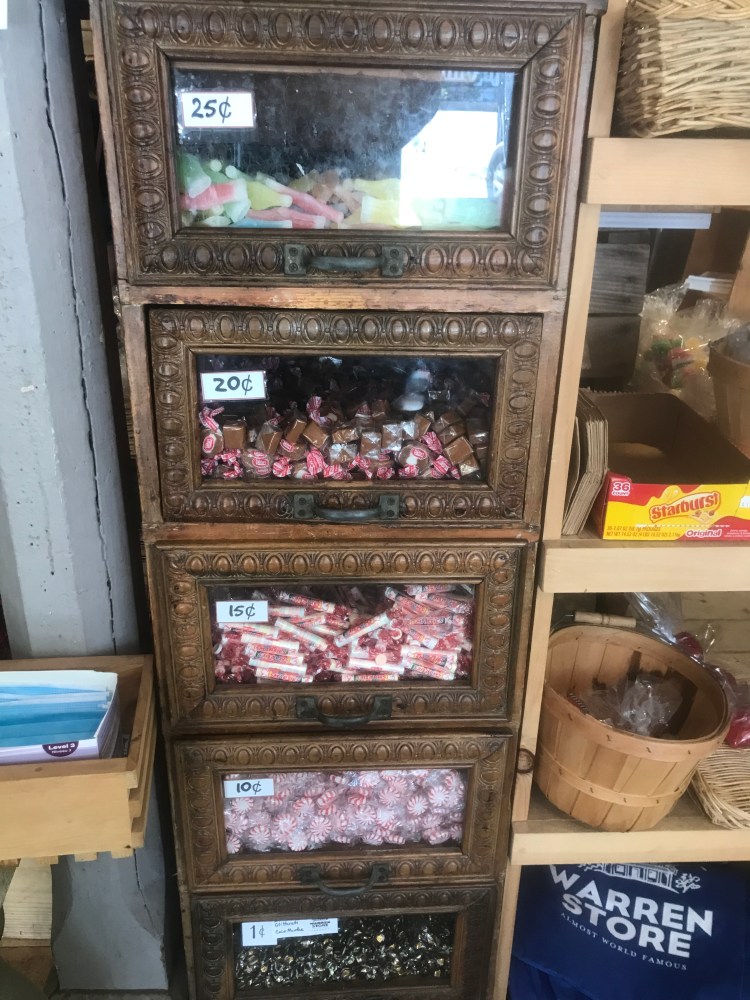
Warren village began to develop when mills were placed along the narrow section of the Mad River to process crops grown in the flatter sections of the valley to the north, as well as timber from the surrounding hills. It’s tucked into the valley and its buildings nestle up to (and sometimes overhang) the river. Because of this proximity, the village was hit particularly hard when Tropical Storm Irene swept through the valley. Today, the village has recovered nicely and it’s back to its tourist catnip status. I mean, it’s absolutely gorgeous. We rolled in with our bellies grumbling and stopped at the Warren Store. They have a solid selection, including the typical t-shirts and ephemera, but also snacks, candy and sandwiches. We ordered up a few and sat down to eat listening to Freeman Brook flow into the Mad River, just a few feet away. We weren’t the only bikers there, as the area is popular with cyclists of all stripes. In fact, we saw some guys on a road ride and one of them was riding a triathlon bike that costs over $10,000! There is actually an extremely high-end bike shop in the Valley called Fit Werx that caters to those sorts of bikes, so it’s not too surprising to see them. Lunch was delicious and it was fun to be around the energy that was buzzing as the town prepared for the parade the next day. I’ll talk more about the parade later on, but it’s a huge deal in the Valley and beyond. After refilling our bottles, we jumped back onto Main Street, headed south, taking a right over the river on the Warren Covered Bridge, then back up onto Route 100 to continue south into Granville. 

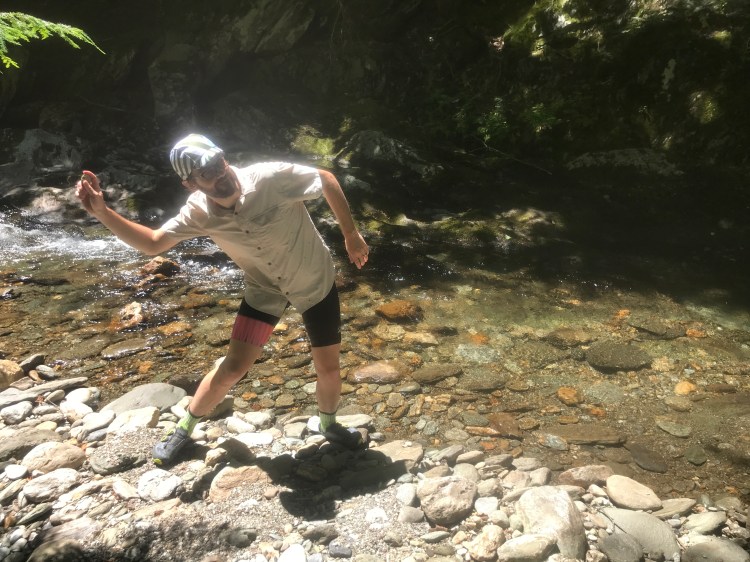
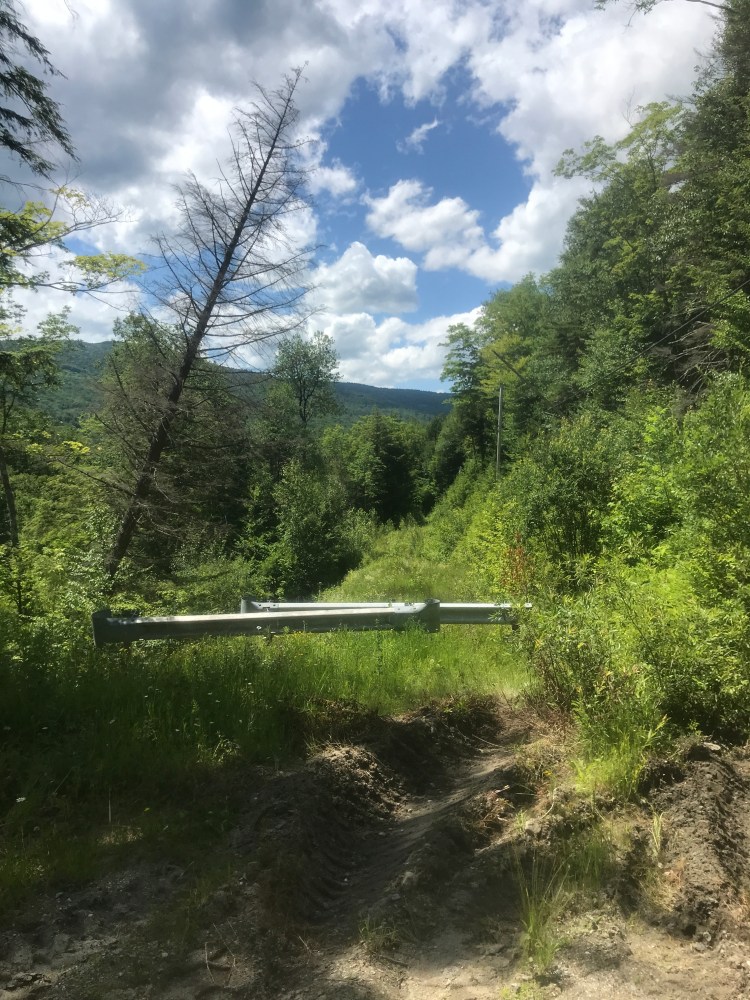
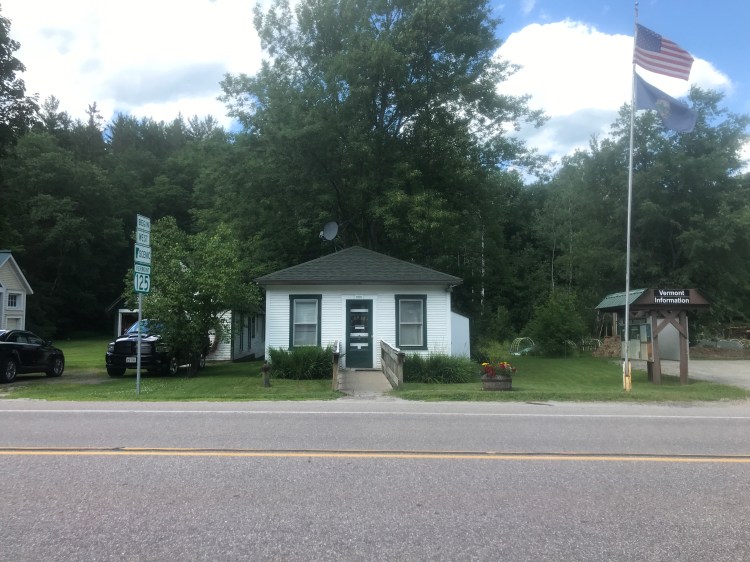
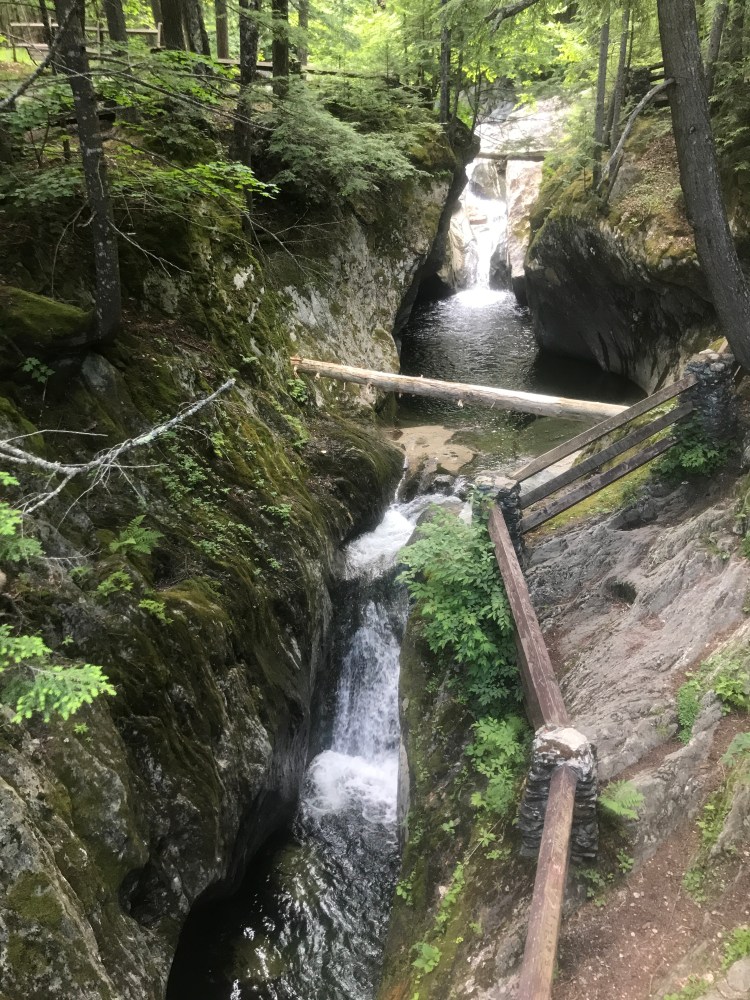
We soon saw cars lining the side of the road and a bit after came upon Warren Falls. This beautiful, incredibly popular, swimming & cliff jumping spot was hopping (no surprise given the heat). It was really tough to see so many folks just relaxing and cooling off. But we had to push on, so we continued…to another swimming spot. This one I didn’t know as much about. It’s about 2 miles south of Warren Falls and doesn’t have the same deep pools, but it was virtually abandoned. Definitely good for families or a back-up if you strike out at Warren. After taking a break that included shade, snacks and some stone skipping, we continued into the town of Granville and the Granville Gulf area. Granville is in a different county, watershed and almost universe. Whereas Warren is toursty, busy and generally pretty hopping, Granville is small (only 300 or so residents) and there isn’t much of a town center. Its vast majority of land is forested, which we were about to see plenty of. We continued to climb and instead of taking 100 south and dropping into the main valley, we turned left onto North Hollow Road. We followed this road steadily up until it became Buffalo Farm Road and began a quick drop. We were enjoying the downhill when all of a sudden there were a couple of guardrails across the road blocking our path. We didn’t know it at the time, but the road had been slumping badly in the years after Irene, so instead of spending an estimated $2 million to repair it, the town designated it a legal trail and closed it to vehicular traffic. After navigating through that short section, we were back on 100 and into the town of Hancock. Hancock is similar geographically and demographically to Granville, but it gets a bit more tourist trade since it’s over Middlebury Gap from Ripton and Middlebury. We stopped in the small cluster of buildings centered around the intersection of Route 100 and Vermont 125. We’d just missed the end of the $11.95 all-you-can-eat brunch buffet at the Old Hancock Hotel, so stopped into the Hubbard’s Country Store. We honestly weren’t too hungry, so we each bought a beverage: Maddie’s amazingly being a single Zero Gravity Stout, a seasonal offering that hadn’t been on shelves for months, back home. She stashed it as a reward for the end of the day. We chugged up 125, making a right at the Texas Falls Recreation Area. We enjoyed a brief walk around the falls, then pushed further up the beautifully smooth access road to get into the dispersed camping area. After a few potential spots, we spotted a great flat one. And with that, we’d found home for the evening.

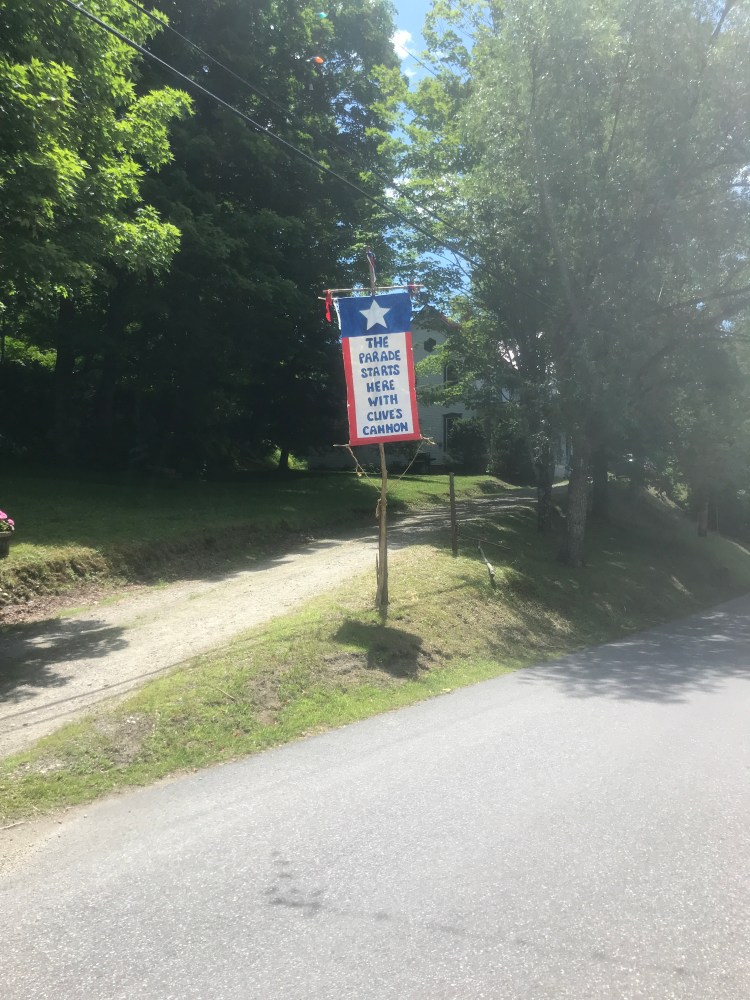
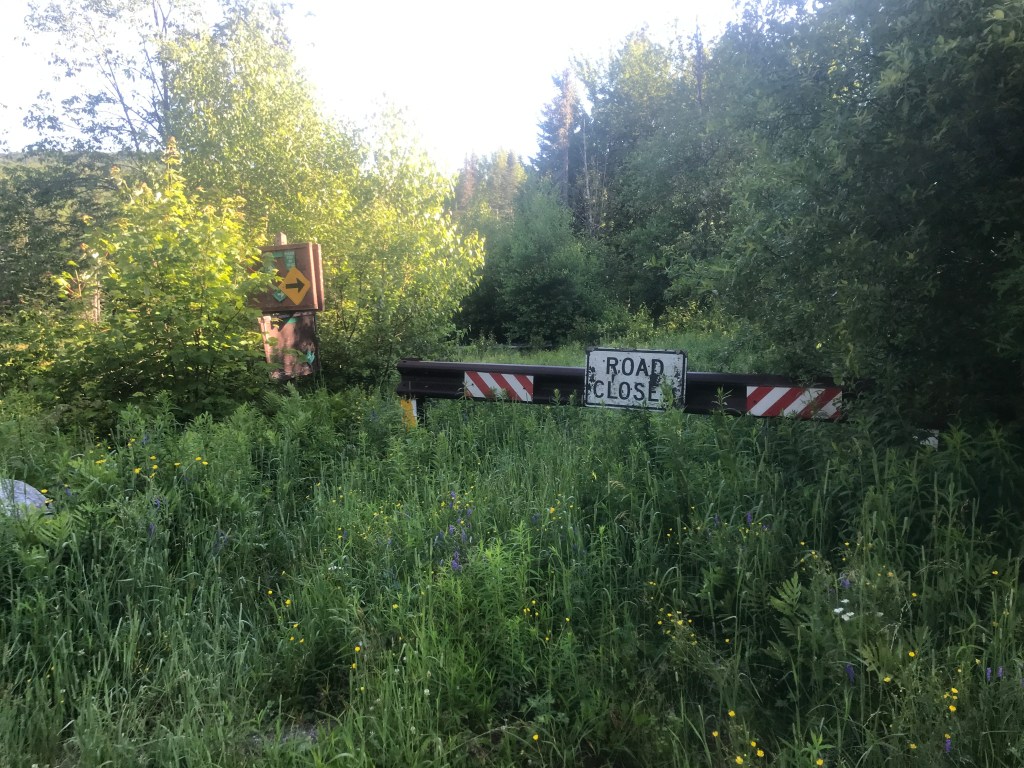
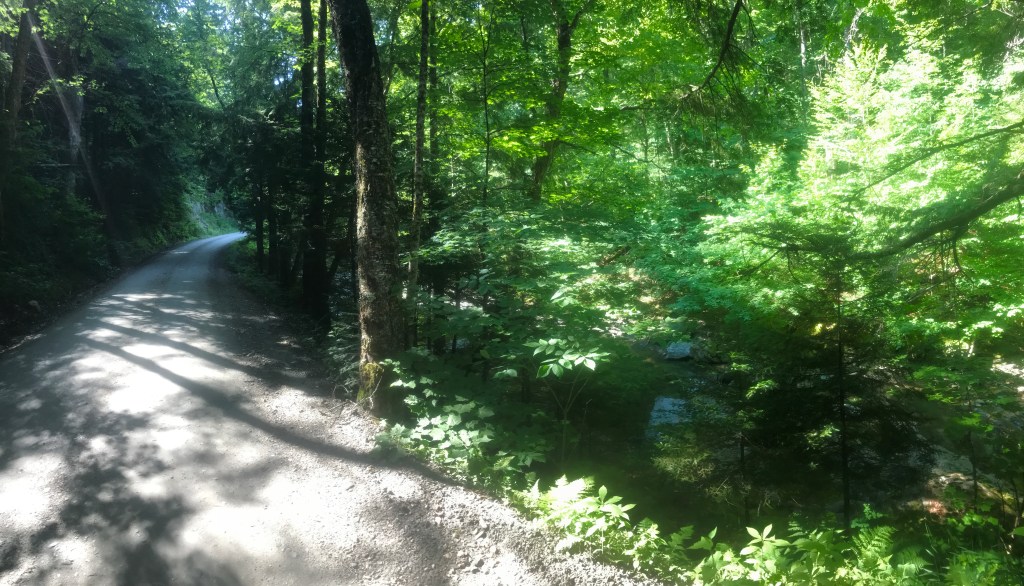
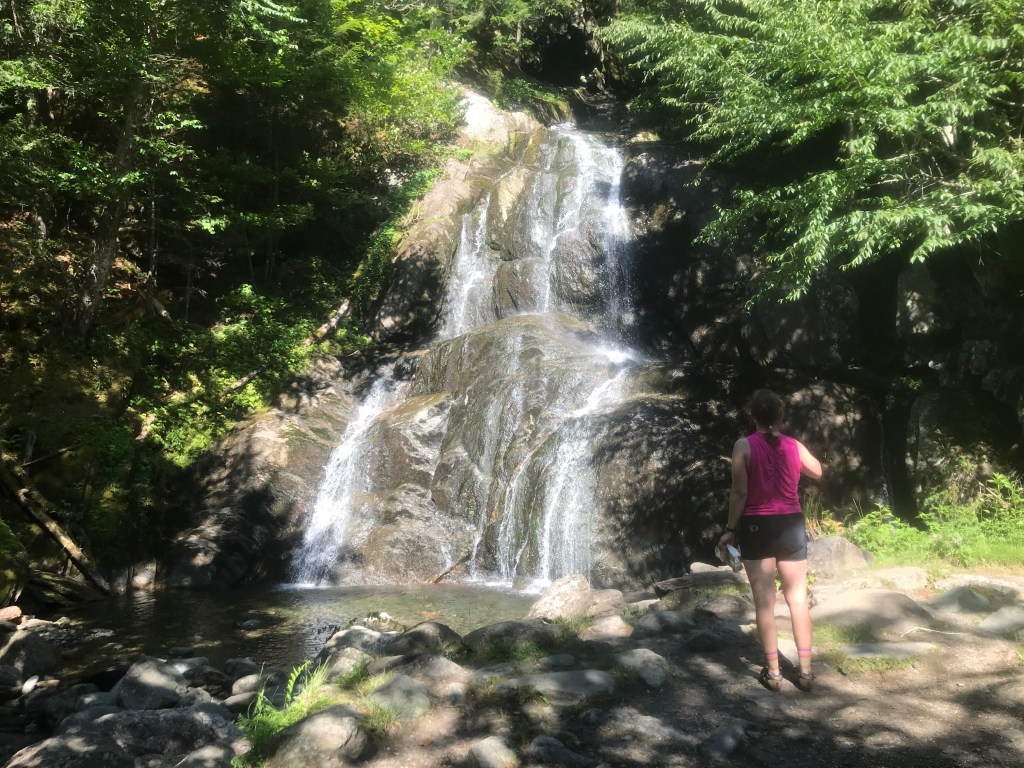
Once settling into camp, we ate a quick dehydrated dinner, took a walk but then realized we were pretty tired. In fact, we were actually asleep before the sun was down. The next morning, we awoke and though we’d brought some oatmeal, we still had some delicious pastries we’d picked up on the way to Waitsfield at Red Hen in Middlesex, where we started Ride 15. It was a light breakfast, but we had some more climbing ahead right off the bat. We’d continue up on the Forest Service road up to Texas Gap. It’s not one of the main east/west gaps through the spine of the Green Mountains, but it’s still pretty high. So we packed up and continued climbing the smooth road. We passed one or two other folks camping, but quickly came to a “Road Closed” sign, where the road became a narrow path through high grass. It continued dead straight and up at the same rate, and eventually opened up a bit more to look like a more traditional Class 4 road. In fact, as we reached the top, the understory opened up and there was a lot of room on either side of the road. On the downslope of the gap, there were a few trees down and it’s clear this isn’t used too often by anyone (snowmobiler, biker or hiker). But we eventually popped onto a nicely maintained forest service road which we flew down. It was probably my favorite road of the trip with the right combination of curves, slope, stream views and smooth surface that we really did feel like we were flying. We’ll have to come back and camp on this side. We eventually rejoined Route 100 at the Granville Manufacturing campus which includes the Granville Bowl Mill. We paused briefly, but were gently motivated to get back to Warren for the start of the parade. We began the slow climb up 100 back into the Granville Gulf. The road was relatively quiet and when we stopped at Moss Glen Falls (one of the most popular tourist spots in the area), we had it all to ourselves. It was a nice break, but the gravity of the parade pulled us north again. As it neared 10 am, we kept our ears out for the sound of a distant cannon, signaling the start of the parade. Sadly, we were too far away, but as we pulled onto Warren’s Main Street, we saw the tail end of the parade just getting started. 

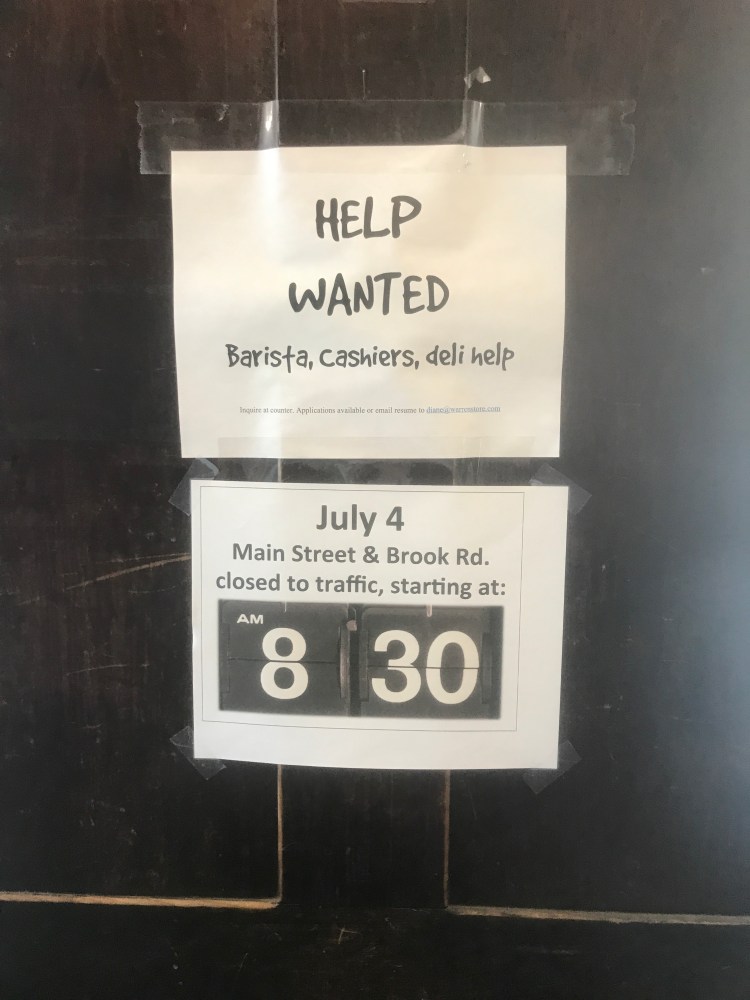
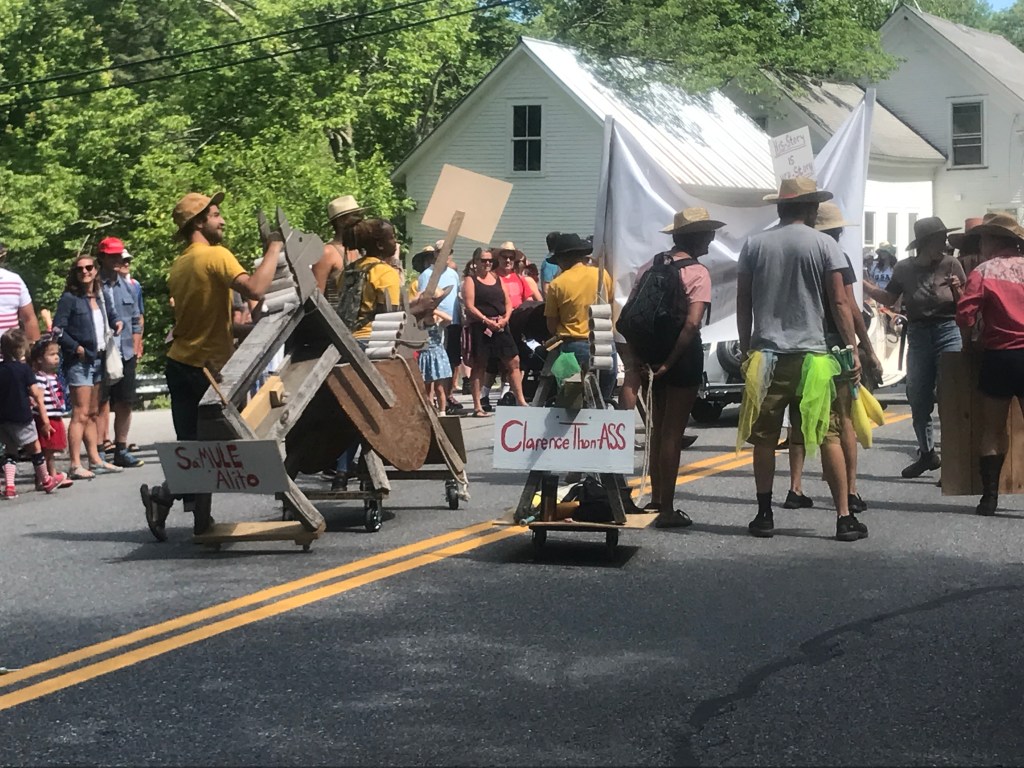
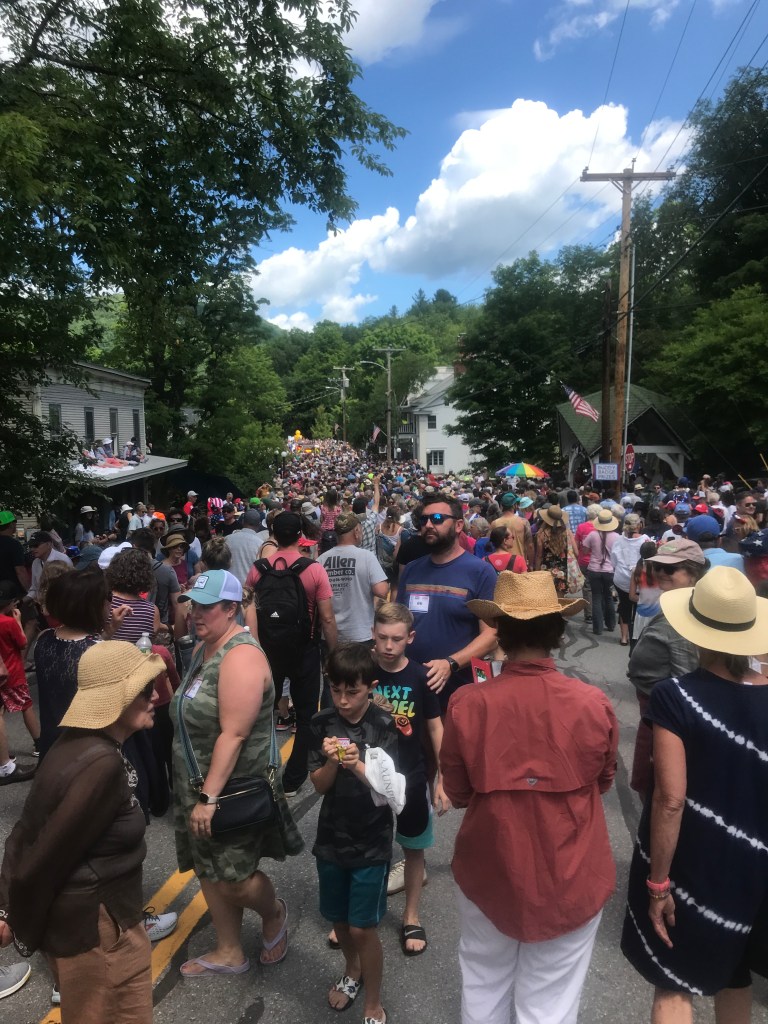
Vermont has a number of Independence Day celebrations, but Warren’s is by far the most laissez faire. It’s 73 years old and from what I can find, they’ve always pretty much let whoever show up and join: no need for registration or anything formal. This was on display as we essentially joined the parade from the back and slowly started working our way through towards the front. Based on the video evidence, we made it about halfway to the front before we saw our friends Claire and Megan (and Megan’s kiddo Haddie) and joined them. It meant we didn’t see the huge floats that tend to be up front, but it was such a wonderful surprise to see folks we know! Maddie and I actually took an informal over/under bet on how many folks we’d see, who we knew (had to know their names at least). We put the number at 10 and I took the over. It ended up being 11, but there were some locally famous folks in there (like Josh Panda), so that may not count. Anyway, the parade was super fun. Good energy all around: everything from a “Screw this shitty political moment” to “Thank god we can at least be together as a community”. Afterwards everyone just crams onto the street and makes for the Warren store area where there’s some pre-made food to satiate to hordes. We grabbed an overpriced burrito and tamales, then headed to the shade behind the store. We had more time to chat with Megan and Claire and I saw my buddy John Abbott and his family as well. As we worked our way out, I looked for my “buddy”: the parade sells pairs of individually numbered stickers and if you find your matching number in the crowd, you win a prize! I actually found my sticker on the ground, and never found my buddy, but we were near some folks when they got matched up! 

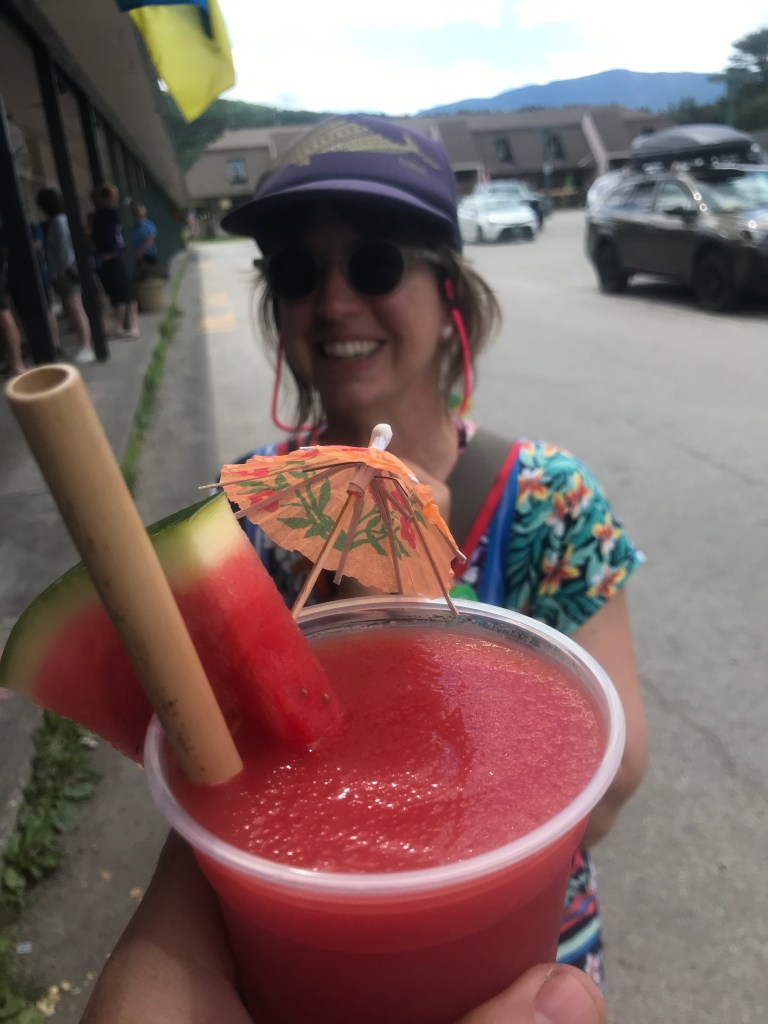
All-in-all, from the reports, it was a highly successful parade. Maddie decided she’d had enough climbing, so we parted ways. She took 100 back and I headed up Brook Road up to get some more views. This area above the valley is so beautiful. Originally, I had the route going around Blueberry Lake, on Chatfield Road, passing a bunch of the Prickly Mountain houses, then coming down Roxbury Mountain Road and the East Warren Market (and community radio station!). I eventually met back up with the original route and enjoyed views over to Sugarbush, Mad River Glen and even saw a glider getting towed up from the nearby airport. I eventually made it back into Waitsfield and onto the Common Road. The views continued to be some of the best in the state. The road eventually tipped down, sending me on a fun, fast descent back towards the car where Maddie was waiting. We were well tuckered out, so decided to indulge in some food and sweet treats from Canteen Creemee Company. It’s not the best quality creemee, but their flavors are to die for. We had a watermelon slushie too which (along with the fried chicken) really hit the spot. It was a fantastic trip and we’ll certainly be doing at least one more this summer!

The Details:

https://www.strava.com/activities/7414875569

https://www.strava.com/activities/7414947863

https://ayvri.com/scene/gdkz16el5z/cl5qyjywn00013b6uzy5mhxel

https://ayvri.com/scene/gdkz16el5z/cl5qyo7zl00013b6uv8o5ujk3

Ride 32: Essex Junction

As I mentioned in my introduction to Ride 27, Vermont was going to get a new municipality. Since it fell on a Friday and because it was right around the corner, I decided that on July 1st, its first official day of existence, I’d ride through the City of Essex Junction. This would obviously be one of my shortest rides and the only time I’m planning to feature a single city or town, but I managed to find some neat little nooks and crannies of the 4.7 square mile city. A few more numbers: Essex Junction is now Vermont’s 10th city and 10th most populous municipality. It’s home to GlobalFoundries’ Burlington Design center, the state’s largest private employer with approximately 3,000 employees. According to the Times Argus, the 725-acre campus (formerly occupied by IBM until 2014) houses 3.5 million square feet of manufacturing, laboratory and office space. 

I headed towards a canoe access point located right near one of the entrances to the GlobalFoundries campus. It actually took me a second try after I got flustered by a section of road that switches from two way to one way during commute times. I eventually made it and was quickly on my bike. I’d also forgotten my Wahoo, but I was able to fairly effectively navigate by phone, just like the old days. I headed towards the GlobalFoundries west gate and made a left onto Franklin Street and into the first of many apartment complexes. They all come with their own special brand of overwrought names and this one didn’t disappoint: “Riverside in the Village”: sounds like it’s a combination of settlement in the English Midlands and suburban New Jersey. Anyway, I zigged and zagged through there and popped out on Park Street (AKA Route 2A). The crowd was already growing at Rocky’s, a pizza and creemee joint, that I admittedly have never been to, but it’s supposed to be pretty good. I continued on towards Five Corners. Essex Junction obviously developed as a railroad hub and this intersection is perennially complained about, constructed and proposed to be fixed. It’s also been redeveloped extensively as of late. There are still some interesting older buildings that remain, like those housing El Gato and Firebird Cafe. But the new ones that sprung up recently are needed, mixed use buildings, but they have the same cookie cutter look of many of their ilk. Like all of Essex Junction, it’s been a story of steady growth over many, many years. If you want to dive really deep on this, check out the Landscape Change Program from UVM. Cataloging photos for them was actually my first work study job and you can easily get lost finding cool retaken historic photos

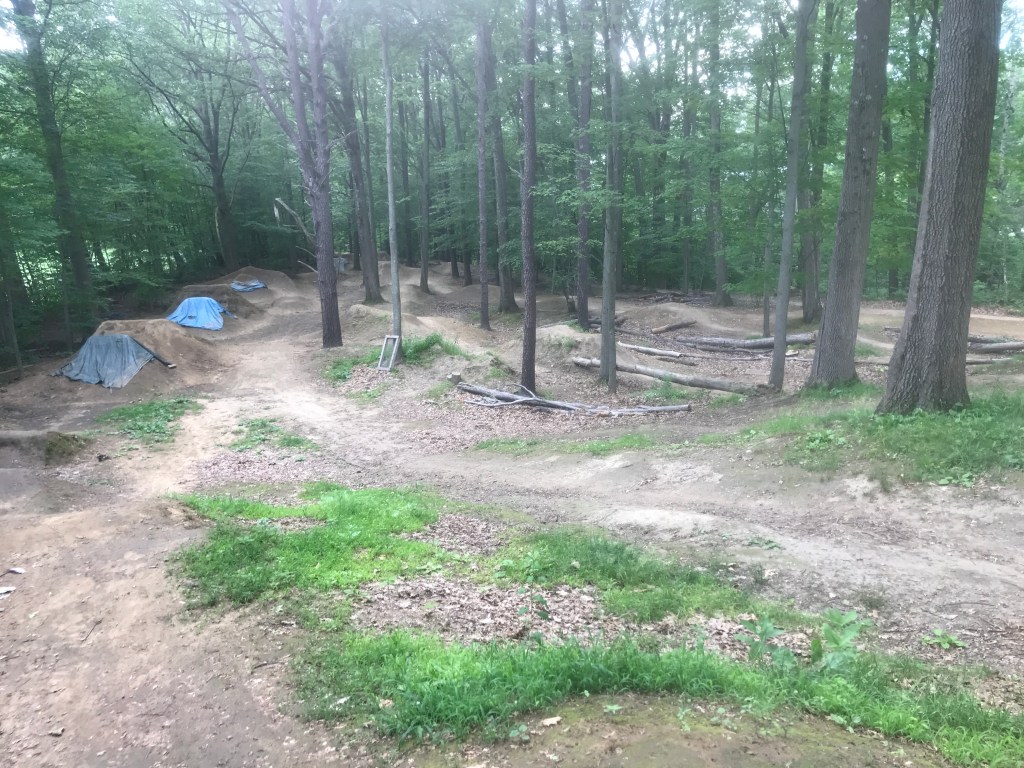
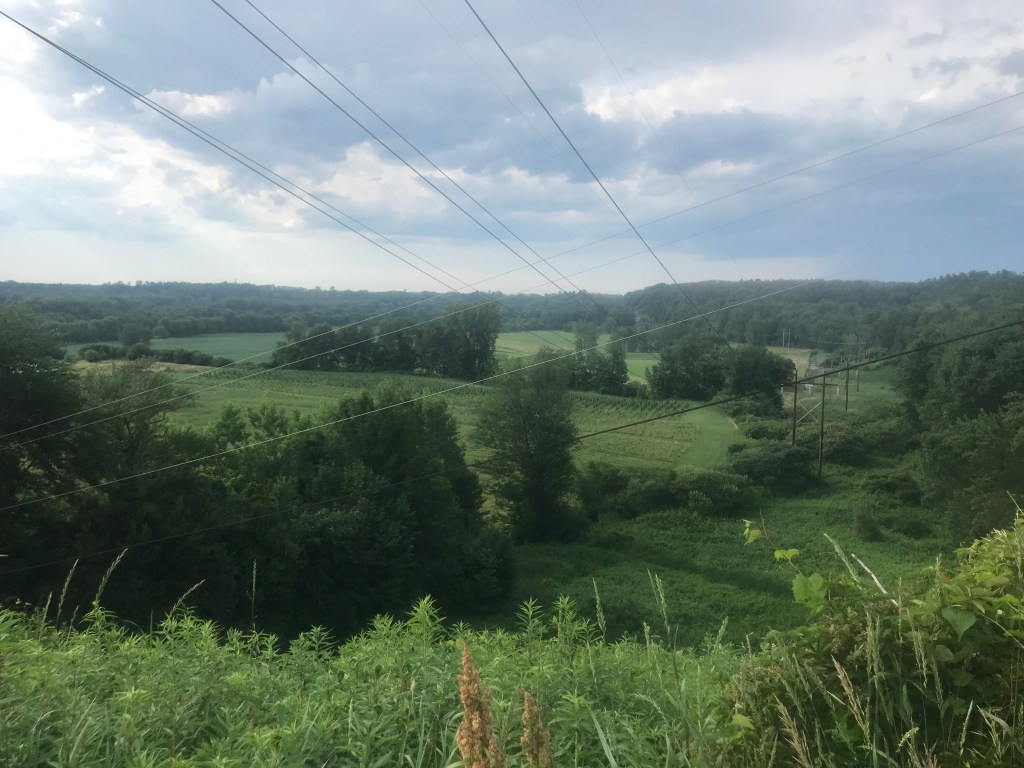
I continued out Maple Street towards the other side of the GlobalFoundries headquarters. The houses I was riding through were lovely victorians and other 19th and early 20th century styles. They all pre-dated the building boom that IBM brought in the late 50’s and into the 60’s (basically everything in purple on this old map). I soon came to Maple Street Park, a centerpiece of the Essex Junction department of Recreation and Parks. It consists of a number of sports fields, tennis courts, a skatepark, playground, public pool and as of about ten years ago a pump track and jump park. Seeing as how I was looking to wring out as many miles as possible out of this new city, I thought I’d add in a pump track loop. It wasn’t fast, and I steered far clear of the proper jumps, but it was a fun diversion and certainly the first actual dirt of the ride. I hopped back onto Maple Street and  made a left onto Maple Street Extension. This dead end allows access to a powerline corridor and the thin path carved into the sandy soil alluded to occasional use by bikers and walkers. It also represented the top of my biggest climb (about 150 feet) and my highest elevation of the day (485 feet). Essex Junction certainly isn’t Barre when it comes to city-limits climbing. I entered a wooded housing development of medium to large houses on Kiln Road. Much of the next part of my journey would be in neighborhoods like this. I didn’t take many photos, because honestly it’s not what excites me. It’s pleasant to look at, but cruising perfect pavement, bordered by too green lawns that roll out to McMansion-esque homes isn’t why I began this project. I did manage to find a small island of wildness though: in between Brickyard Road and  Rosewood Lane, there is a patch of woods that has been left semi-natural. I did my best to follow the many paths, walking some wet spots, but like many natural places when there are children nearby, it has its own magic and complexity that seems to intentionally confuse anyone who’s gotten too far along in years.

I continued to cruise around gentle neighborhood curves, passing over Indian Brook. This small stream had been dammed and also more broadly impacted by the area’s development. I eventually crossed Main Street (AKA Route 15) and took Athens Drive to enter yet another bucolically-named, multistory development via its backdoor. This one I did end up getting turned around a bit and took a right after the central pool instead of a left. Just past a thick wall of evergreens was the Tree Farm soccer fields. This huge complex consists of at least 15 fields and hosts local leagues and regional tournaments. It’s also host to a few scruffy trails and a VAST snowmobile corridor. I hopped on one of those and took it most of the way north parallelling the fields. I actually crossed into Essex town at this point and hightailed it back through the fields, taking a short bike path back out of the city to head over towards Route 2A.

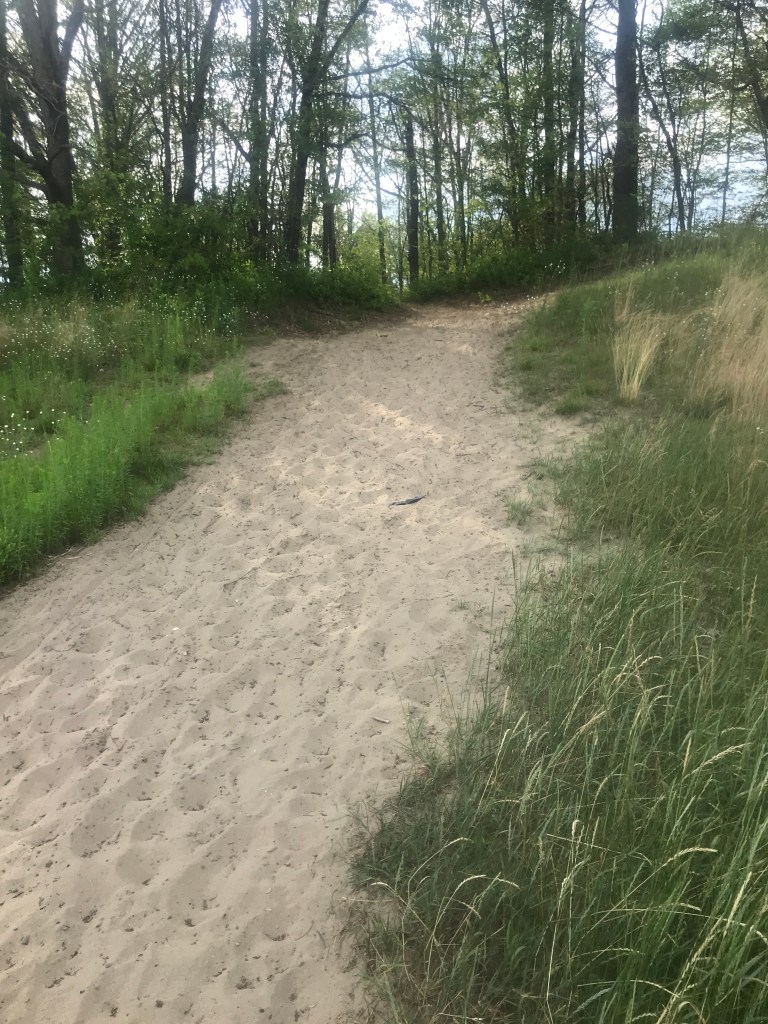
In order to get over to 2A, I took a fun little cut through that carried me across some railroad tracks. These carry freight and also the Vermonter Amtrak Line which runs down from Saint Albans to Washington DC and back every day. The station in Essex Junction is actually slated to get a much needed upgrade soon, with a line extension all the way to Montreal hopefully not too far behind. Being able to bike to a train station and take it to Montreal would be so fantastic! I followed the busy road south for about half a mile and made a right into the Champlain Valley Expo campus. This huge facility is the site of the annual Champlain Valley Fair every year. The Fair is best known for its throwback touring bands, figure-8 car race and being the last hoorah before school starts. I’ve actually never been to the fair (I much prefer the Addison Co. Field Days) but I did see Wilco at the Expo in 2012. It was also a major Covid vaccine site and where I’ve gotten all my shots. On this particular day, coming in from the back as it was, it was difficult to determine what was happening. I saw some trailers and thought maybe something involving horses was going on, but I never found any confirmation there or online. I didn’t go all the way down towards the cluster of buildings, but instead ducked into the woods up a steep sandy hill. There is a small series of trails that are between two neighborhoods. The developments are seemingly actually divided along the Essex town and Essex Junction line, one of the few spots I saw much of a  differentiation. I sped through another neighborhood of smaller midcentury homes and took another short cut through into Pearl Street Park. While technically in Essex Town, this small park has some nice amenities including a 9 basket, 18 tee disc golf course

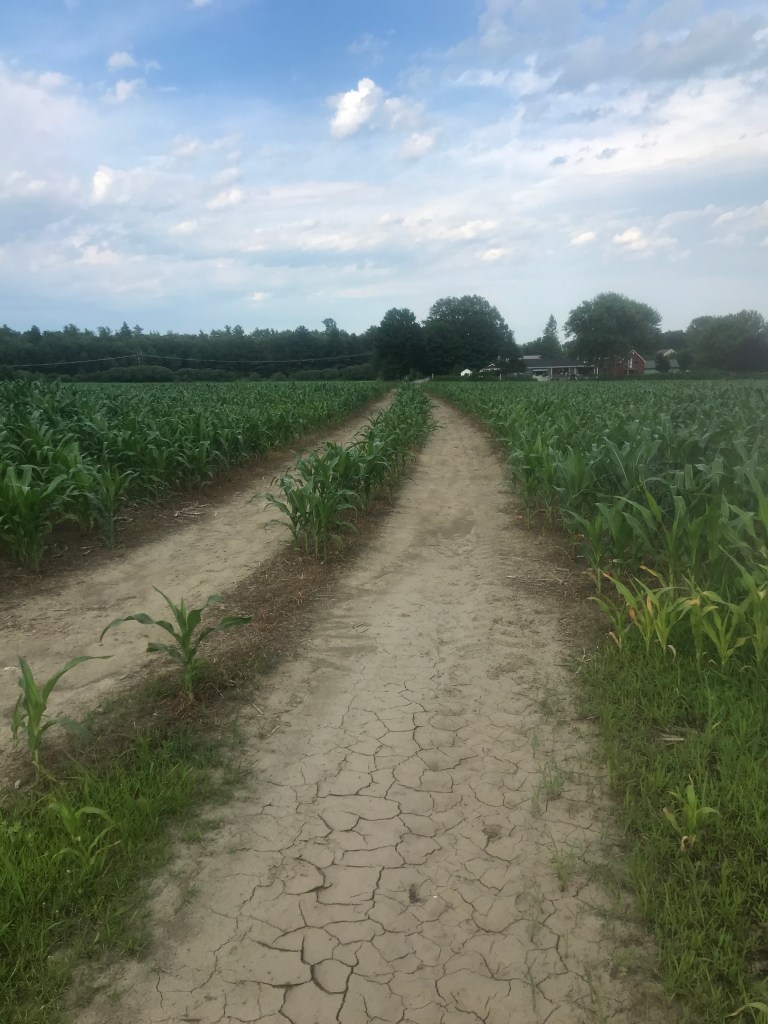
I crossed busy Pearl Street, down West Street past the community gardens and regional Department of Natural Resources office, turning onto Hiawatha Ave. I couldn’t confirm where the name came from (presumably the Native American Leader) but there is a school with the same name. I followed a short paved path between streets to head over to another trail that I thought I may be able to take. On the map, it showed as connecting, but it was a steep slope, so I wasn’t sure. I hunted back and forth, but didn’t find anything, and instead took Wilkinson Drive to South Street. Very quickly, the scene changed from suburban to agricultural. The Whitcomb Farm is one of several farms that used to dot Essex. The town still has some, but it’s certainly the last operation of its kind in the Junction. Their homestead is relatively intact and the surrounding lands have been conserved by the Vermont Land Trust, so it will always be in farming. Interestingly enough, there is a public right-of-way that bisects much of their cropland. I took a left onto this rough path called Whitcomb Road (no sign to speak of though) and followed it though some sprouting corn. It would certainly be knee high by the fourth of July, as the saying goes. It stayed double track for its entire length and towards the end even had corn growing up in the middle strip. It was an odd feeling being in a place that felt so relatively remote. I could still hear planes, but birdsong and other natural sensations certainly dominated. 

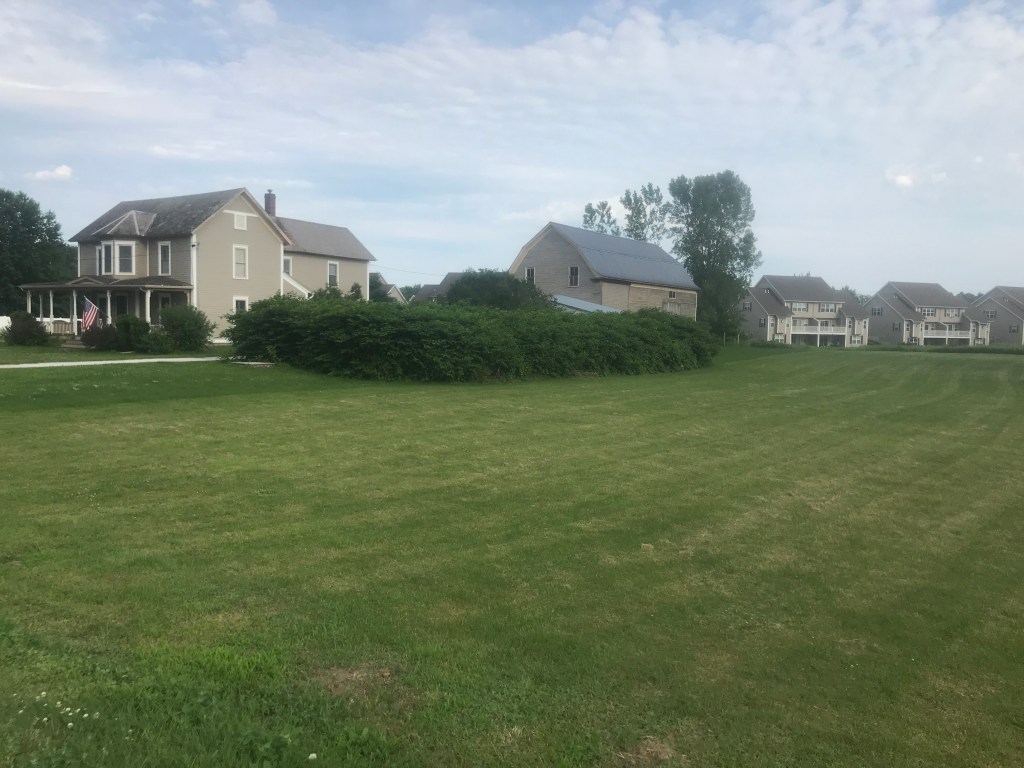
I pulled onto Cascade Street and the transition back to suburban development was made clear again by an old barn and farmhouse standing, faded but proud, with a line of identical condos looming behind. Further down the street, I passed yet another barn, this one in further disuse, but just across the street was a sign commanding “-Slow- Turtle Crossing”. So maybe, despite the growth and sprawl that’s happened, people and the land have maybe reached an understanding. I continued down the street past a park, and turned again onto Park Street, just above the dam on the Winooski. Interestingly, this dam is certified as “Low Impact” which I’d never heard of, but seems pretty legit. I turned right onto Mill Street, getting one last view of the Winooski above the dam and getting back to the car as the sun began to weaken. It was strange only being in the saddle a little over an hour for one of these rides, but this wasn’t like any other 251 ride. I’m happy to have checked another off the list and gotten up to 186! I’ll soon be within striking distance and could finish this year if I really focus. I’m just happy I’m not doing them one by one. Maybe that will be my next great challenge…

The Details:

https://www.strava.com/activities/7399693099

https://ayvri.com/scene/gdkz16el5z/cl5ir7w9j00013b6ur1kab9pu

Ride 31: Saint Johnsbury, Kirby, Victory, Granby, East Haven, Guildhall, Lunenburg, Concord & Waterford

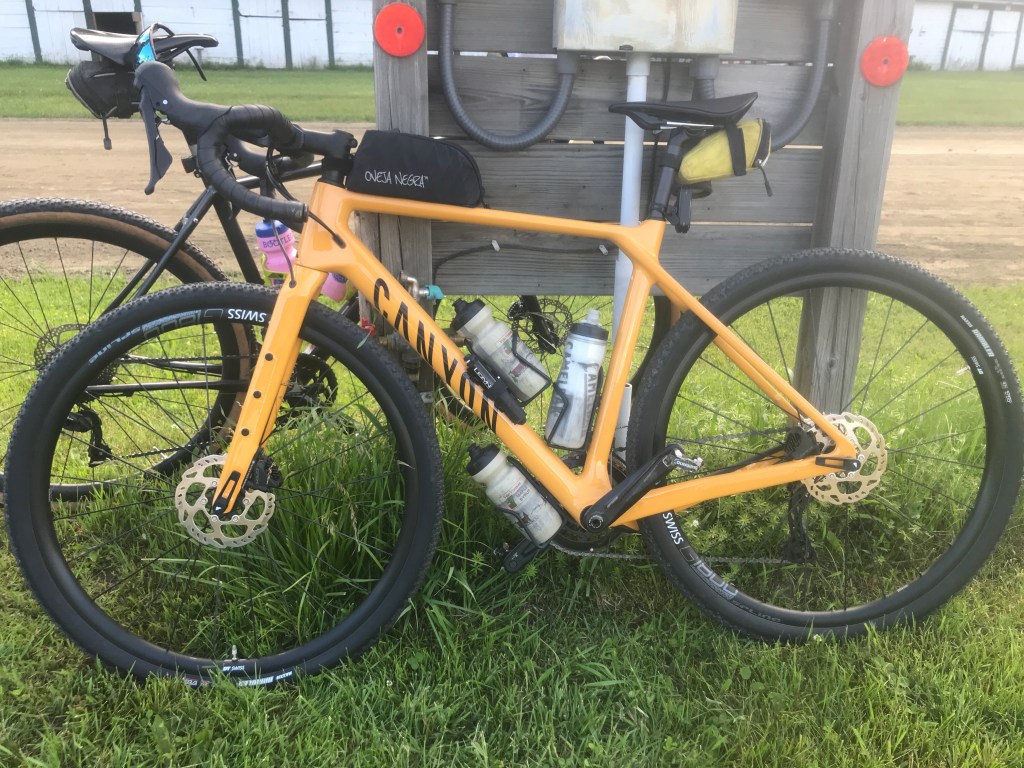
When I began this project, I knew I always wanted to incorporate some overnights into the routes. I’ve done some light touring on my Jamis touring bike, but that was using more of a classic set-up (rear panniers) as opposed to what these routes would require (full-on bikepacking). Bag and rack-wise, I ended up going with the following:

Also, since I’d recently gotten the new bike, I wanted to see what it could do. However, being new to some of my bags and new to riding this bike loaded, I didn’t want to go crazy…well, too crazy. 

I decided to go with an 87 mile route I’d do over two days. The first would be relatively short, but have a fair bit of climbing (5,220 feet over 34 miles). It would begin out of Saint Johnsbury and enter Essex County, the Northeast-est of the Northeast Kingdom counties. After getting everything packed up and having done a shakeout ride, I got up early on a Saturday and drove over to Saint J. Being the metropolitan hub of the NEK, Saint Johnsbury is fairly bustling. There was a farmer’s market going on and plenty of folks about. The town (yes it’s a town, not a city) grew somewhat out of its geography: the Moose and Passumpsic rivers meet right downtown, and it’s located very near to the confluence of the Passumpsic and Connecticut. However, it was really manufacturing that put it on the map. In 1830, Thaddeus Fairbanks invented a popular platform scale and (along with his brother Erastus) began a company that was based in Vermont until the 1970’s. He and his family were very philanthropically-inclined and gave to many causes including schools and libraries. One major vestige of that legacy is the Fairbanks Museum and Planetarium, begun by Erastus’s son Franklin Fairbanks in 1890 is one the best-known attractions in the area. I especially like it, because it’s the home to the “Eye on the Sky” crew who deliver my beloved daily weather forecast and almanac. 

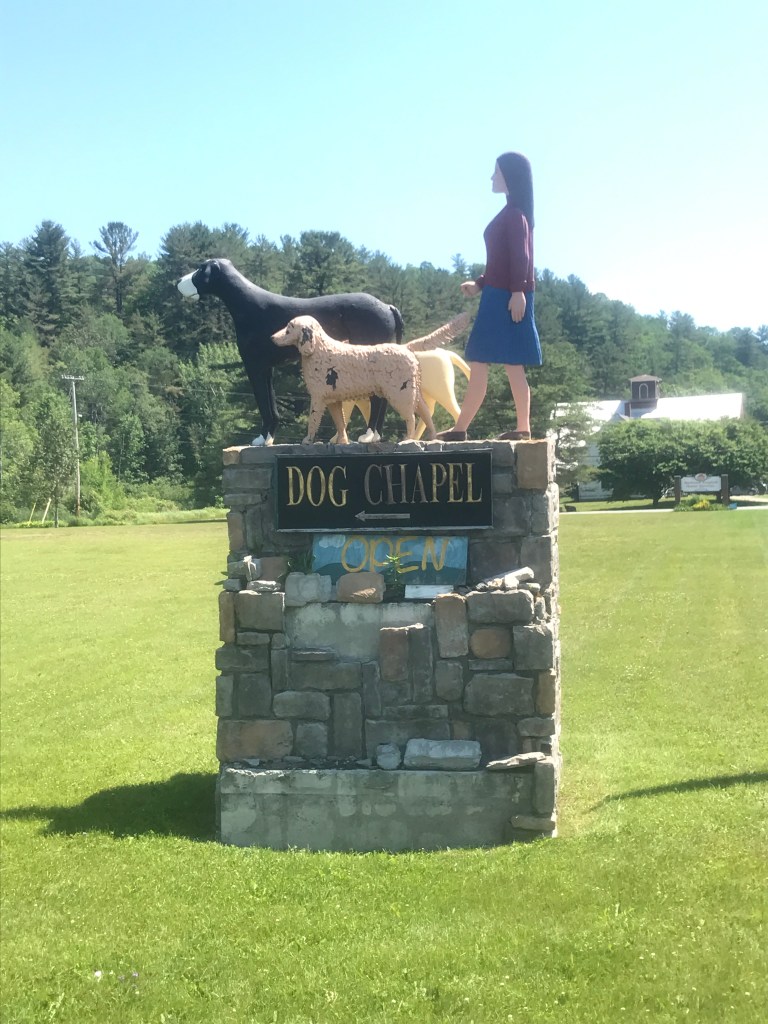
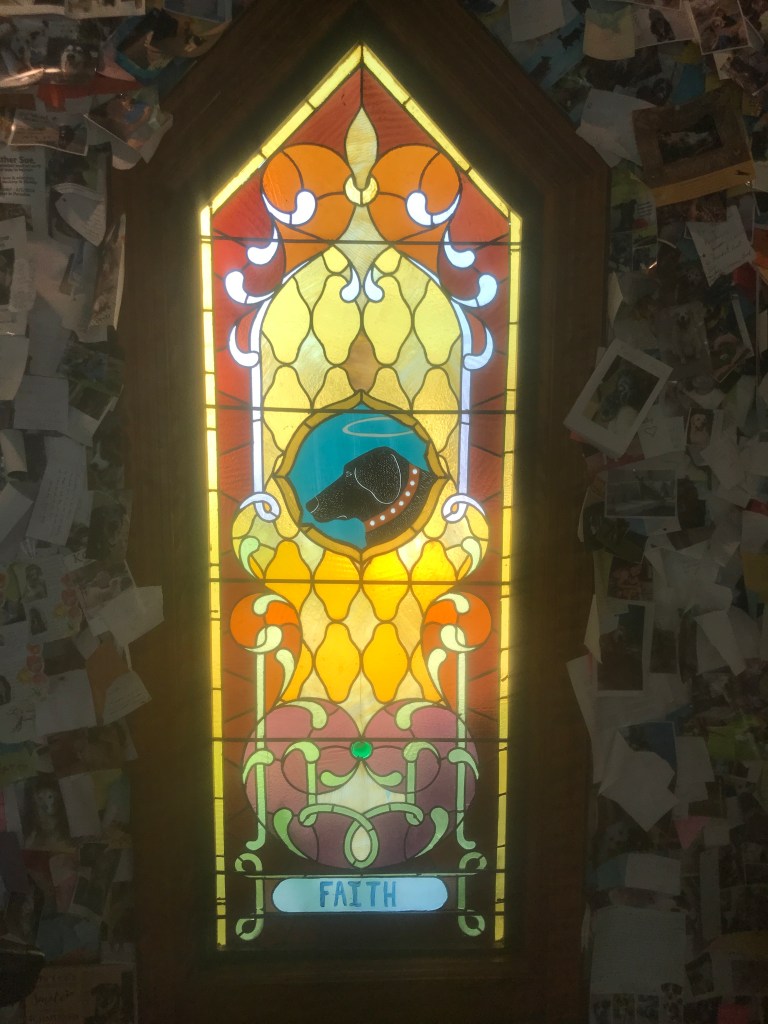
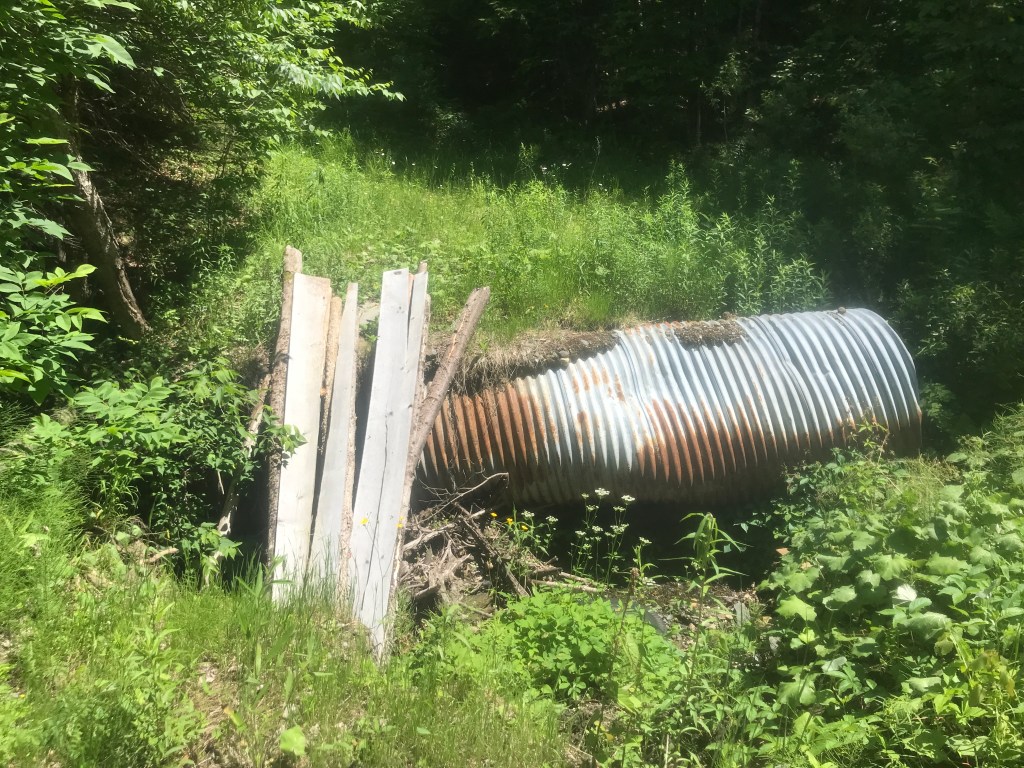
The town is certainly getting a bit hipper, and now boasts multiple trendy bars and cafes. I knew food stops would be virtually nonexistent on day one, so I was sure to swing by Boule Barkey and pick up a panini and spinach tart to store in my bag. From there, I headed east out of town on Route 2. After passing pancake, syrup and dressing producer, Maple Grove Farms, I turned onto Spaulding Road to make my way up to Dog Mountain. This 150 acre property was the brainchild of Gwen and Stephen Huneck. Stephen was an incredibly talented painter and sculptor, with much of his work focusing on our canine friends. They bought the property in the mid-90’s and turned the barn into a studio space. They built the chapel and opened it to the public in 2000 as a place for dogs to be remembered and celebrated. Sadly, in 2010 after needing to lay off most of his employees, Stephen shot and killed himself. And three years later, Gwen died via suicide as well. The property has continued under the management of “Friends of Dog Mountain”, but it’s always been both a place of both joy and melancholy to me. It was nice to stop in and the person working that day was kind enough to top off my water bottle. It was hot and I knew keeping enough water on the bike would be tricky. I had three regular bottles (one storing extra supplies, not water) and a 1.5 liter Nalgene bottle, but I’d be drinking a ton. There were more lovely views on Spaulding Hill and I soon came to a Class 4 section I wasn’t so sure about. Mt Pisgah and Chesterfield Hollow Roads look like they should connect, but it was a gamble. When I arrived at end and of Mt Pisgah, there was a washed out culvert, but luckily I found a snowmobile trail back down the road that connected. I followed it a bit, but I eventually realized I wasn’t actually on the old road bed. I was trending too far north, and since I’d already been pushing my bike a fair bit, I did a little bush whacking through a camp’s back yard and eventually made my way to Chesterfield Hollow. I’d certainly recommend finding a different way through if you want to try this route.

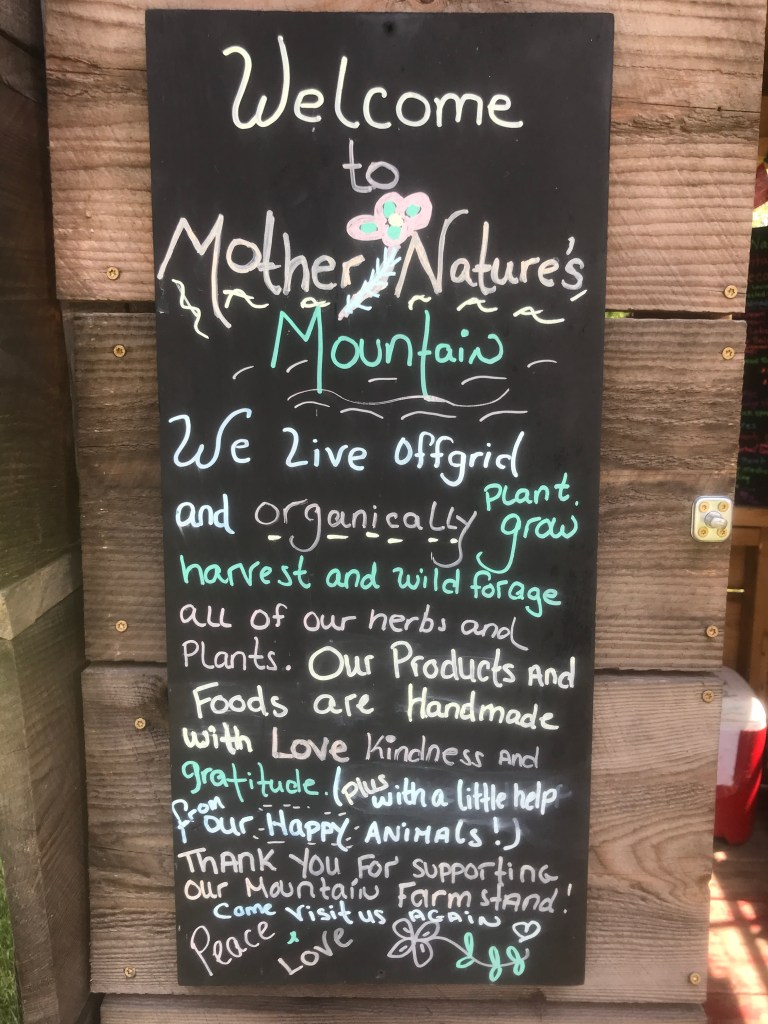
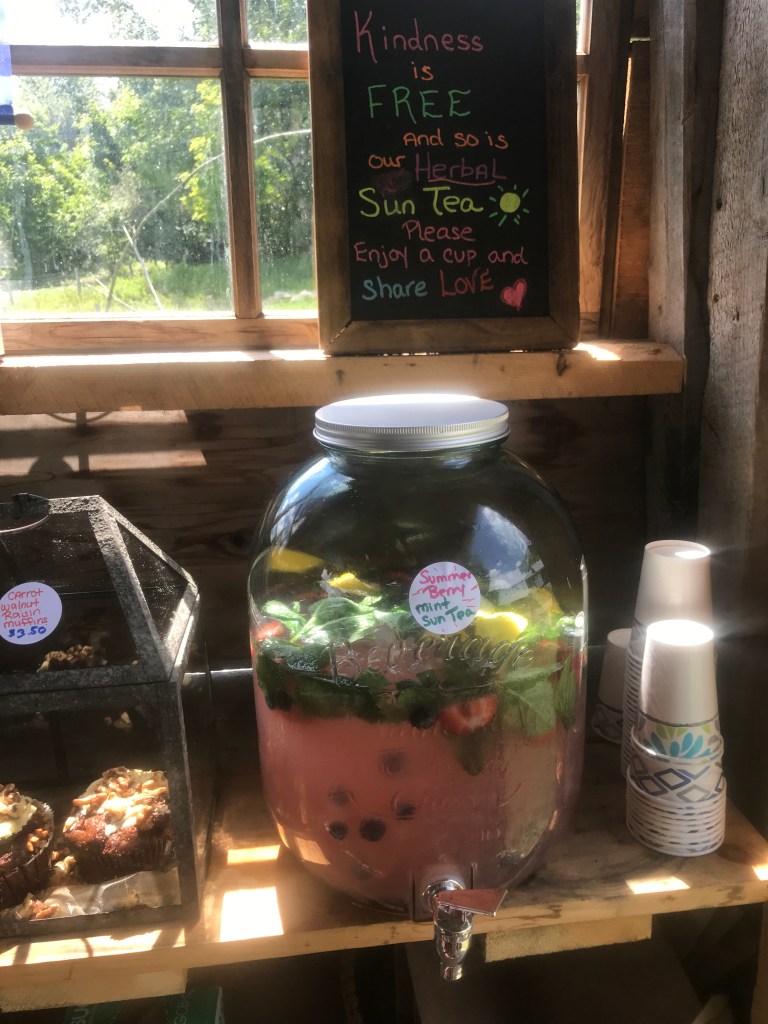
I eventually made my way into Kirby and stopped along a road called Willoughby View Road. It wasn’t false advertising: the views over towards the lake and the towns we covered on Ride 25, were fantastic. I stopped and ate my panini, taking my first major break of the day. I’d covered about half the milage, but had much more climbing ahead. Kirby doesn’t have a village and only 575 residents, but its mix of farms and wild remonteness was very nice to ride through. Also, interestingly enough, the town was originally granted in 1790 to Roswell Hopkins who was “Clerk of the House of Representatives and Secretary of State of Vermont, and he accepted the land grant in lieu of cash as payment for his government service.” Not a bad way to get paid. I turned onto Kirby Mountain Road, continuing the steep climb on Victory Road, which is seasonally closed. It became double track and is clearly a popular snowmobile route in the winter. After beginning to descend, the road narrowed a bit more and I came upon what seemed to be an aberration: Mother Nature’s Mountain farmstand. I later learned that it’s run by a couple named Flower and Jerry and they make tinctures, soaps and other natural products. They also had a solid selection of baked goods and some DELICIOUS, ICE COLD and FREE, strawberry, blueberry, mint sun tea. Seriously, it was a life saver. I was getting low on water again, and though I’d been mixing in Gatorade powder, this was obviously lightyears better. I decided that if I filled my bottles, there’d still be some left and I could pay them for it, so I filled away. 

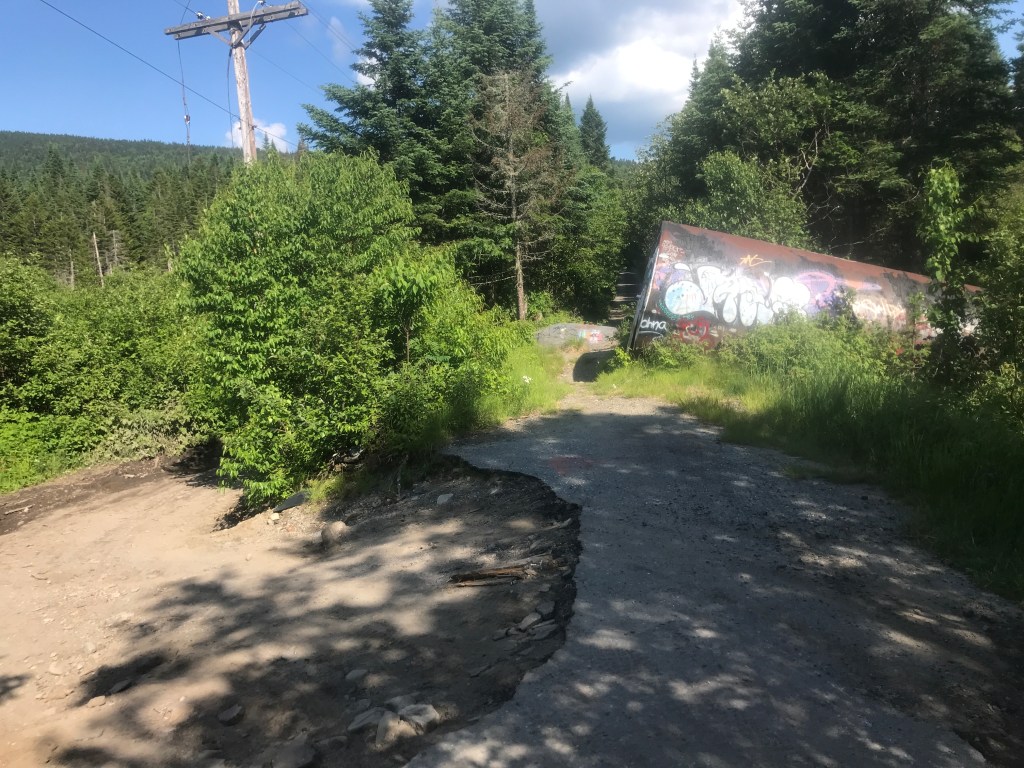
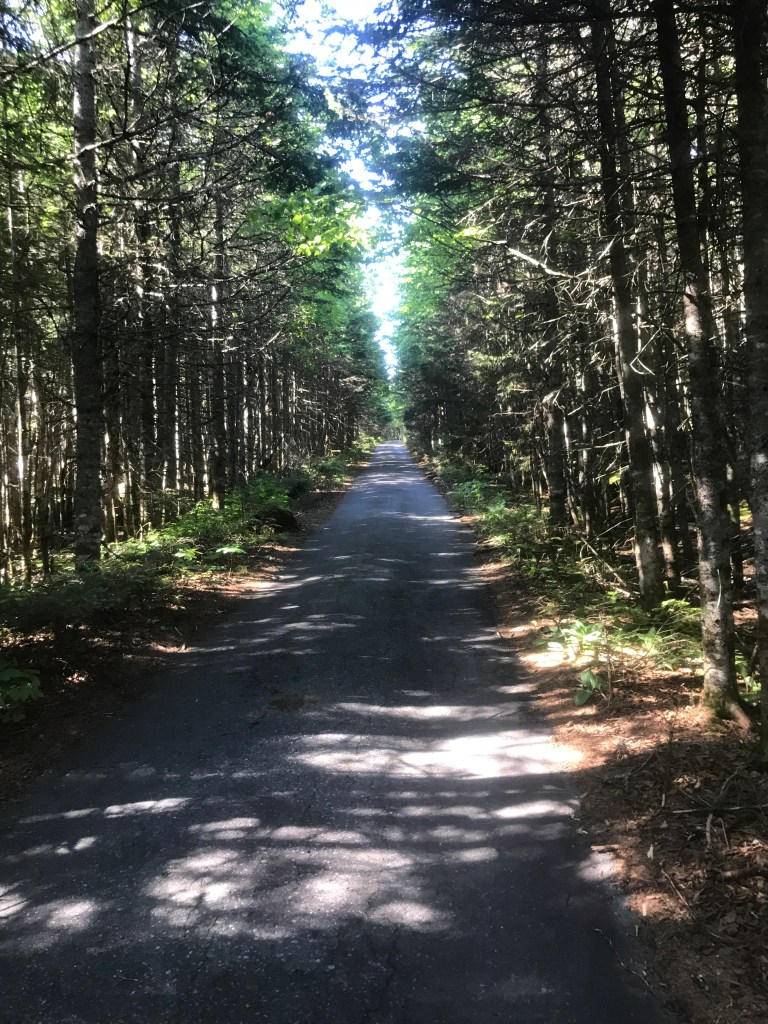
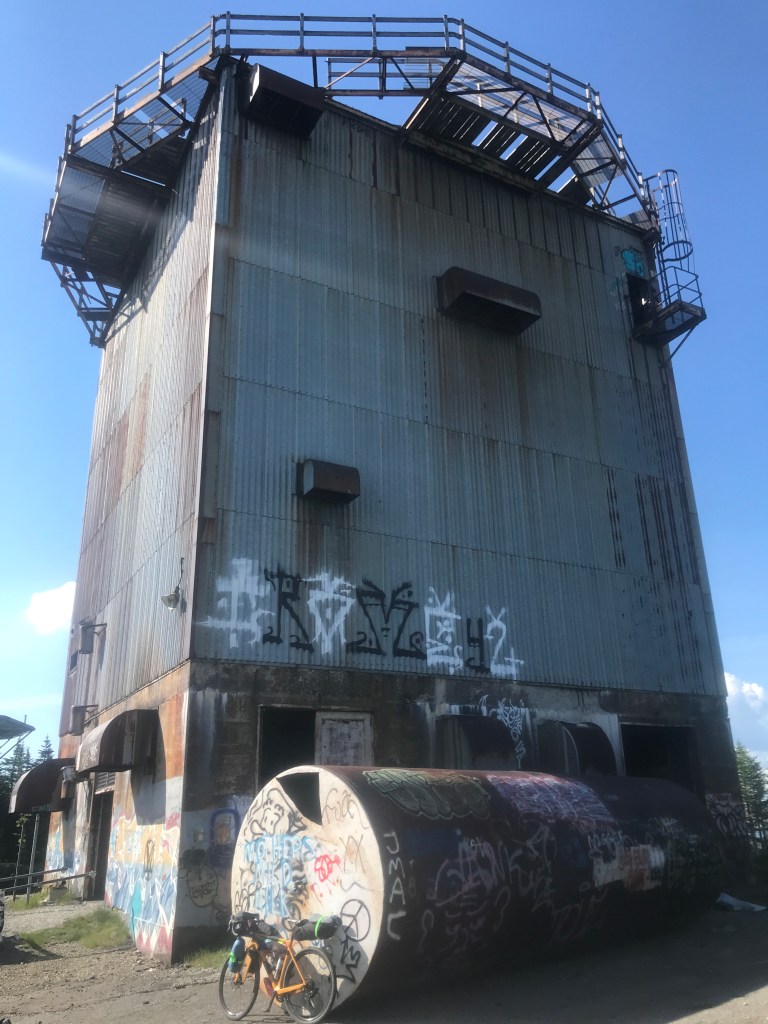
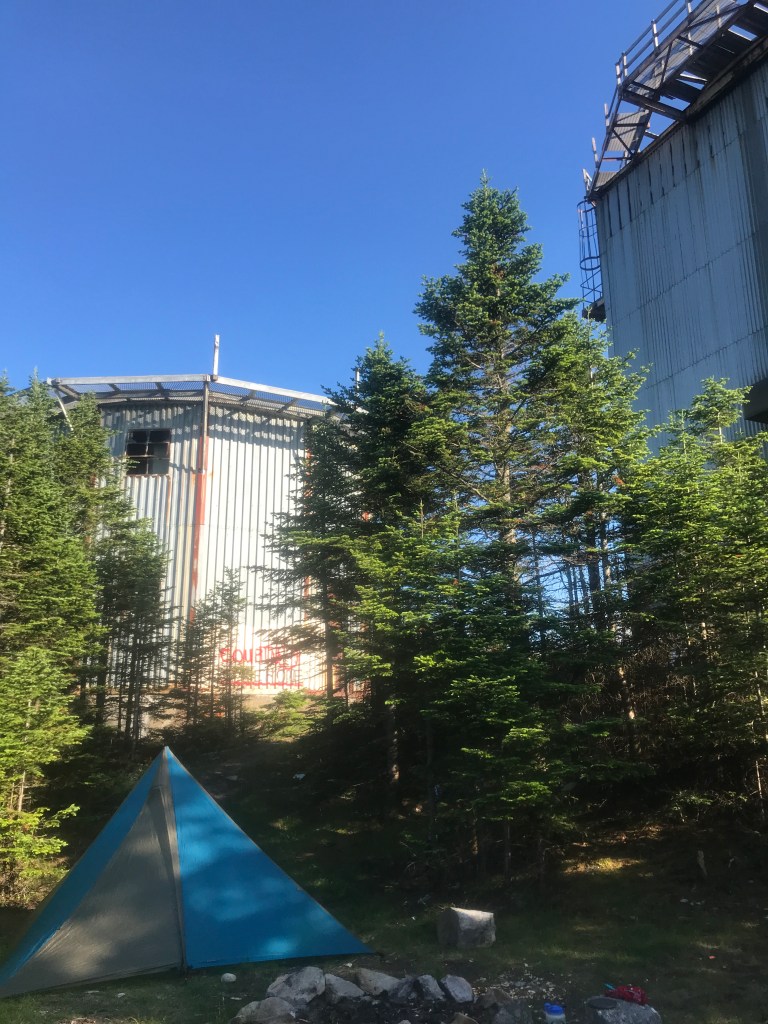
I continued east, catching my first glimpse of East Mountain, where I’d be camping. I was now in Victory, an even tinier town (population 70) that, in 1963, was one of the last two towns in Vermont to be connected to the power grid. I’ve actually ridden in Victory before. There was a mountain bike ride called the Circumburke that I rode in 2014 and 2015 which utilized some single track in town that’s on private land. The trails seem to be in some sort of red tape limbo relating to Act 250, but are still currently accessible for single rider, but not for the Circumburke. I entered the flatness of Victory Basin and followed the upper reaches of the Moose River for a while. I made a stop to sit by the water for a bit, but generally kept plugging away. After leaving the Wildlife Management Area, there were a few houses/camps and I made a pit stop at the Victory town offices. I topped off my bottles and steeled myself for the long climb up Radar Road. I entered the town of Granby and also crossed onto private timberlands that are publicly accessible, through an interesting partnership with multiple stakeholders, under the umbrella called “Kingdom Heritage Lands”. There weren’t many vehicles going on these roads other than 4×4 enthusiasts and logging trucks, so it was fairly quiet. As the road tipped up, it got more and more rough. I had a few cars pass me in each direction, most of them pretty rugged, but I did end up seeing a right-hand drive Japanese microvan which I’m shocked made it. I had to hike a few of the steeper bits, but all of a sudden I reached pavement. That magical change came about thanks to the US Military being who they are. I’d arrived at the barracks portion of the former Lyndonville Airforce Station. I’ll talk more about it below, but the instillation had two main sections: a lower base, part way up East Mountain, where servicemen lived. And and an upper base at the top, where the radar towers and other technical equipment was. I was happy to have the pavement ahead of me and besides a small detour around a large fuel tank of some kind, the road was amazingly smooth all the way up. It was also, however, steep. I again needed to hike a few spots, but after a lot of huffing and puffing, I made it to my camping spot for the evening!

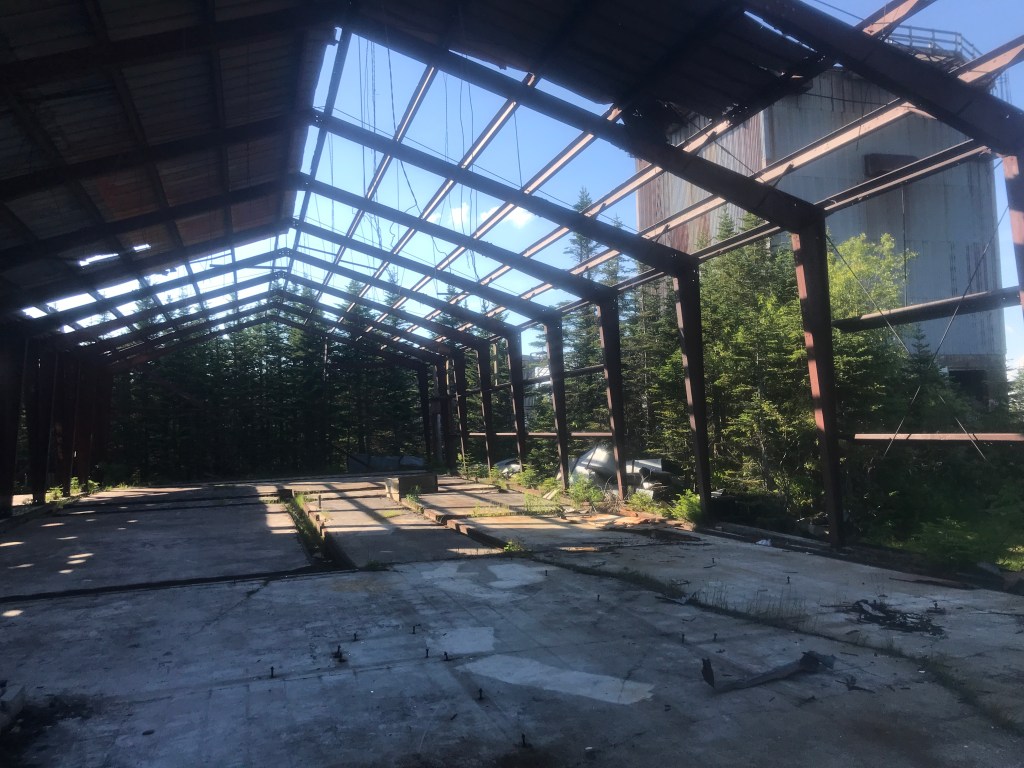
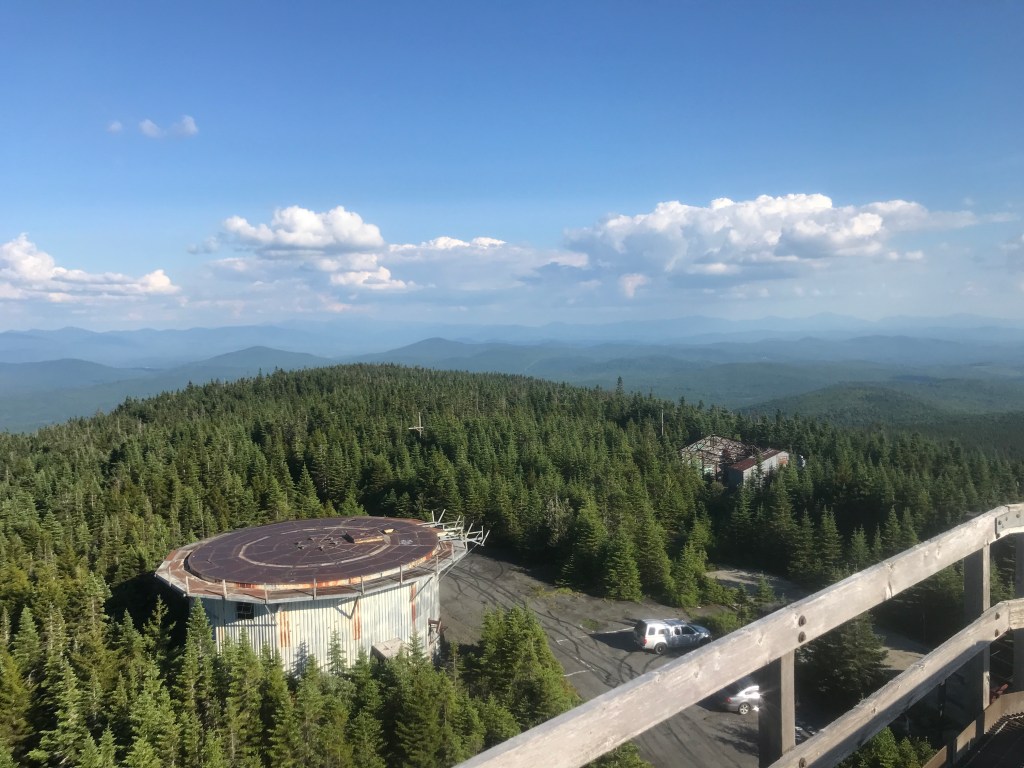
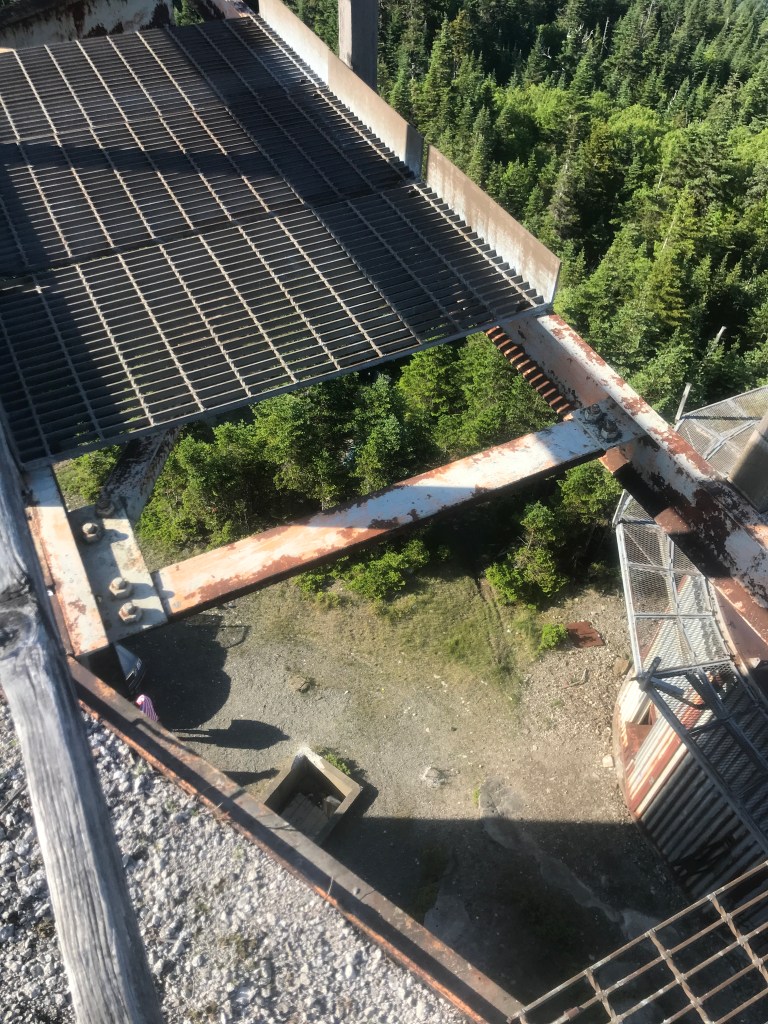
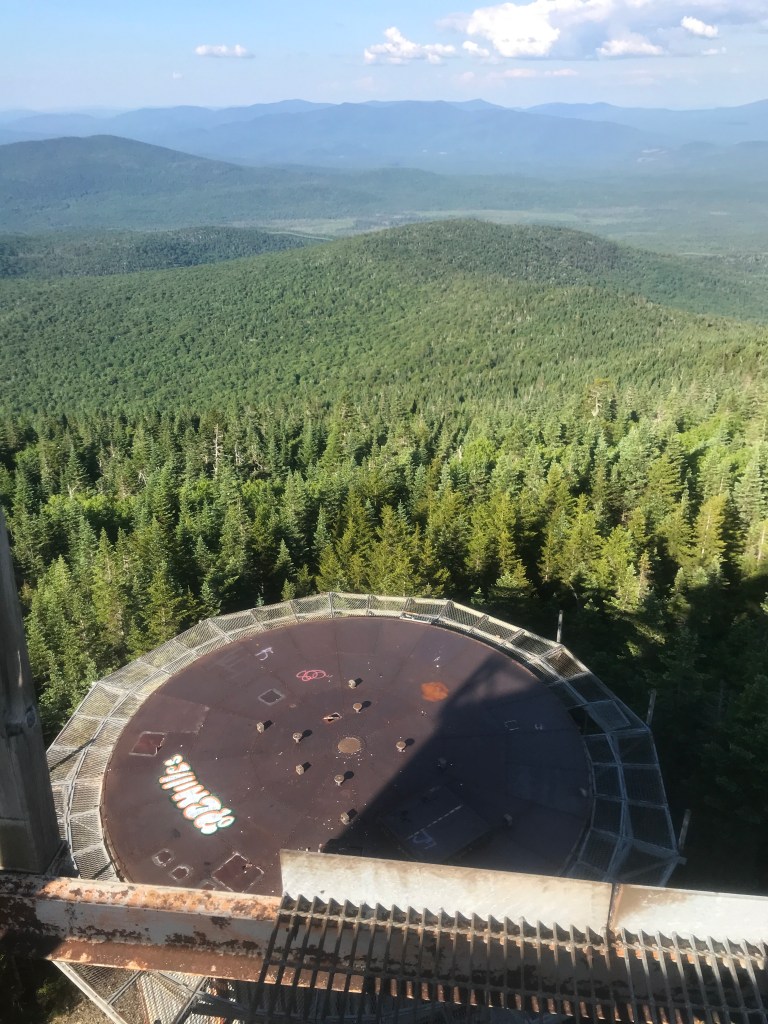
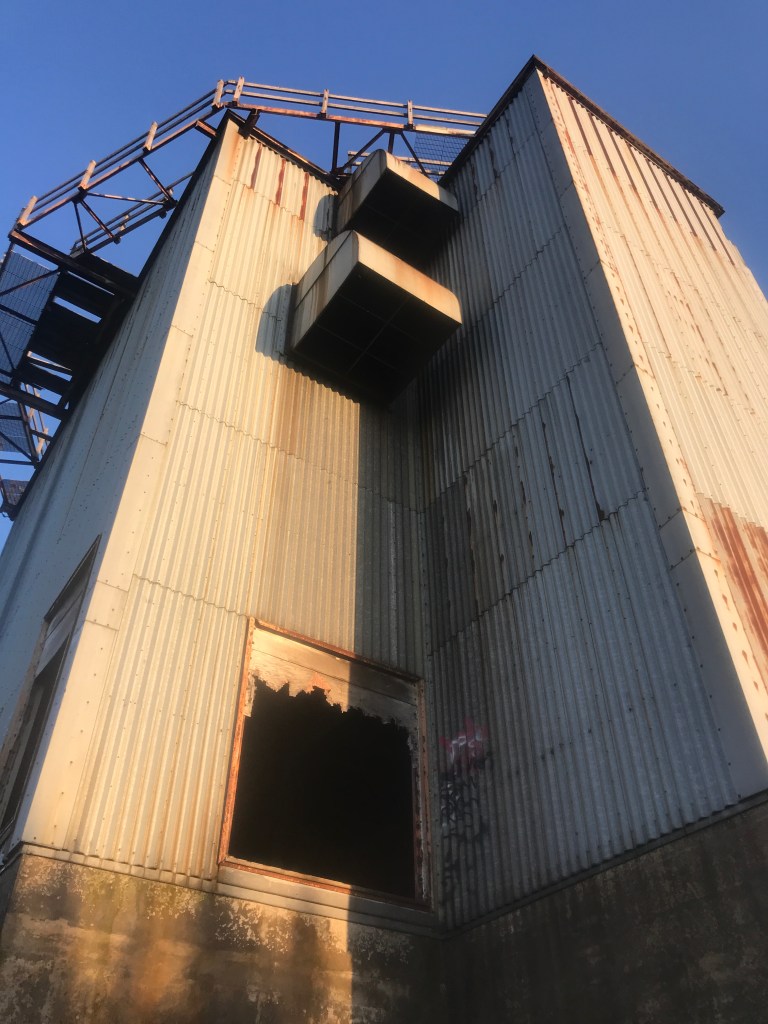
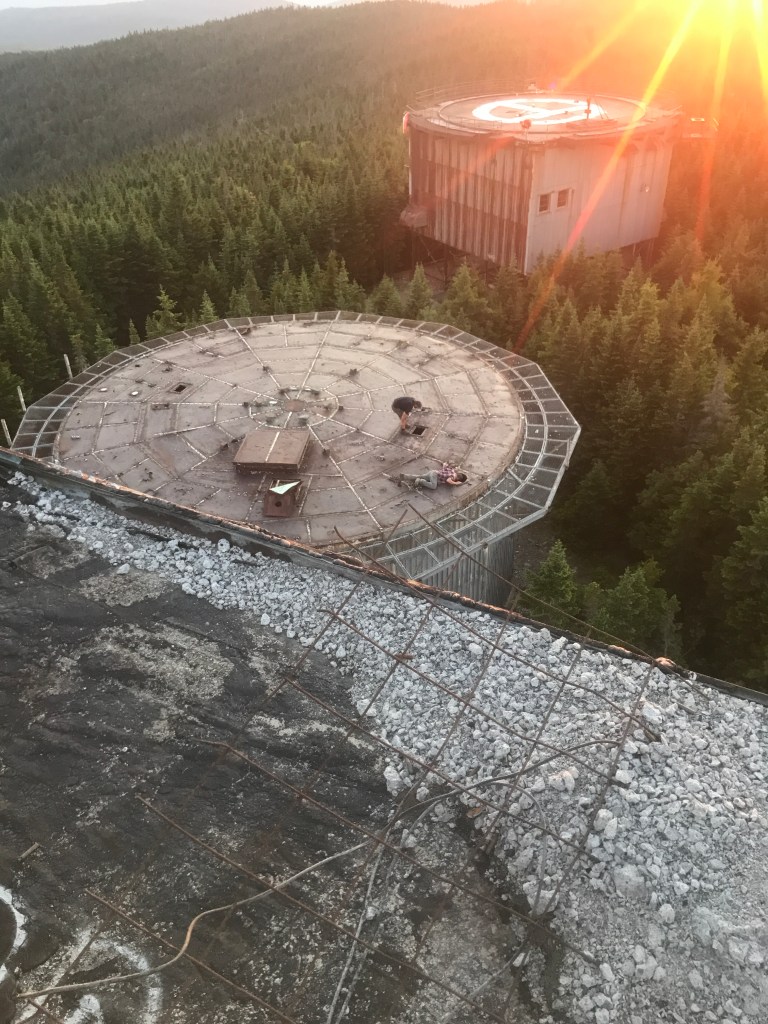
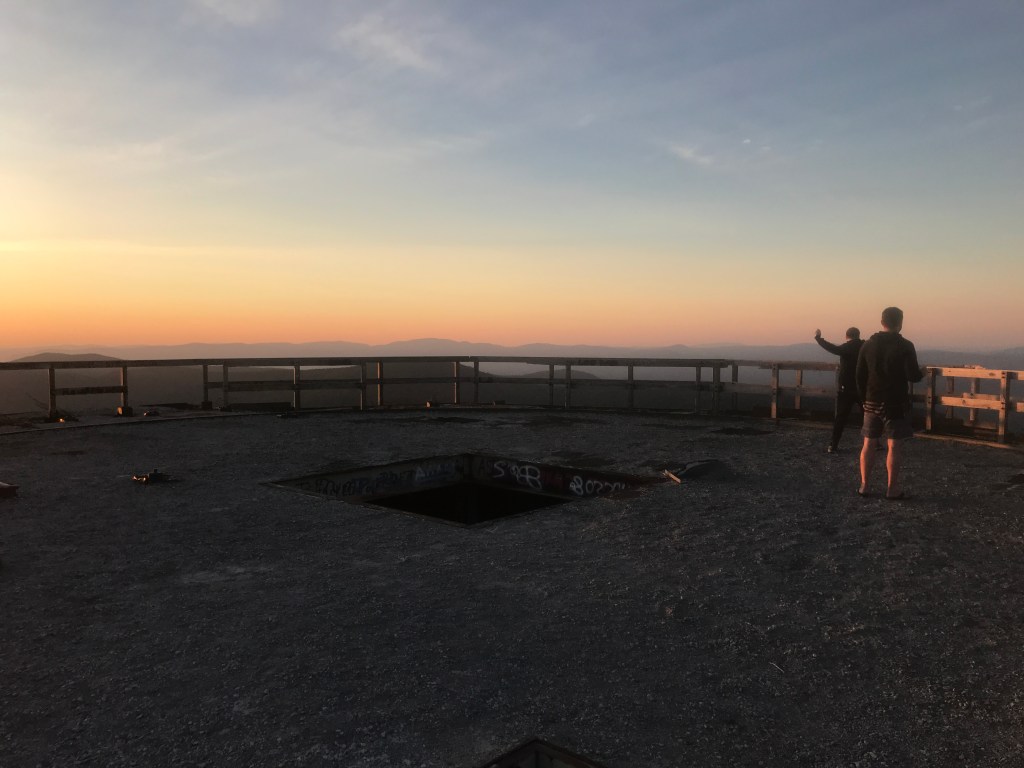
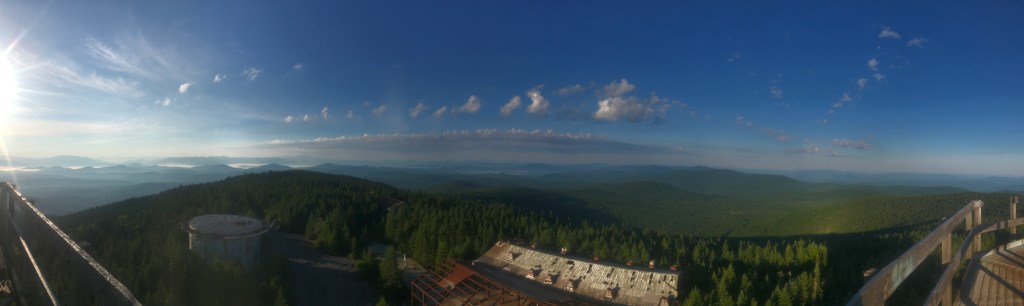
I began to poke around and scout out a place to pitch my tent. I quickly ran into a guy named Ben who’d been up there since the evening before with a couple of buddies. They’d all gone to UVM, and drove a new Bronco, some other SUV truck thingy and a Ducati motorcycle with slick tires up there for a guys weekend. Despite the warning barks of their dog Leo, they didn’t mind having a neighbor (and neither did Leo, once you gave him some pets) so I quickly set up my tent. I explored a bit but didn’t yet go into any of the five radar towers. There are a few other buildings but it’s pretty well overgrown. It’s not super rough, but there’s certainly garbage and graffiti up there. You can get a good sense of it from the various youtube compilations of artsy, spooky drone flights and explorer-types roughing it. If you really want to delve deep into the history of the base, I’d recommend reading this awesome article from Obscure Vermont. However, to put it succinctly, the base was build between 1954 and 1956 for $21 million. The Cold War was blazing hot and it was designed detect any sort of inbound Soviet strike. Around 174 men lived in the barracks and operated and maintained the equipment housed on the top of the mountain. Technology quickly outpaced the instillation and it was shuttered in 1963. It’s now privately owned by Matthew Rubin and he’s happy to allow people up there. “There’s nothing to steal. If you’re up there and want to take some scrap metal, please do!” he said in a recent Seven Days article. I’d best describe it as a post-apocalyptic state park. You see people relaxing, doing their own thing, but there are more folks carrying guns and there’s more drinking too. Not that everyone was wasted. The UVM guys graciously showed me how to access the top of the highest (and sturdiest) tower. It’s built mainly of concrete, unlike some of the smaller ones, which are mainly metal and rusting out. I spent some time up top, taking in the panoramic 360 view from the highest mountain in the Northeast Kingdom. I ate some dinner while battling the bugs and laid down a bit to wait for the sunset. At one point I hear some folks shooting and on the third and fouth *BANGS* I also heard a whirring like a drone, but it was short-lived. It turned out those were ricochets. They stopped shooting for the night after that, but it was certainly the sketchiest moment on the ride. I went up for more amazing views at sunset, then went to bed sleeping fairly well. At one point I was awoken by some people who had clearly driven up there after dark and were drinking. At least one guy was from Maine, because he kept saying “I love it he-yuh” with such a strong accent, I thought he was joking. I woke up in the morning and they were nowhere to be found. I went up for one last look from the tower, ate some oatmeal and packed up to head down.

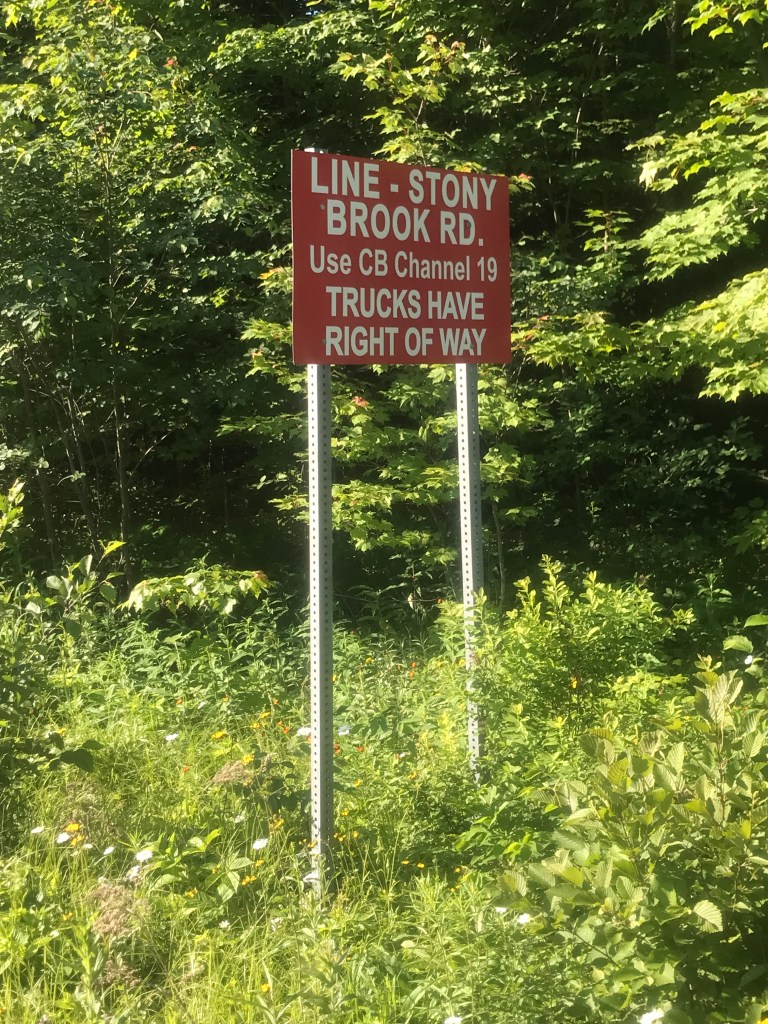
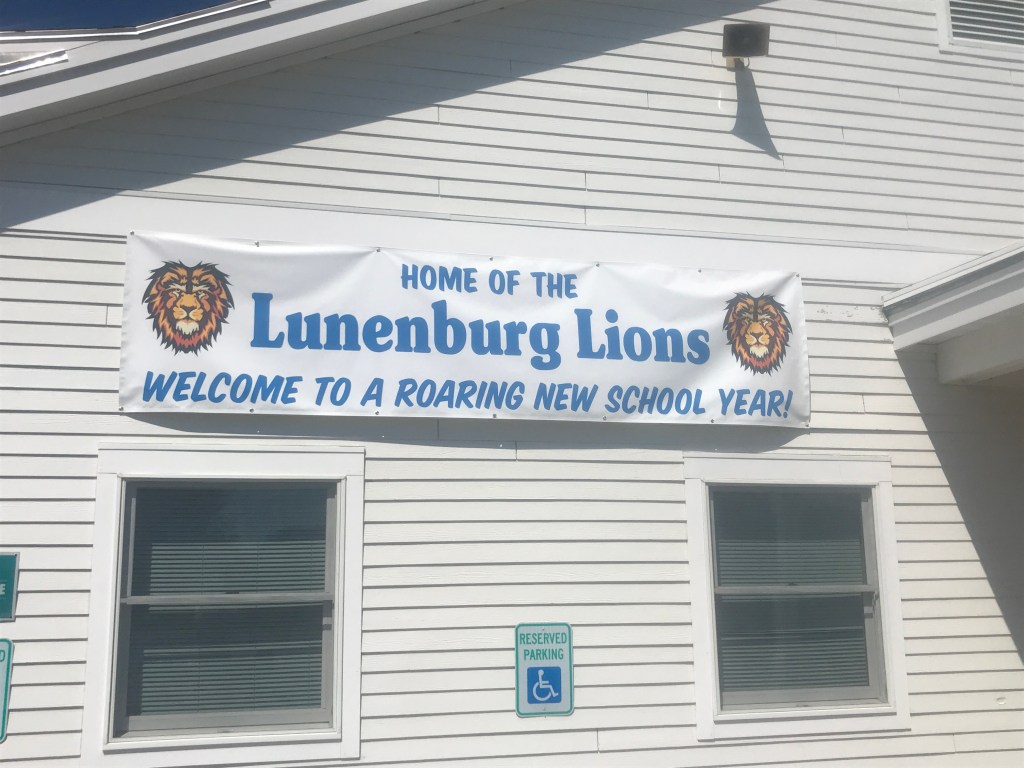
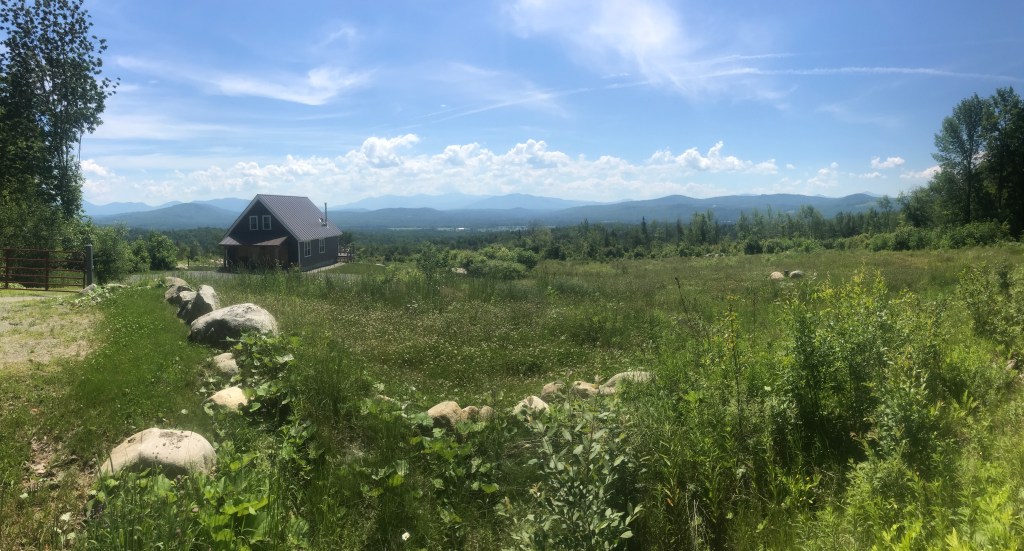
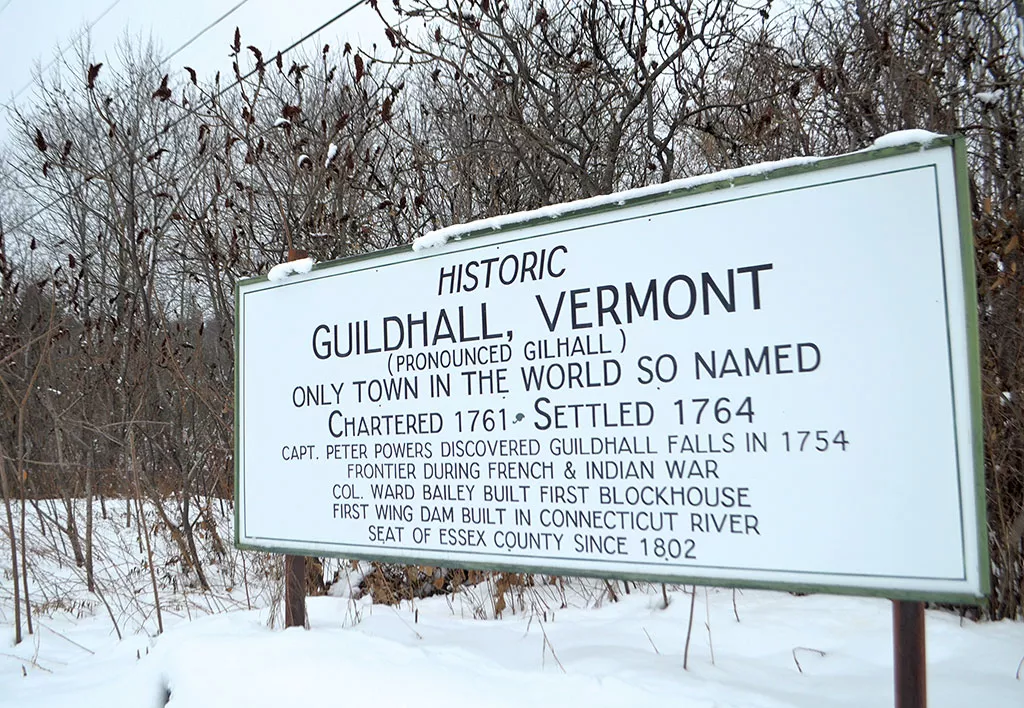
The ride down off of East Mountain was amazing. It was a bit chilly, but a sustained 6 mile downhill isn’t a bad way to start a ride. I eventually ended my back-tracking and was on new roads. This section was obviously used predominantly by logging trucks, to the point where there was a sign explaining which CB channel to use and that trucks had the right of way. It was these sort of roads for the next roughly ten miles. The scenery wasn’t anything too spectacular, but the sense of isolation was palpable. Despite being on a well maintained road, you’re way out there. I slid around a gate at one point and the road was more akin to a VAST trail, but overall it was more of the same until I reached Granby Road. I’d been in Granby pretty much the whole time on these roads, but I finally was passed by my first car of the day. There are only 81 people who live in Granby and there’s not much of a village, but it does have some history that folks are keeping alive. I worked my way through Guildhall (“the only town in the world so named”), yet another small town (population 262) that has a bit more going on down by Route 2 and the Connecticut River. The town has been a poster child of the lack of children in some parts of the state, but I just enjoyed it for the continued quiet roads, including a lovely Class 4 section between Fellows and Lamotte Roads. I crossed into Lunenburg and got some far flung views over to the White Mountains. The cruise down into town was especially lovely. I’d actually been to Lunenburg a few years before when I was doing professional development trainings. A colleague and I made the long drive out there to the Elementary School to teach about Social and Emotional Learning. There’s a small village on a rise and a newly reopened store, where I was happy to refill bottles and buy a few snacks. As I was sitting there enjoying the shade, amazingly enough I saw a Bronco drive by and it was Ben, from the top of East Mountain!

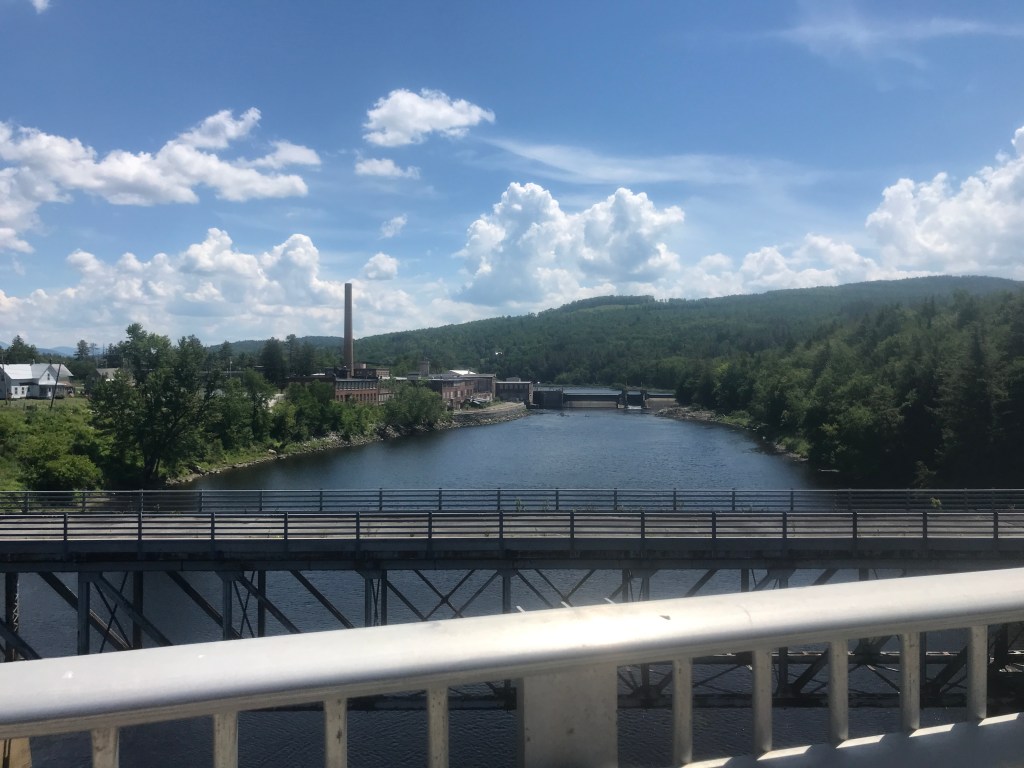
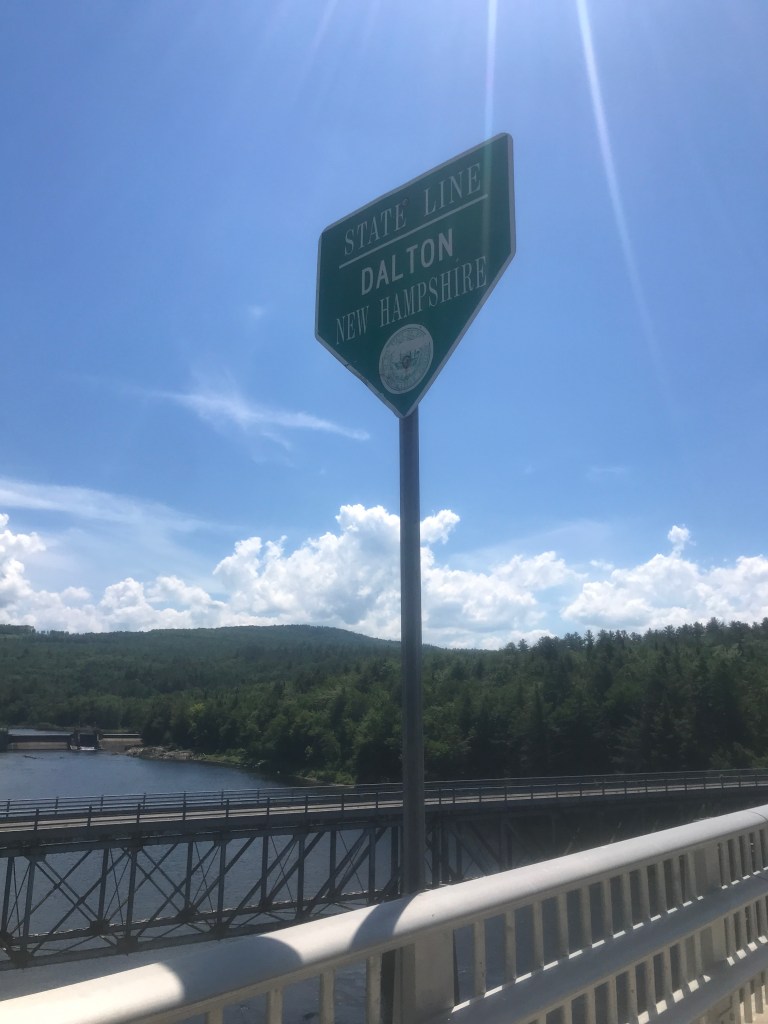
I took Route 2 west for less than a mile, had a brief climb up Baptist Hill, then had a good long cruise down to the village of Gilman. The village has a complex history involving power generation and paper mills and in fact used to be called Fitzdale. In the mid 1910’s Isaac Gilman began amassing controlling interest in the few companies that had mills in the village and soon after his name was applied to the whole area. Today the area is a hydroelectric dam and the mill buildings appear to be unused. Being right on the Connecticut River, and having crossed ever so slightly into New York during Ride 22, I decided to pop over into New Hampshire and buy a sandwich. I think I’ll try to pop into Massachusetts and Quebec when I’m doing adjoining town, to complete the set. The Dalton Country Store was yet another sparsely stocked rural store, but they had a deli counter, so I ordered a turkey sandwich and enjoyed the air conditioning while I wolfed it down. I then high tailed it back to the good old Green Mountain State to continue into Concord.

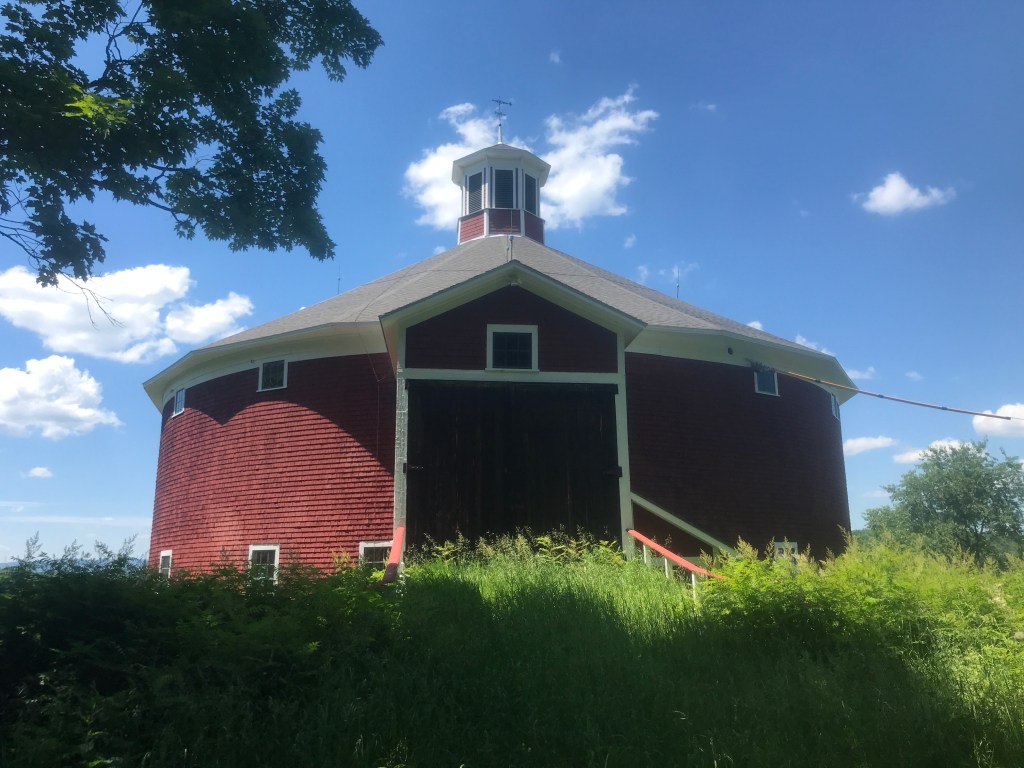
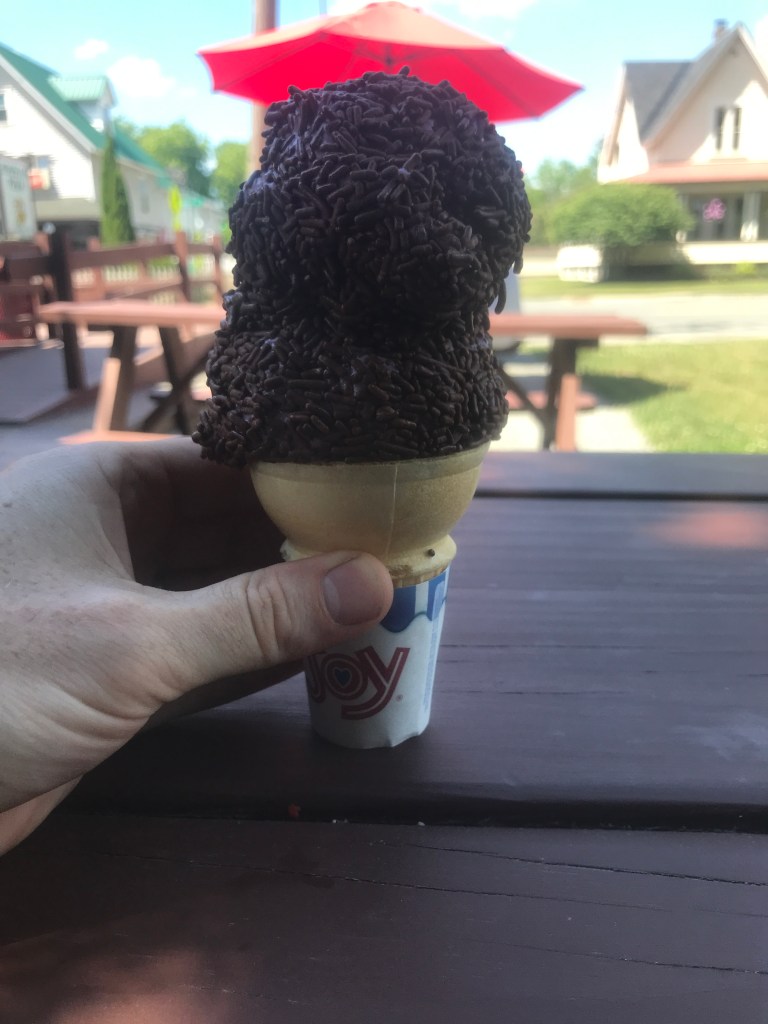
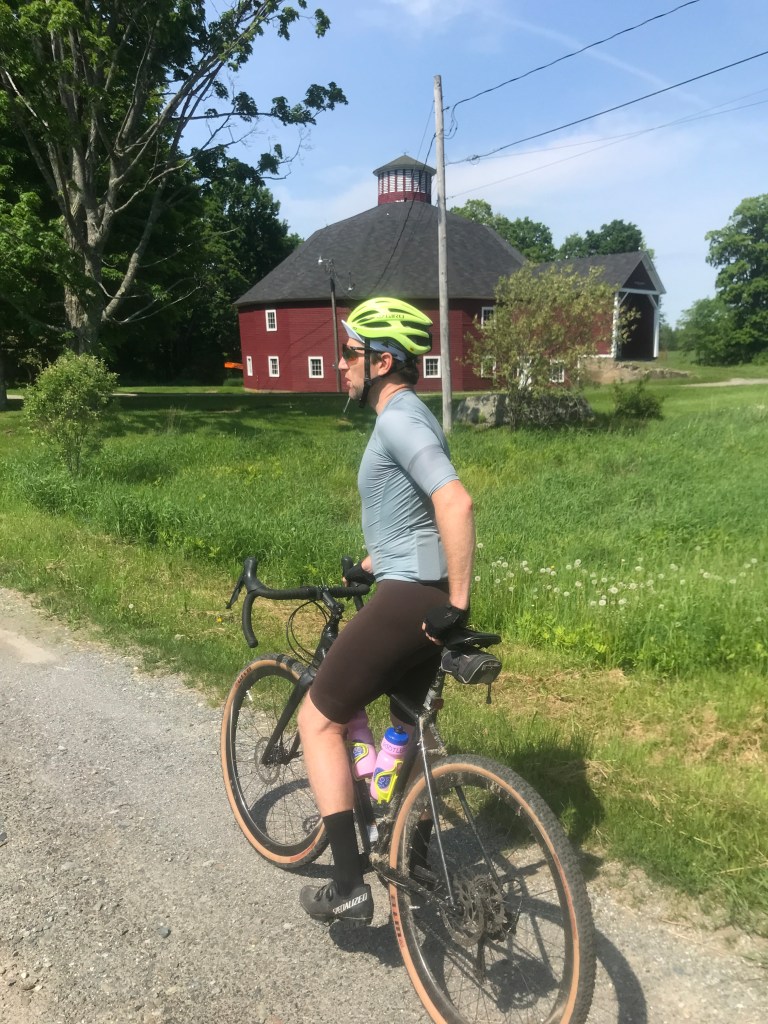
Much of my time in Concord was on Leonard Hill Road, a straight rolling road that I would describe thusly: camps, clearcuts and crummy views. No views really. The day was getting really hot and I was starting to drag. I saw on the map there’s an area called “Texas”, but sadly didn’t see a single sign to prove it. I eventually got to Concord Corner: the site of the first normal school in the US, founded by (the appropriately named) Samuel Read Hall, a location where Robert Frost apparently had owned property and the seasonal camp community around Shadow Lake. After getting some pretty nice views over the lake, I came to a mellow Class 4 section, before crossing Interstate 93 (for the first of two times) and taking a quick jog on Route 18. I was now in my last town of the day: Waterford. It’s another town with a picture postcard village that I unfortunately wasn’t passing through. My route took me along Duck Pond Road and eventually to my last Class  road of the day. This deeply dug out track was lined with ancient trees and punctuated with one of the best preserved round barns I’ve ever seen. The West View Farm is home to not only this spectacular Lambert Packard designed barn, but numerous other barns and outbuildings as well as a rambling Greek Revival main house. The property was listed on the National Register of Historic Places in 1995. From there it was truly all downhill and I was quickly back at the car. I’d passed an ice cream stand in my last mile, so I quickly unloaded my bags and then backtracked in the car for a well deserved cold treat.

The Details:

https://www.strava.com/activities/7373365045

https://www.strava.com/activities/7373361359

https://ayvri.com/scene/gdkz16el5z/cl4xdx4if00013b6u2o86t6up

https://ayvri.com/scene/gdkz16el5z/cl4xeae7100013b6u7x9clywi

Ride 30: Tunbridge & Strafford

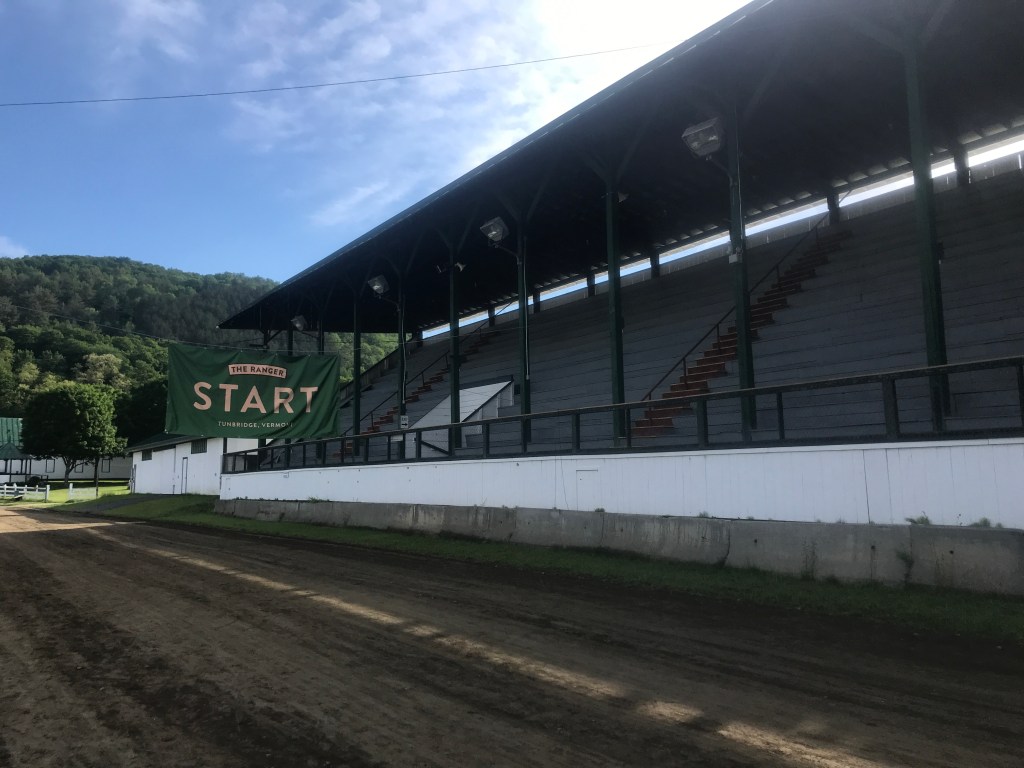
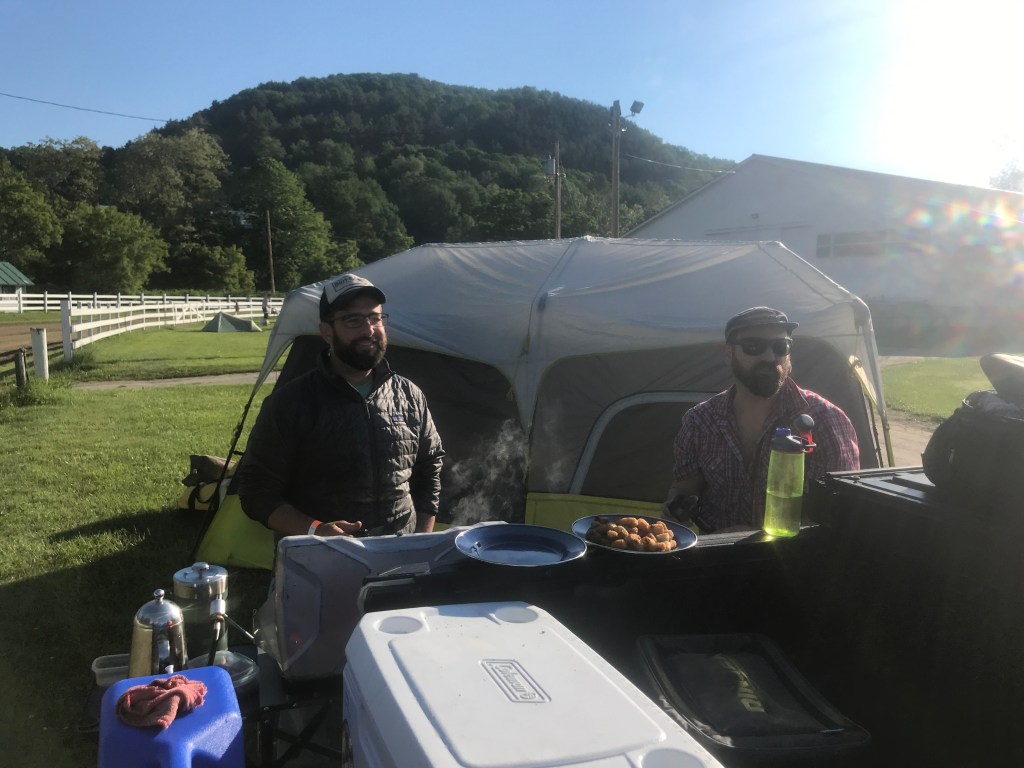
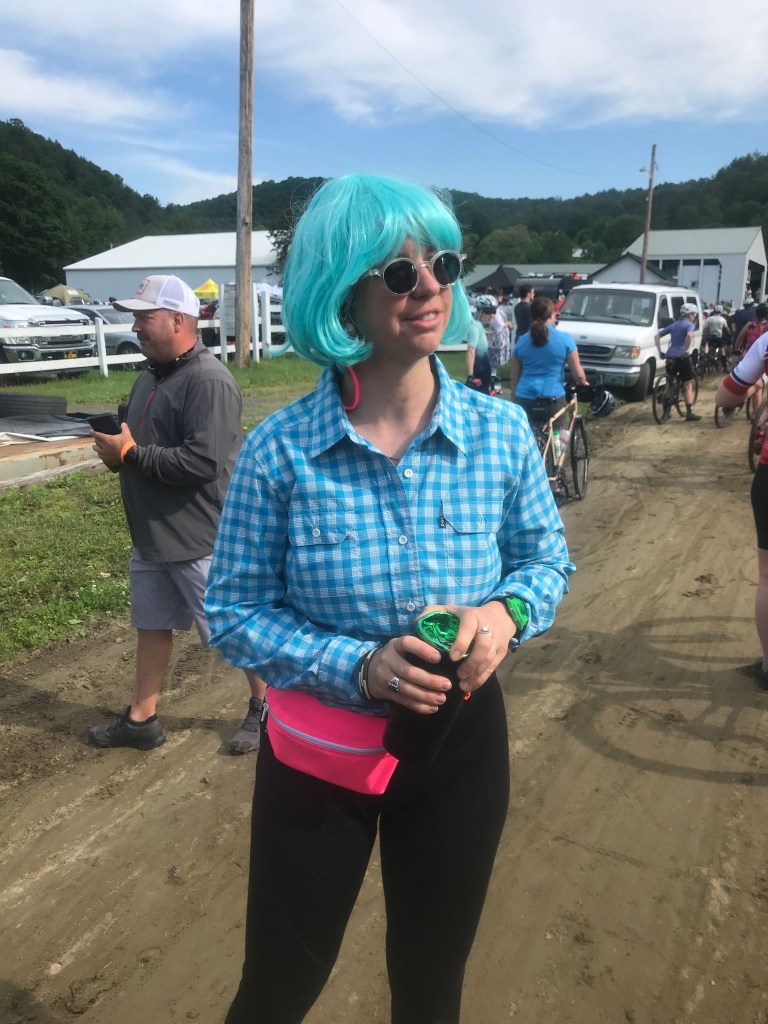
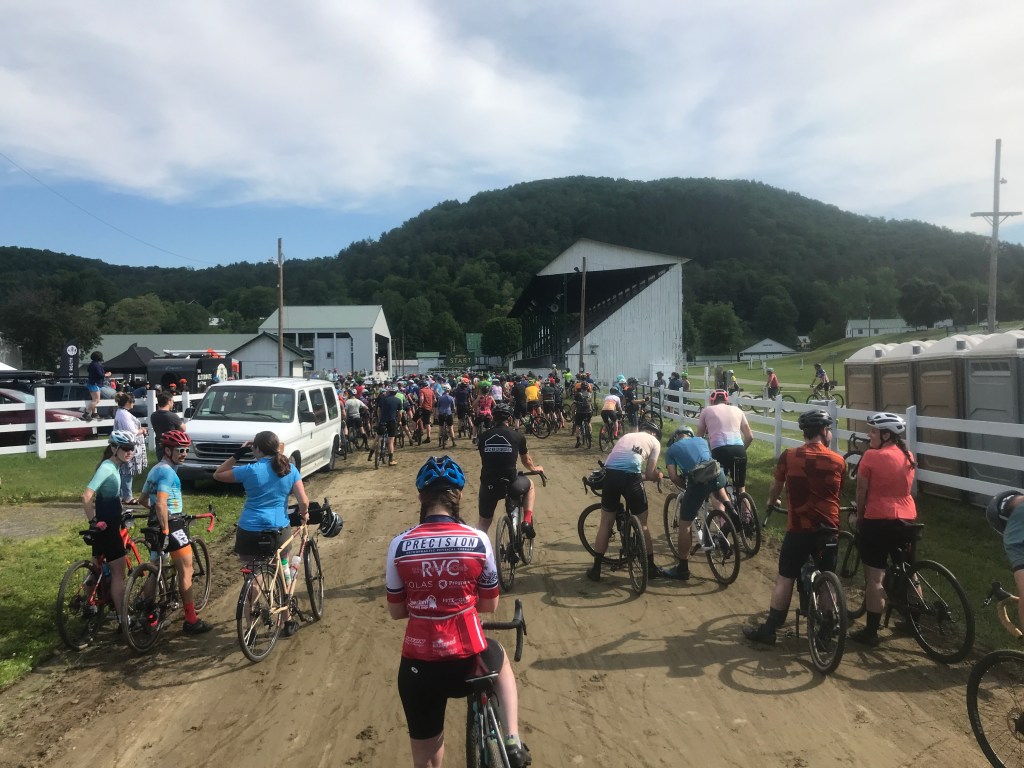
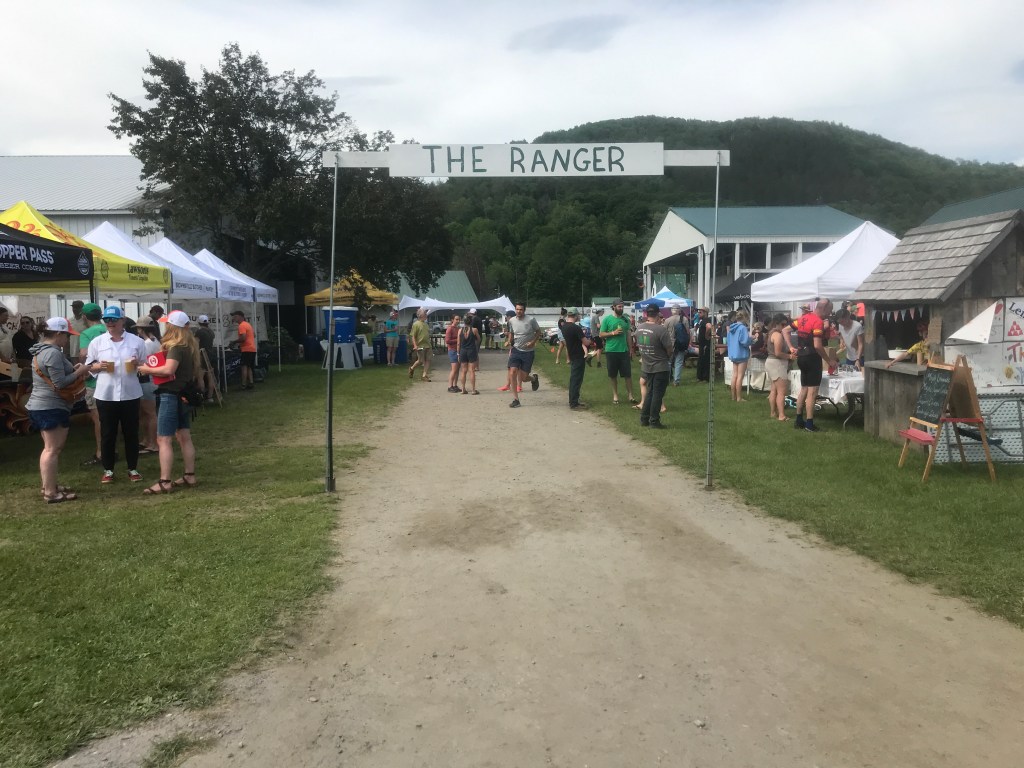
Ride number thirty was always going to be a little different. Instead of going out solo or with a small gaggle of friends, I asked my friends Tyler and Rachel Cohen to gather a group of close to 700 people, rent out a fairground, hire some awesome caterers, plan a killer route and pull it off without a hitch. And guess what: they did as I asked! I kid of course. This ride is called The Ranger. It was born about 7 years ago out of a community’s sudden realization of its fragility: a developer was beginning to buy up land and was planning to set off a 20,000 person, 5,000 acre bomb that would have completely changed the character of the area. The plan has since been scuttled, but the ethos of the ride was born: “Ride With Purpose”. Ever since then, the ride has raised over $30,000 for various local causes, not to mention bringing direct funds and awareness to the local towns through rider spending and visits. Needless to say it’s an awesome ride and last year, when Tyler and Rachel were given the opportunity to take on running it (along with their friends Jon and Pamela) they jumped at the chance. I’d never done the ride before and it was really only my second paid gravel event ever, so I was very excited. So excited in fact that Brad and I cooked up the plan to ride the 67 miles down there the day before! Oh and I bought a new bike which happened to arrive the day before that, so I could barely contain myself. 

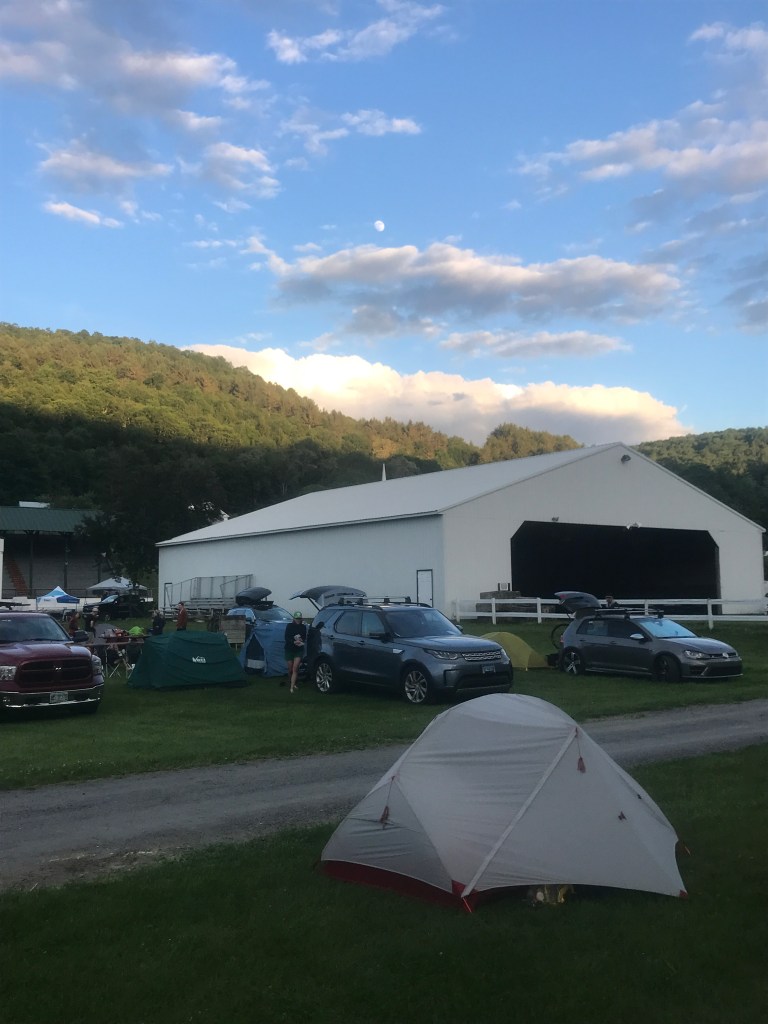
I won’t cover the ride down extensively, but it was really great. We were planning to camp, meeting our buddies John and Chris down there. Plus Maddie was coming down to volunteer and do her own small ride, so she would be driving later in the day. We decided against hauling our stuff down, just for the sake of looking hardcore when we rolled in and enjoyed a beautiful, non-burdened ride. The new bike is an absolute dream. It’s so light, the shifting is snappy and while the geometry might take some getting used to, but overall it was perfect considering it just arrived the day before. We arrived at the Tunbridge Fairgrounds (Home of the annual World’s Fair) where we’d be based out of for the next 24 hours. Maddie arrived just after we did and we set up camp, jumped in the river and ate some dinner while meeting campsite neighbors. Chris and John arrived later (coming in clutch with a forgotten key) and we had a great night staying up chatting. The next morning we all began with a fantastic breakfast burrito thanks to Chris that included tater tots and we began prepping our bikes. Chris was actually going to ride my Salsa, since it would be much better than his Surly Cross-check, gearing and braking wise for the VERY climb-y course. It was so fun seeing more and more people arrive and we saw many friends from the riding scene who had made the trip down. We began cuing up on the oval track of the infield and soon enough we were off!

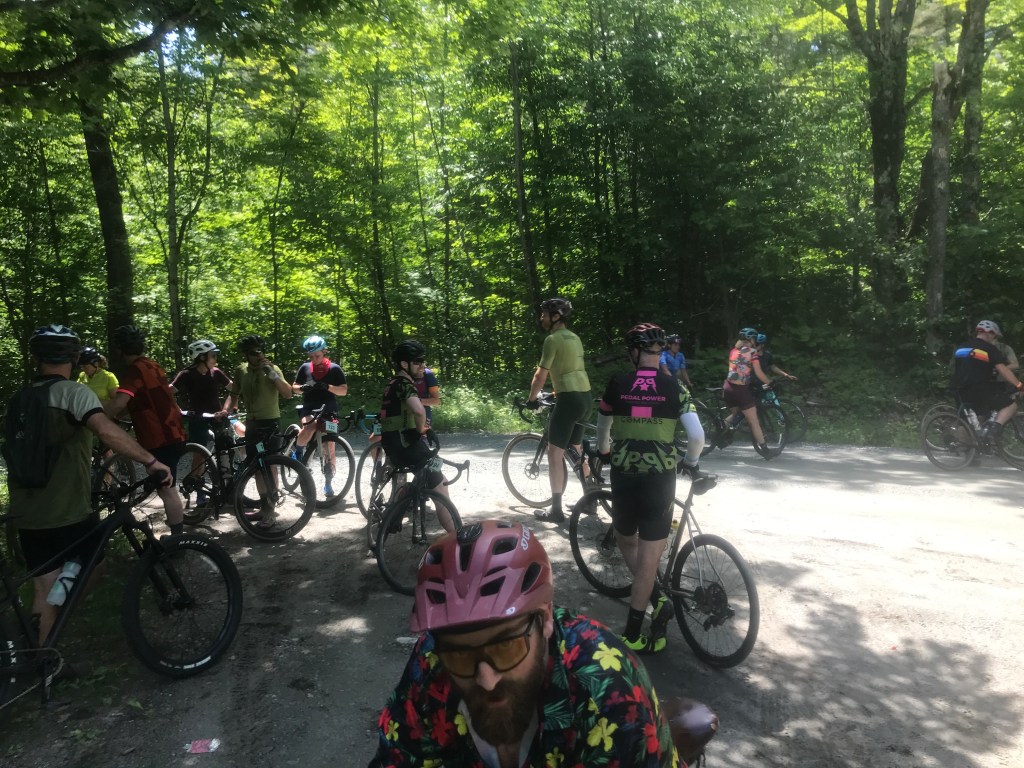
From the get-go, it was exciting being in such a large group of riders. There was a fair bit of diversity in terms of bikes and apparel too. There was everyone from folks rocking racey-looking kits and seemingly too skinny tires, to people with vintage 1x mountain bike conversions in sandals. There were even multiple masochists hauling children in seats or trailers! This made sense given that there was also an awesome range of offerings for the ride: a 2-5 mile kids ride, an 18-mile, no drop regular green course, our 42-mile blue course and a 62-mile black course with about 30% more climbing than the blue. The string of riders spread out as we rode through the fields south of the Fairgrounds. We passed through the Cilley Bridge as we crossed then followed the First Branch of the White River on Howe Lane. We traveled and safely across VT 110 thanks to the help of numerous volunteers. Crossing the river again via the Howe Covered Bridge, we were done with some of the only flats of the day and were set to begin our first climb. Unfortunately, right after the bridge, Chris had some shifting issues and needed to mend some chain suck. This has been known to happen on that Salsa, and I forgot to warn him. We eventually fixed it, and we back on the road towards the back of the pack. But seeing as how this was a ride, not a race, we were happy. Plus we’d already decided to meet Brad at the first aid station at mile ten, so we knew we’d all group up in a little. The climb was a steady one and I was happy for the shade covering much of it. We ended up passing a decent number of folks who had passed us during the repair. We soon came to the first of the “race within the ride” enduro segments. I knew I wouldn’t have much in the tank for the future ones, and it was downhill, so I pushed it a bit. I ended up coming roughly middle of the pack and funnily enough was exactly tied with Brad at 3:30, even though he was a few miles ahead of me. At the bottom of the descent, we turned at Winding Brook Farm, a stunning 270 acre operation pumping out a wide variety of products. Oh and you can stay there! Put that on the future trip idea list. We arrived at the aid station where we gobbled up some goodies including bananas and sugary waffles. We then grouped up as a sextet and continued on. We had a punchy climb on Ames Road, but the view at the top was worth it. The fact that there was a super fun farm road descent afterwards, made it all the sweeter.

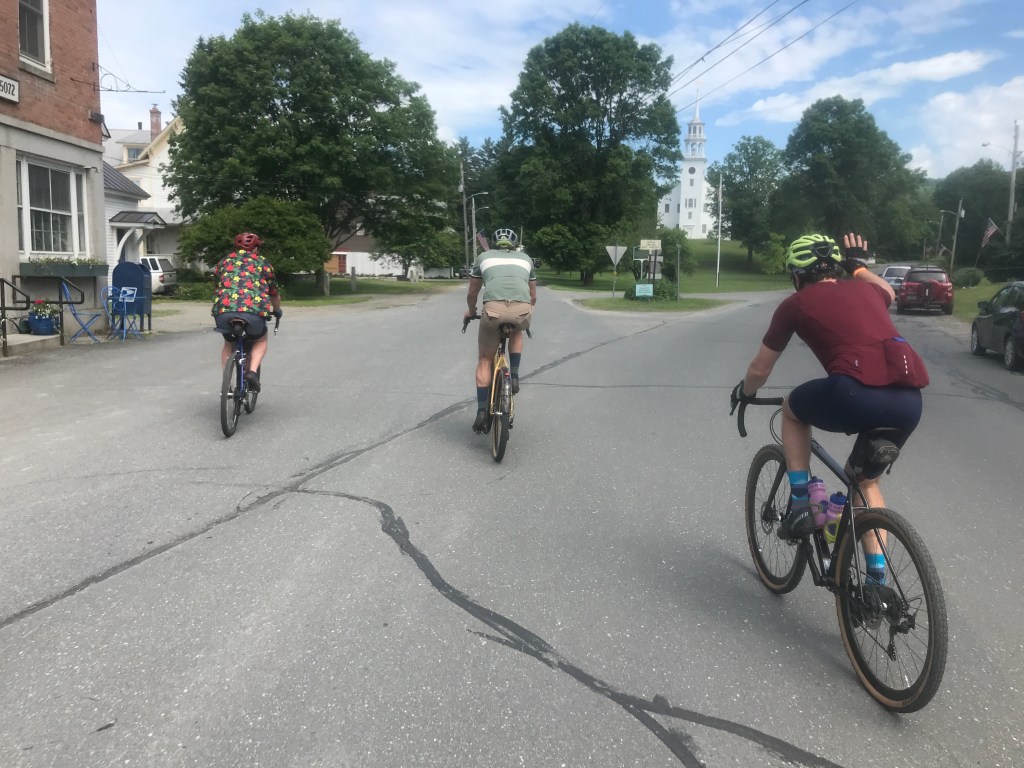
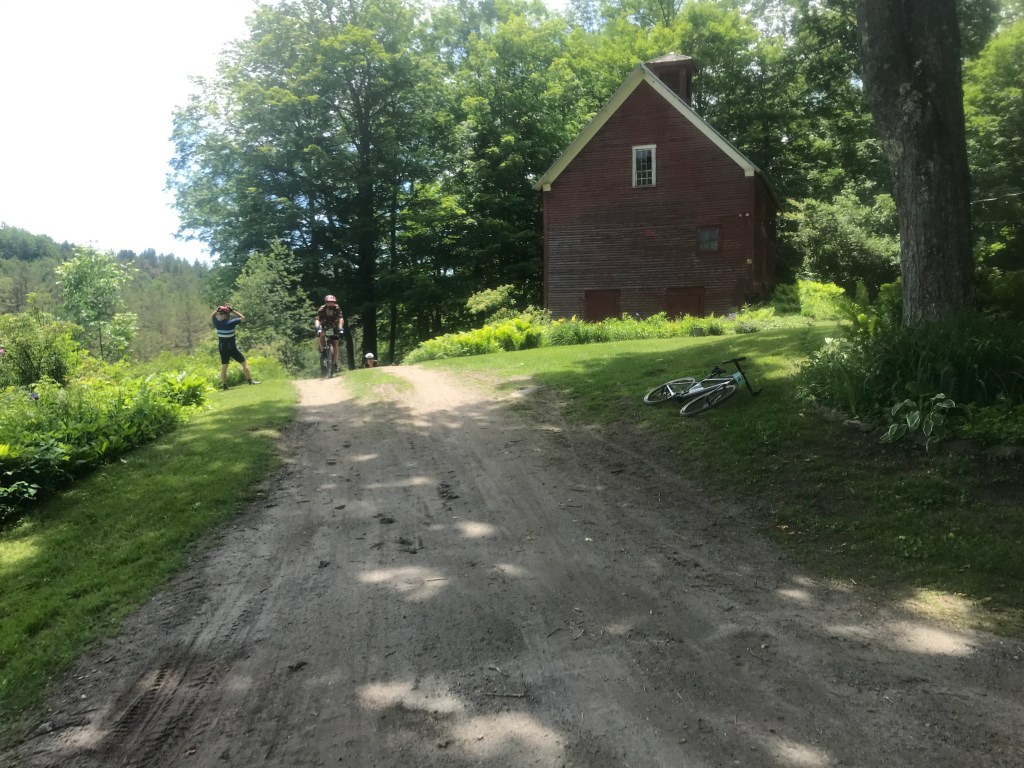
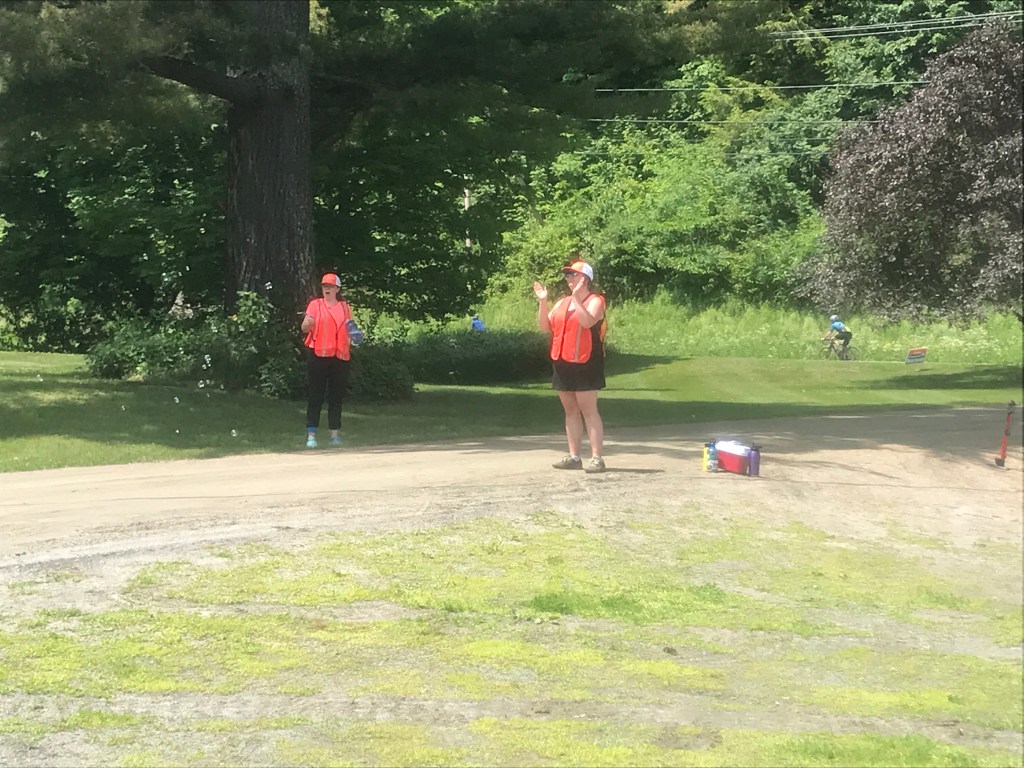
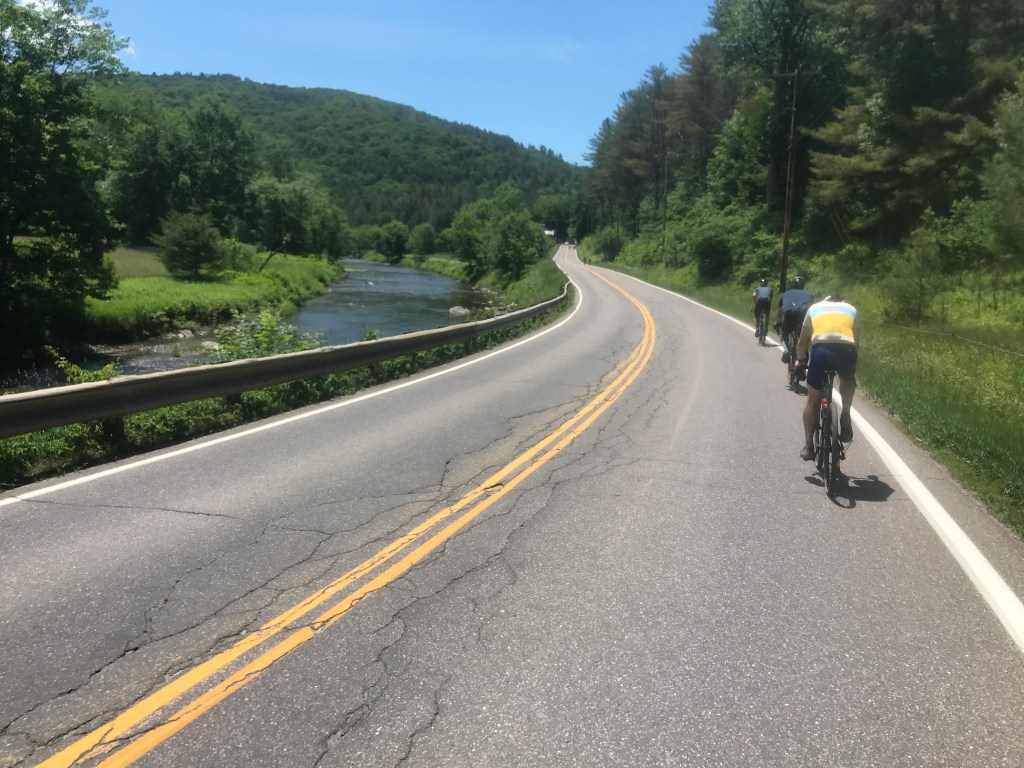
We enjoyed a quick burst of flat pavement as we rolled into Strafford Village. Strafford (to me) most brings to mind the Organic Creamery based there which still uses glass bottles. We now mainly get milk via a neighbor who makes a weekly trip to fill up directly from the bulk tank. But I’ve always loved Strafford’s products (especially the eggnog!) and their beautiful cows. The whole area is gorgeous, including the twee village which isn’t exactly bustling, but is anchored by a gorgeous meeting house on one end and the Justin Morrill Homestead on the other. The dusty pepto bismol pink Greek Revival Homestead was built by Morrill in the mid-1800’s and primarily used as a summer home. Morrill is best known for his championing of the Land-Grant Acts which helped fund public colleges across the country. His traditionally rosy reputation has had new perspectives arise, given the realities of how the land that funded land-grant colleges came into federal possession. We didn’t really make a pitstop to take in the buildings of the Historic District, but it was fun zipping through. The climb up to our highest point began here and we began the slow slog up Kibbling Hill Road. I was happy for the extra few gears on the new bike and despite inhaling the clouds of pine pollen at the top through the deep breaths, it was great to reach the pinnacle. Of course the down was fun, but this being The Ranger, it was followed by a succession of ups and downs that resembled progressively larger and larger shark’s teeth on the elevation profile. There were a few Class 4 roads through here and it was one of my favorite zones of the day. That whole area is ripe for more exploration. We had a sluggish paved climb, which was much less fun than the dirt up and downs. But after we turned off of Strafford Road, we had a true, long glorious descent all the way back towards Route 110. It was mainly dirt and super fast. It ended when we crossed the Larkin covered bridge and even better there were volunteers blowing bubbles onto us and Maddie was there for a water top off and pep talk! We followed 110 back south towards North Tunbridge getting lovely views of the river and enjoying the relatively flatness.

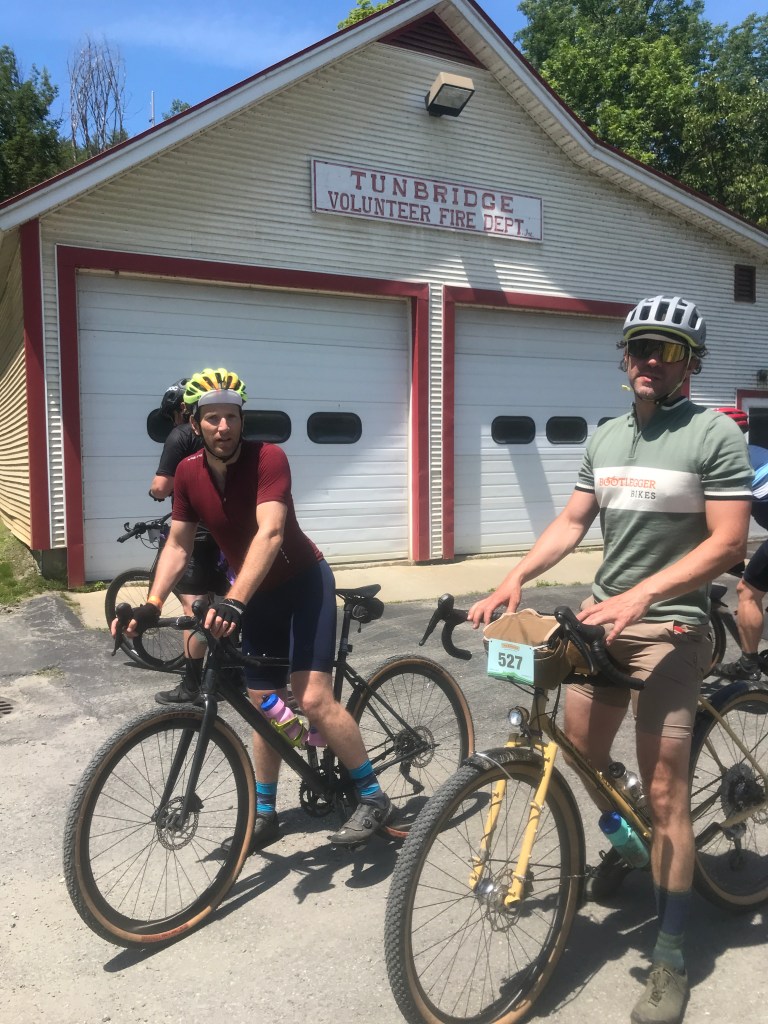
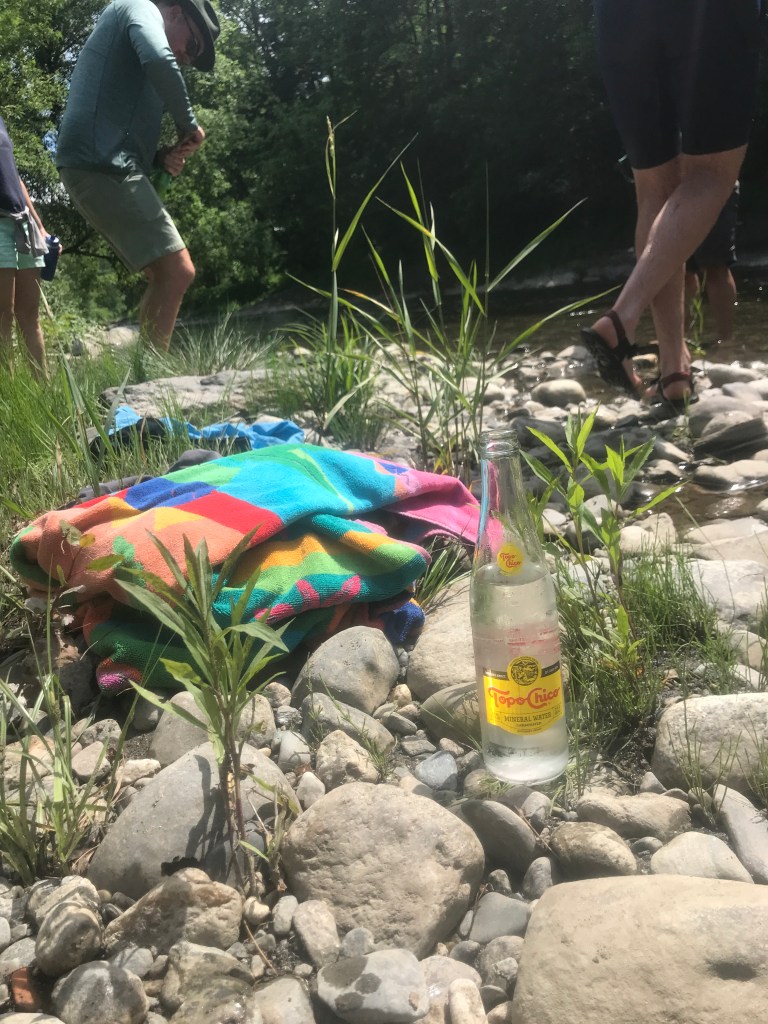
I caught up with the rest of the group at the Tunbridge Volunteer Fire station. Monarch Hill loomed above and was our last truly long climb of the day. Thankfully, the second aid station had been placed about ⅔ of the way up as a carrot. The fairgrounds is just a mile down the paved road and if you’re struggling this is the place to bail. So having the promise of more good food and drinks up the hill was a smart move if you ask me. We all clicked into our easiest gear and began plodding up. Not everyone on the ride, mind you. This was another of the enduro sections and we had people who were clearly going for time (given their speed) and had also clearly done the 63-mile loop (given their muddy legs). We weren’t deterred by the speedsters and chugged along up to the aid station. They had more of the same as the first, but we took more time here. I drank at least two maple waters and ate some more waffles, bananas and basically any other calories I could get down. It was pretty sunny by this point and I’d managed my hydration and food well up to this point, but I wanted to be sure I could finish strong. The last 11 miles or so wouldn’t be a walk in the park. We also ended up seeing a guy named Merrick who lives near me who I’ve ridden with a few times. We did a Bootlegger Bikes shop ride together around this time last year that he did from home, doubling the length (almost 100 miles instead of 50). Oh and he did it on a single speed! He’s a beast, so of course he was doing the Black Course on that same single speed. We stuck with him for a bit, but he dropped us before long. We eventually worked our way down into the upper reaches of the next valley over on Kelsey Mountain Road. We came to the last enduro section which was on a super steep, technical, rocky Class 4 section. I didn’t ride it quickly, but I was able to clean the steep part, which was probably my biggest single accomplishment of the day. After that there were a few more fun downs and a couple of muddy bits, but the real highlight was the final downhill. It’s a full 2 miles long and was a blast. After that, we just returned to the fairground through the fields we’d taken that morning, and took one final lap of the oval across the finish line. Of course, my competitive juices got the best of me and I challenged John to a sprint finish which , thanks to the new bike, I edged him out on (sorry JC). We dropped our stuff at the campsite and collected some Topo Chicos delivered by our buddy Ben and hopped into the river. After a change of clothes, we swung by the silent auction to say hi to Maddie, and then tucked onto the best food ever thanks to the Brownsville Butcher. They’re the joint I tried to go to on Ride 17, but ended up “stomach-broken”. Better late than never. The day ended with Rachel, Tyler and the other organizers saying a few words of thanks and they got a hearty applause. It was richly deserved and we’ll certainly be back in 2023.

The Details:

https://www.strava.com/activities/7298720754

https://ayvri.com/scene/gdkz16el5z/cl4cnhuf200013f6tjfopmnws

Ride 29: Brandon, Hubbardton, Benson, West Haven, Fair Haven, Castleton, Poultney, Ira, West Rutland, Rutland Town, Rutland City, Proctor & Pittsford

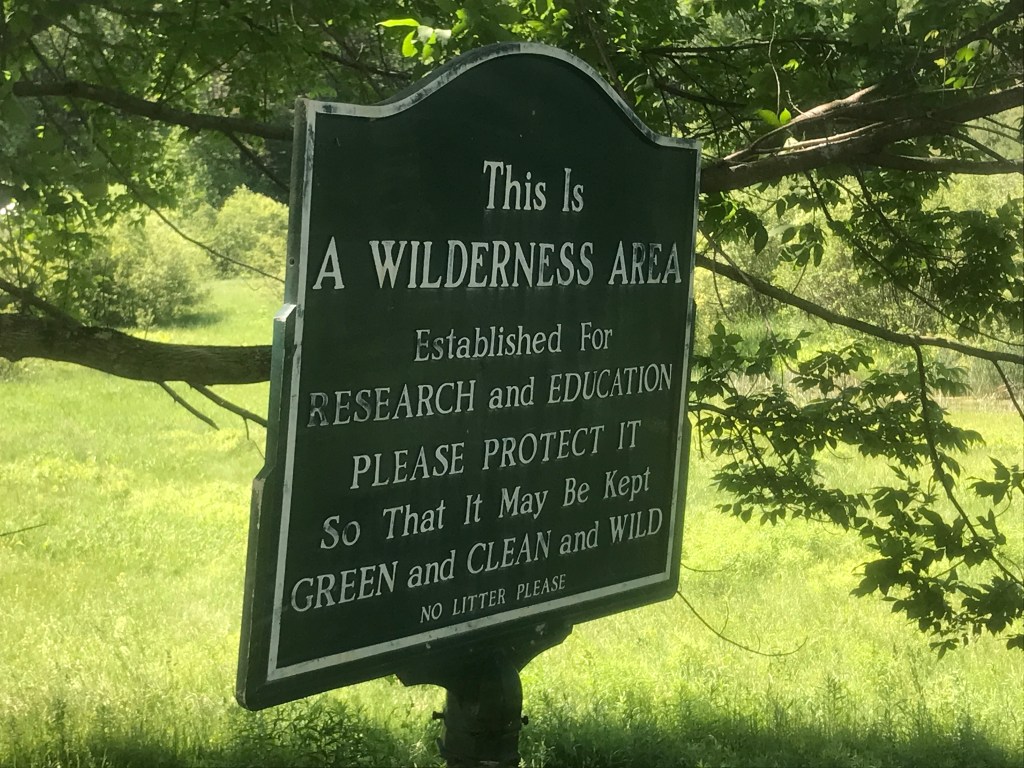
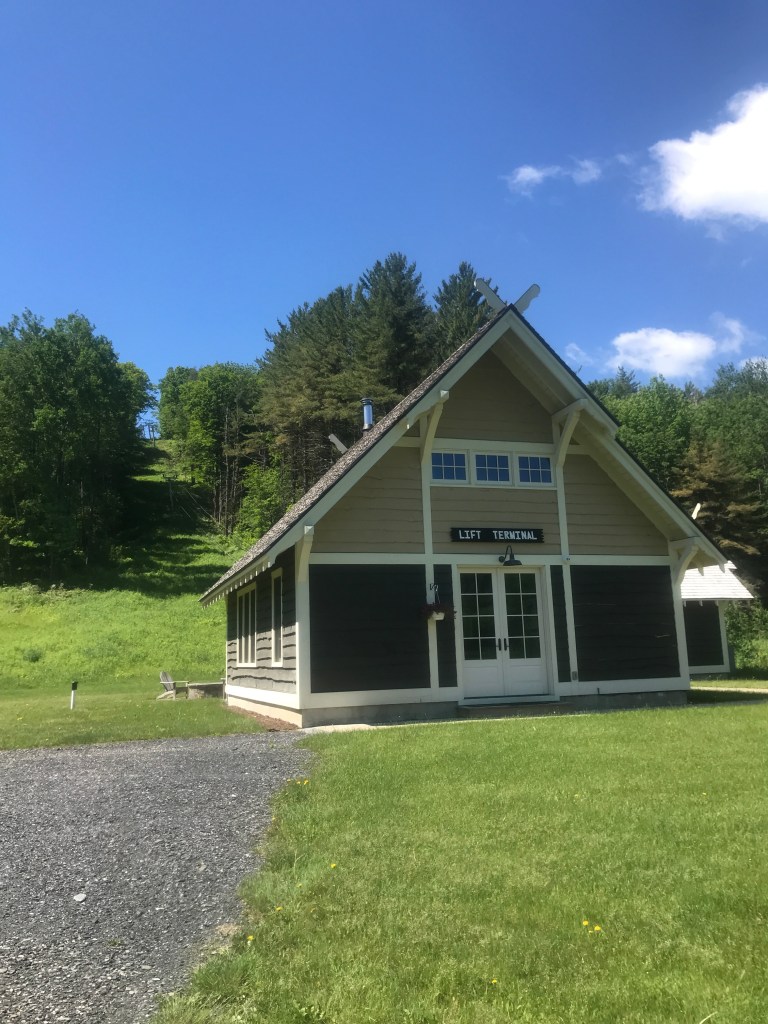
I began in Brandon, a beautiful downtown whose sidewalks have finally been completed and also recently played host to a classless rally by the Vermont GOP. I pulled up next to the local library and hopping on my trusty Salsa, weaved by way past the many great shops, breweries, galleries and restaurants to head southwest out of the village. I quickly came to the Otter Creek and made my first crossing via covered bridge of the day. After that, I began my first major climb up High Pond Road. Towards the top I was struck by a sign advertising the area as “Wilderness”. I later found out that it’s not technically defined as such, but the High Pond Natural Area does look really nice despite this Grouch’s review. Just a hundred yards past the sign I was also stunned to see a meadow with four, small lovely buildings, one of which sat at the bottom of a t-bar ski lift! It turns out this was the site of the former ski area called High Pond Mountain. Since it fell into disrepair in the 1980s (and to be honest since that last link was updated) it is now in private hands and the main lodge and restaurant buildings have been rehabbed and turned into private homes, plus the entire t-bar was rebuilt! Sadly the area is privately owned and they have no plans to open it to the public. However, a piece of Vermont skiing history was preserved, and I don’t really begrudge them for keeping it to themselves.

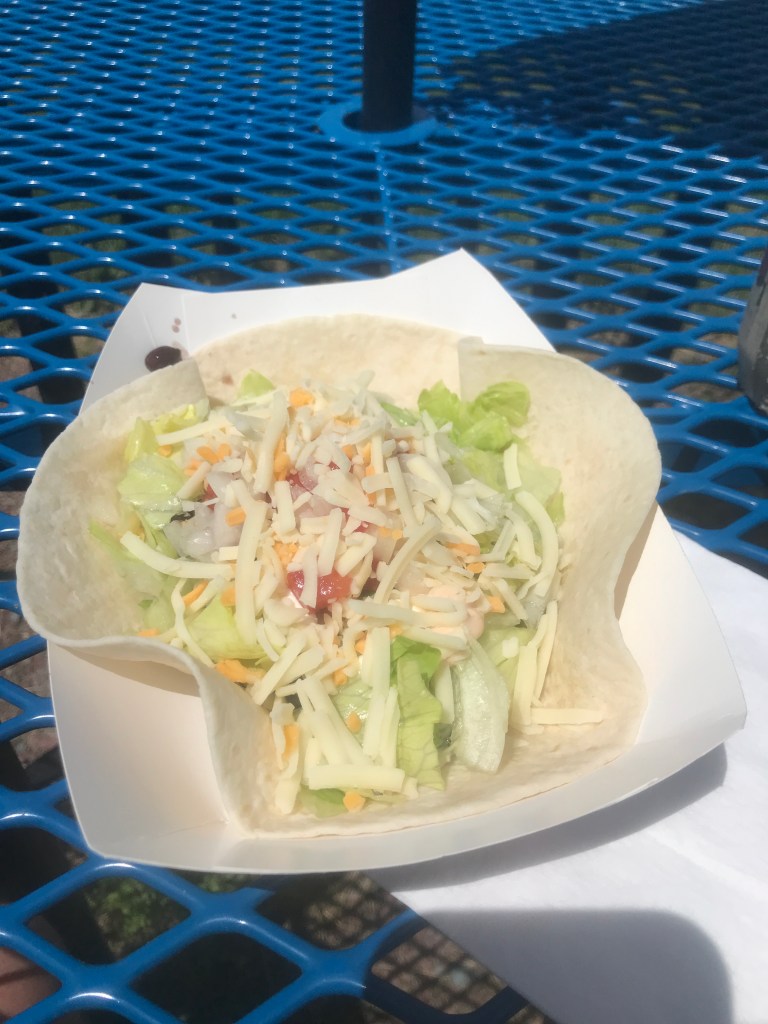
I had now passed into Hubbardton, which is most famous for its battle. As I descended, I could have taken a left and gone up to the battlefield, but I’m more of a scenic descents, kind of guy, so I proceeded downward. I crossed Route 30, past Austin, Roach and Breese Ponds and was astounded by the amount of damage that’s already been done this year by the spongy moth caterpillar. I mentioned this a couple times already, but those little buggers are moving further and further, eating leaves and making it look like April in June. I rode over and dodged innumerable caterpillars on my ride and definitely passed through areas where I could hear the droppings hitting the ground like a rain shower. I pushed on through a somewhat sketchy Class IV section that I thought would be simple because it used to be a part of the Vermont Super 8 bikepacking route. It certainly appeared like I did some light trespassing, or someone posted a public right of way. Either way, I pushed on into Benson, and stopped at West Coast Tacos. This is a taco truck I’d passed many times on my way south on Route 22A to my Mom’s house and have always wanted to stop. Sadly, despite the name, the tacos were decidedly Vermont-style (read: mediocre), but even bad tacos are good and I was happy to have the calories.

Across 22, lies Benson Village. In addition to a surprisingly detailed Wikipedia page, Benson has a lovely town center. Sadly the village store was lost to fire in 2019, but there’s still a tavern as well as a library and Presbyterian church. Heading south I passed a wedding venue before getting into West Haven. As I mentioned before this strangely shaped town is bounded by the Poultney River and is pretty much the only place in Vermont where you can head due east and hit New York. Note to self: I definitely need to come back to ride Bay Road to Galick Road out to the very southern end of Lake Champlian. It looks lovely. I crossed over 22 again and made a short climb up Bigelow Road to get some dirt in the town of Fair Haven. This moderately-sized town originally sprung up around mills on the Castleton River, but continued to grow thanks to the slate quarrying in the area. The Slate Valley extends approximately twenty-four miles along the New York-Vermont border from Granville, NY and Rupert, VT north to Fair Haven, VT. The area is rich with a diverse array of slate colors that can be used in many different applications. The area drew immigrants to work in the quarries and associated industries and despite ups and downs it’s still a successful area of slate production and only one of three areas in which slate is produced in the US today. The area is also known for its “inscribed” barns where the date or some name or message is spelled out in slate on the roof. I later passed one that said “Hiland Gray” on a road of (almost) the same name. I made a water stop just south of the town green, because I knew I had quite a doozy of a climb coming up. 

I crossed into Castleton, hitting some of the D&H Rail Trail before peeling off to duck south into Poultney. Until 2019, the town was home to Green Mountain College, a small liberal arts school with a creative bent. Green mountain was one of a number of small schools in the area to shut down during a rash of closures. I didn’t make it all the way down into the lovely village, but instead headed up into the hills. At the top of the first hill I came upon Pond Hill Ranch, the self-proclaimed “Largest horse leasing service in the east”. In addition to a bunch of random horses standing around a paddock, there is a large arena where they hold rodeos, barrel races and horse shows. I didn’t even know you could lease a horse, let alone that this huge operation existed! After a quick downhill, I continued climbing up. I was headed up Ames Hollow Road towards the Bird Mountain Wildlife Management Area. It’s a significant nesting site for Peregrine Falcons and is a beautifully remote, rough area. It has the same feel as the Notch in Orange from Ride 19: it begins as a lovely farm-type road, becomes rockier with a hunting camp or two, then becomes the realm of ATVs and wildlife. I reached a saddle and there was a split and most people crazy enough to be on bikes probably call it good enough and bear left to continue north and down on Birdseye Road. But that would have kept me out of the rugged parts of tiny Ira, so I turned right, kept climbing and dealt with the overgrown and rougher trail. The town is named for Ira Allen, the first Treasurer and first Surveyor General of Vermont as well as brother to Ethan. I eventually popped out onto Ira Birdseye Road which connected me to Route 4A which I could cruise down into the marble valleys of Rutland County.

The town of Rutland was incorporated in 1761 as one of the original New Hampshire Grants. Since then, it’s been chopped up into four different communities and you can certainly see the local history through the shifts. In the early years things remained largely agricultural, like much of central Vermont. In the 1830s marble deposits were found in what is now West Rutland and Proctor. The railroads allowed Rutland marble to get to market and also helped the burgeoning city of Rutland to develop. Helped on by pressure from marble companies, in 1886 Proctor and West Rutland were split off as separate towns. In fact, Proctor is named after and was once almost entirely owned by Redfield Proctor who was at one point the president of the Vermont Marble company and eventually became Lt. Governor, Governor, US Secretary of War and US Senator. In 1892, Rutland City split from Rutland Town and we got to the funky borders we have today. I crossed the West Rutland Marsh and headed south on Marble Street passing by dormant quarries and active sculptors. I zipped through the Marble Street Historic District, and followed the railroad tracks over into Center Rutland. I made a pitstop at the Sunoco Station/Headshop. Seriously, they were selling bongs in there. Anyway, my PB&J went down quickly and I was on to Meade’s Falls and (yet another) defunct small college: the College of St. Joseph. I then followed a bike path along East Creek which (once you get past the Marble Valley Correctional Facility) is quite lovely. It was then into Pine Hill Park and up and into the woods.

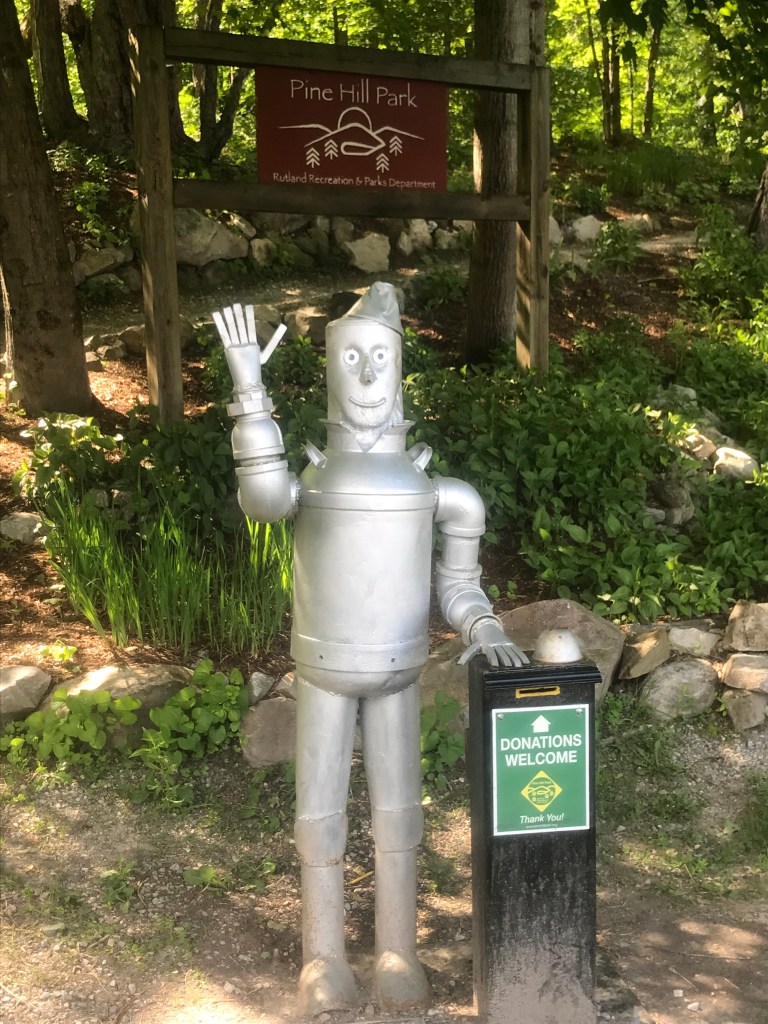
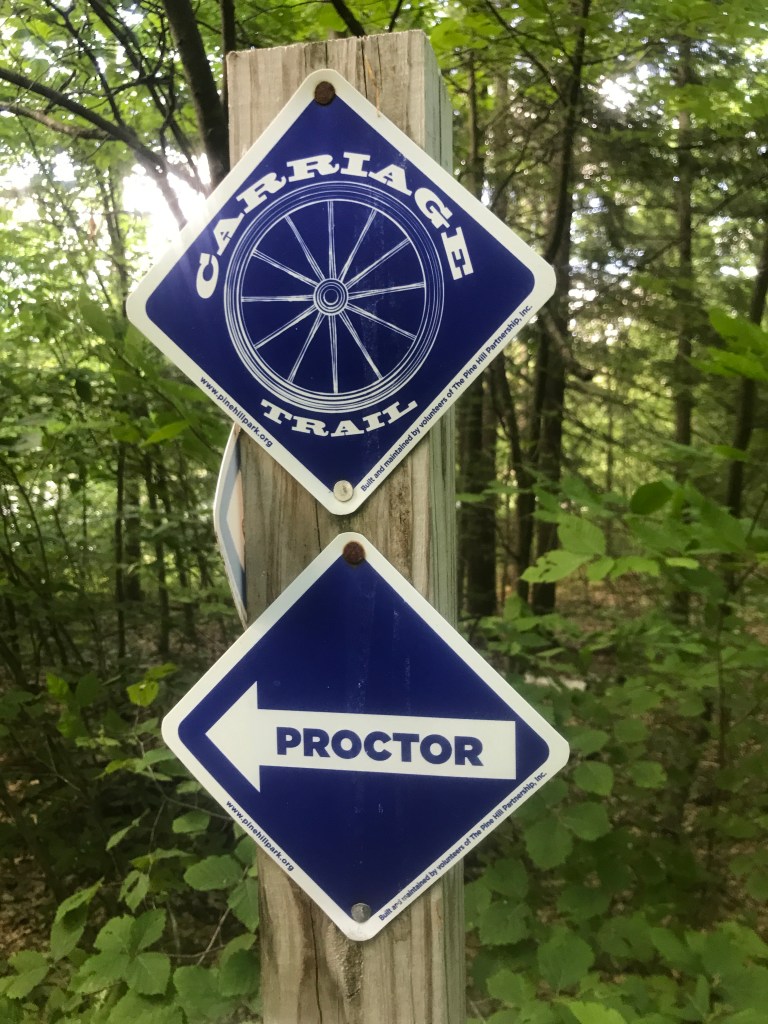
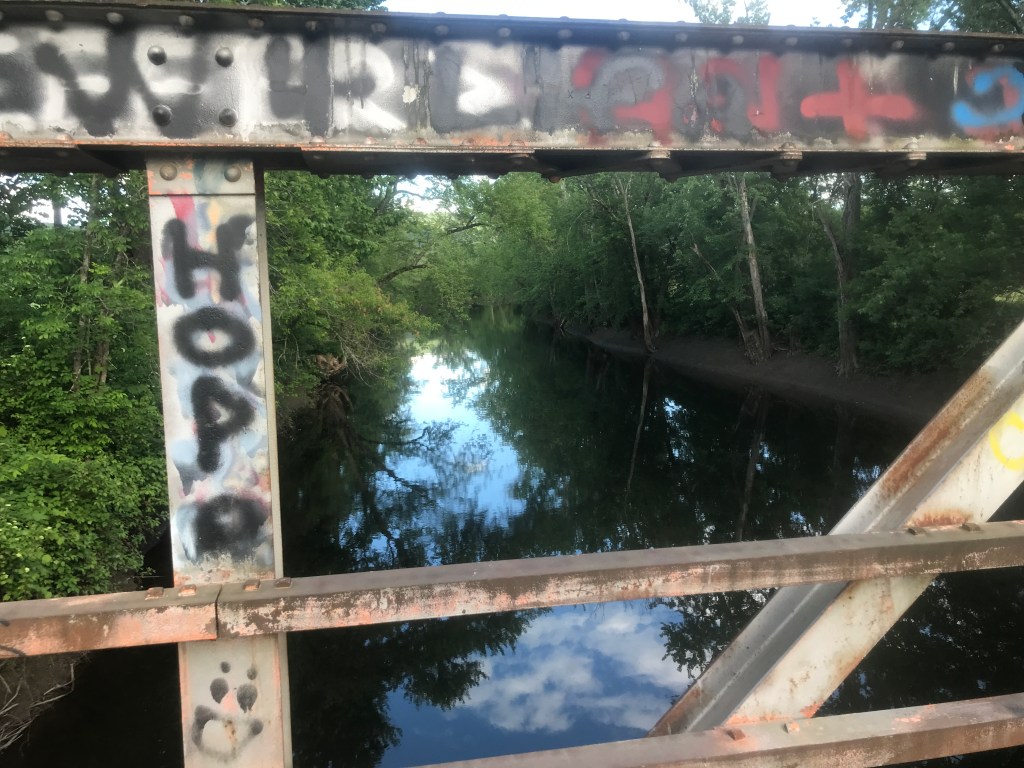
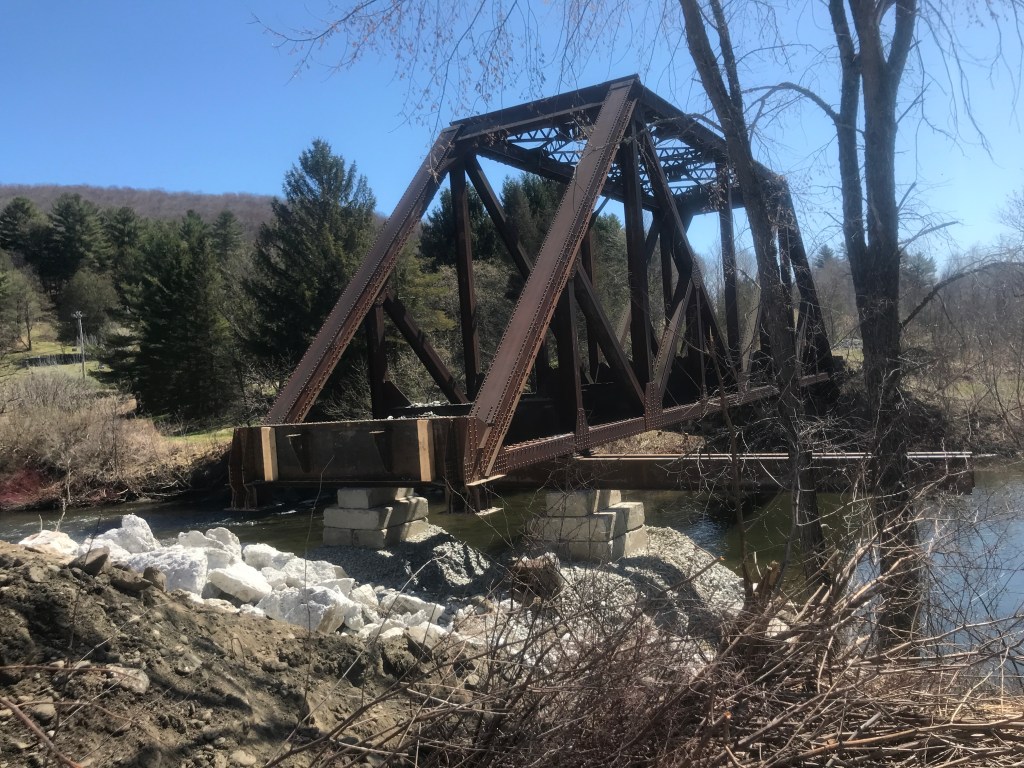
The land that is now the park came into the city’s possession when Henry O. Carpenter gave 273 acres of land to Rutland in 1921. Over the next 20 or so years, city and WPA crews made improvements to the park, centering mainly on a road that led up to Rocky Pond. A recreational area operated during the 1950s, but didn’t last long. These days, the area is crisscrossed with dozens of mountain bike trails, and the old road up to the pond and a connector over to Proctor are maintained as the “Carriage Trail” which I slowly began to climb. It wasn’t too tough, or too eventful, but I did end up chatting with a nice guy towards the top. As much as I enjoyed chatting with him and his cute dog, the bugs were horrendous and I was getting tired. So I cruised down into Proctor: spooking a ruffle grouse, then popping out of the woods, over the beautiful Marble Bridge, past the Vermont Marble Museum and north into Pittsford. The last town of the day is luckily a (relatively) flat one. Through its center runs the Otter Creek and the town boasts four covered bridges, over which I crossed three. I had planned my route to wend into the village in case I needed anything, but I was good on water and supplies, so I just took a quick breather on the green, admiring the banners that the local high school puts up every year. I passed the most residential-looking post office ever in the hamlet of Florence and turned north on the amazing Syndicate Road which leads all the way back to Brandon. I’m not sure where the name comes from, but this seasonal road shadows the Otter Creek and has a lovely truss bridge in the middle. It’s probably too buggy to ever camp there, and it was a bit trashed at points, but it’s a hidden gem and a great way to end the ride.

The Details:

https://www.strava.com/activities/7261691986

https://ayvri.com/scene/gdkz16el5z/cl421ti0800013f6ti3y570as

Ride 28: Waterbury, Stowe, Elmore & Morristown

After a few weeks off, I was back at it: looking a bit closer to home for towns number 158-161. Despite the wonderful riding that exists just over Mount Mansfield, I don’t often get over into the Stowe valley, but I’d planned this one to be my attempt at a “Best of” ride (despite my limited knowledge). The tough thing with the valley is its shape: with Route 100 running smack dab up the middle, you want to stick to the sides for the good roads and views, but that’s where the climbing obviously is. I managed to make a route that stayed under the golden ratio, but still looked appetizing. I knew I had a free day after volunteering with the fantastic Solid Sound Festival at Mass MoCA. The festival has been around since 2010 and though I missed the last couple, it’s such a blast. Check out this documentary for a taste of the vibe. Anyway, I managed to wrangle old reliable Brad for this one and we set out at midday on a sunny Memorial Day for Waterbury.

Our start point was Brookside Primary School just east of downtown Waterbury. The town of Waterbury developed like many Vermont communities: sprouting up around the river nearby rich farming the the railroads and mills eventually supporting steady growth. By the late 19th century, the town was home to the Vermont State Hospital, originally Vermont State Hospital for the Insane. It has an ugly history with its (at one time up to 1,728) patients being subjected to barbaric treatment. It was also the epicenter of the eugenics movement in Vermont which has its own dark history. The complex now houses state offices, the status of which looked shaky in the wake of Hurricane Irene, but things have been fixed up and the town overall is doing quite well

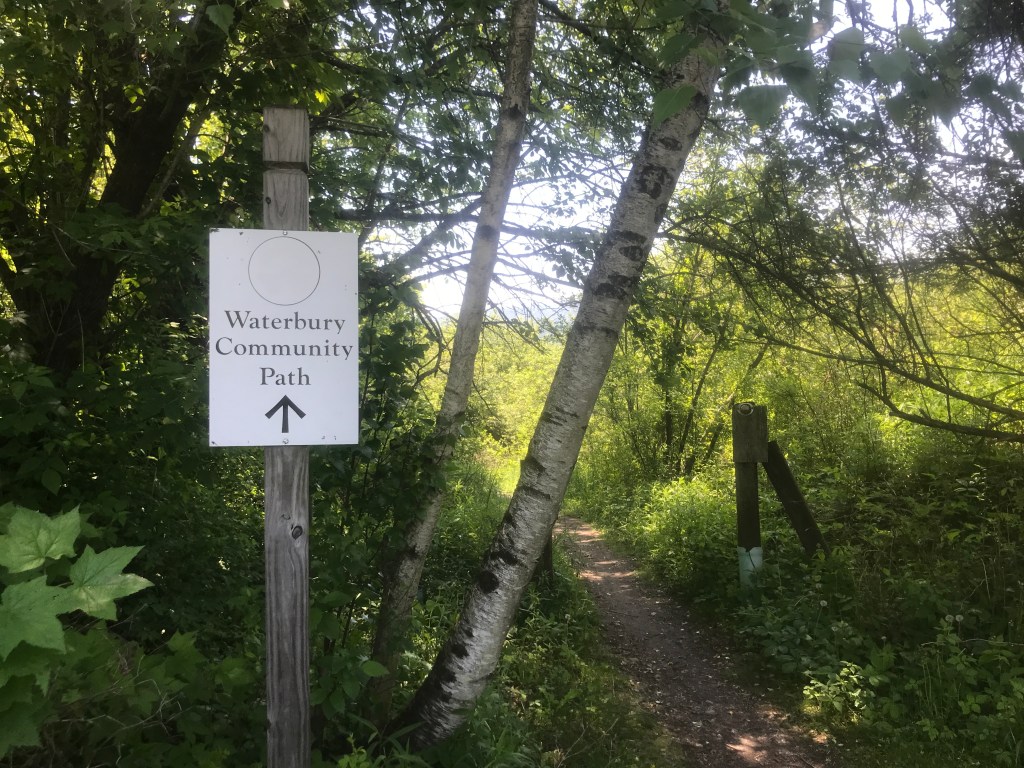
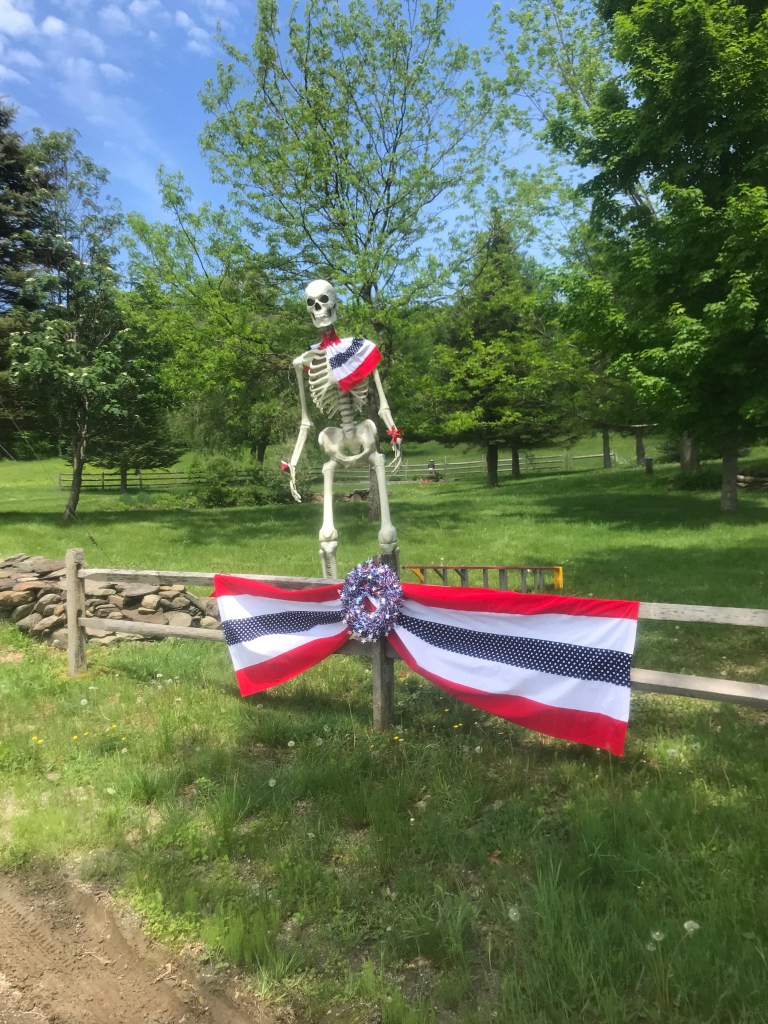
We headed out Stowe Street away from the former Keurig Dr. Pepper (nee Green Mountain Coffee) building that now houses Darn Tough Socks, past the excellent Hen of the Wood restaurant and out to the Waterbury Community Path. This allowed us to stay off of the busy byway that shuttle folks from the interstate up into Stowe (not to mention the Ben and Jerry’s Factory). After popping out past a golf course, we soon took a right onto Kneeland Flats Road which (ironically) began our first of four big climbs of the day. I had routed us onto Shaw Mansion Road (it certainly has some nice houses, but no true “mansions” that I could see). But in doing so I saved a few feet in overall climb, but I missed a huge dip that could have been avoided had we opted for Ripley Road. But that’s just me being self-critical. The road continued to climb and close up and by the time we passed the Mount Hunger trailhead and the gate after it was a beautiful seasonal single-lane road that interestingly has Google Street View. The single lane section ended at Stowe Hollow Road and a strange patriotic skeleton display that was part July 4th and part Halloween, with a little Grateful Dead mixed in for good measure.

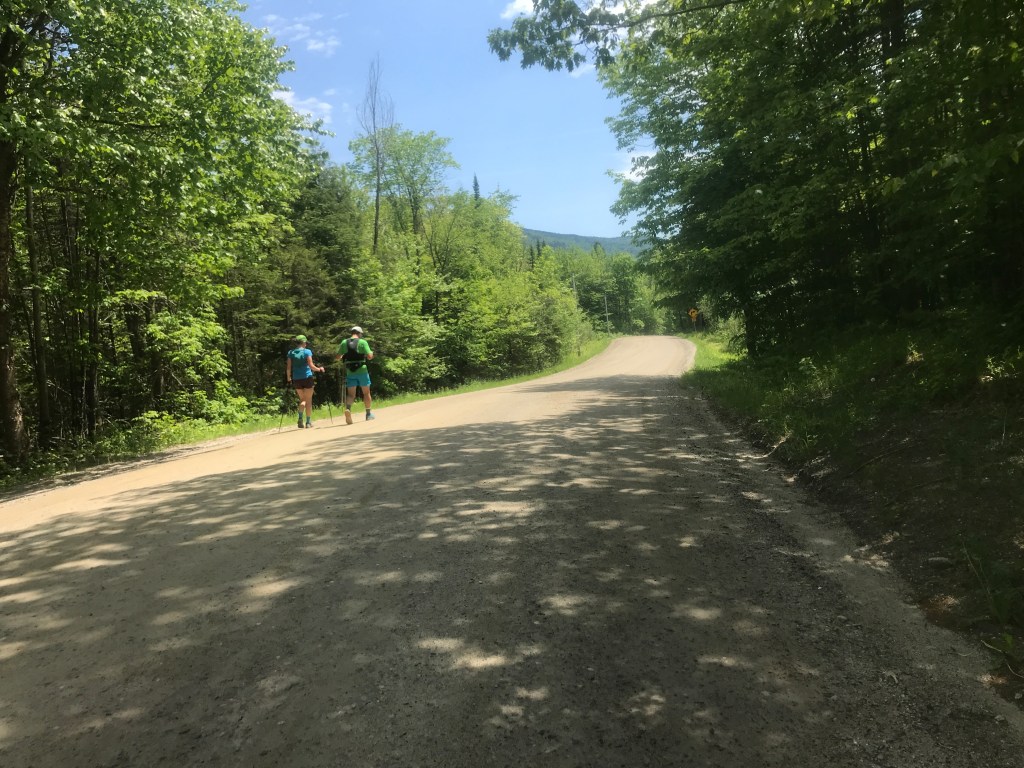
As we crested the hill and reached the end of this first climb, we crossed paths with a couple who were out on a long trail run that included Mount Hunger as well as Stowe Pinnacle (almost 15 miles in total!). We zoomed down the steep pavement of Stowe Hollow, slowing down to gawk at the aptly-named and oft-photographed, Grandview Farm. We continued down over Gold Brook Covered Bridge, making the brief climb past many newly built houses and one gorgeous old brick homestead. At this point, we’d crossed into Stowe and the architecture reflected that change of zip code. Stowe is consistently in the top 5 wealthiest towns in Vermont, with a gross income per tax return in 2017 of $109,302. For a bit of context, there is currently a house right in the area listed for $16 million. Now, don’t get me wrong: Stowe isn’t all 18,000 sq. feet monstrosities and HGTV Dream Homes. There are still a few working dairies in town, but its economy solidly relies on tourist dollars. Tourists we were about to see plenty of as we entered the village for the first of two times through.

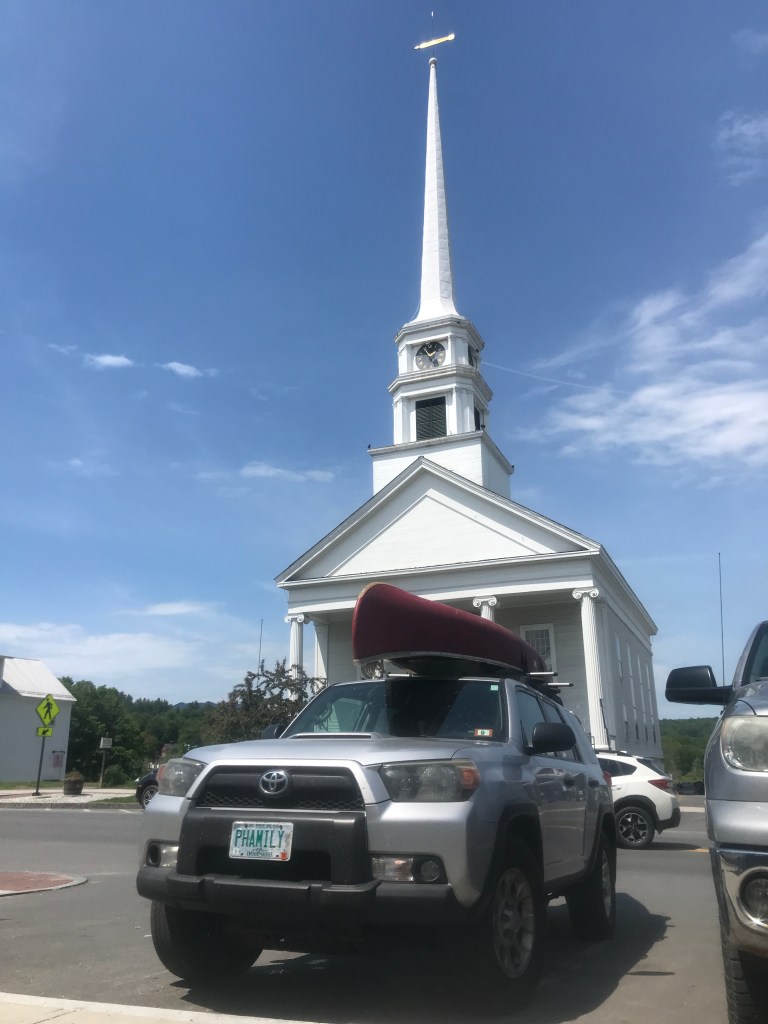
Across from the iconic steeple of the Stowe Community church, lies Black Cap Coffee. Like most cafes in towns with active people, this one is an epicenter of caffeine and snacks before, during and after outdoor fun. On this day, it was mainly tourists, but we refilled water bottles and took a quick rest, knowing our main rest stop would be in Morrisville. The rest of Main Street consists of normal places like restaurants and touristy shops, plus more unusual places that are fitting for Stowe, like the The Vermont Ski and Snowboard Museum and Grand Slam Tennis Tours. After our brief break, we headed north on Route 100, liking the flatness of the road, but very much not enjoying the traffic. But after a few miles we turned onto Elmore Mountain Road which would carry us up into town three of the day and to one of the best views of the whole Dirt 251 project so far. 

Elmore is a town that is mainly on the opposite side of the ridge from where we were. But unlike Baltimore on Ride 13, they didn’t choose to break away and create a separate town. I suppose it helps that there wasn’t much to break away from. Until the past few census counts, its population has hovered in the low to mid hundreds. And even today, it hasn’t broken 1000. It’s best known for its State Park and accompanying lake and mountain. The park is home to great swimming and a fine-looking old CCC-built beach house. The climb up was pleasantly mellow and once we got sight of the Elmore fire tower, the views to the west really began to open up. If I hadn’t just read that they needed to sell their dairy cows a couple of years ago, I’d have said that the owners of Keith Family Farm were some of the luckiest folks around to have views like this right out their windows. They’re now raising Hereford and Angus beef cattle, but they’ve hung onto the fun “Get Milk” sign on their purple barn.

We continued down to Route 12 and I’d planned to take a somewhat unknown Class IV road down to Darling Road and then the Lamoille Valley Rail Trail. It seemed like a bit of a long shot, and I should have done some more research. We ended up turning off the road early and onto someone’s driveway. He happened to be right in his yard and when we asked “Does this connect through” a curt “Nope” was all we got. We’d kind of missed our shot to try the actual road since it goes right behind his place, so we turned around and took the main road down into Morrisville. We did get to see a beautiful round barn at least.

Down Route 12 we zoomed, taking aim at the center of the village and the Morrisville Co-Op. The village of Morrisville lies within the town of Morristown (pretty easy to remember) and it’s a nice little place. It still has some of the swanky sheen of Stowe, but is certainly more working class. It sometimes goes by the nickname “Mo-Vegas” and towns that get a version of that nickname aren’t exactly known for their culture, but it’s certainly shedding its rougher image. Anyway, we eventually made our way to the Co-Op and bought some sandwiches, chips and drinks. The temperature was peaking, hitting the low 80s and we were dreading the, energy droops we’d have to sweat through after this break. We put it off for long enough, then headed west out of town. Right before we reconnected with Route 100, we passed one of the best businesses I’ve ever seen: Universal Empowerment: Certified Angel Guide and Transformation Coach. After looking into it more, I’m still really not sure what they do. Their Facebook page didn’t help much, but it seems to be some sort of life coaching that may involve a lot of crystals. We continued on, moving towards Mud City Loop. The area is decidedly not urban: it’s sprinkled with modest houses and farms and the name dates to the 19th Century:

And on to Mud City –surely Vermont’s great understatement of a metropolis!  The name goes back to 1898 when Joseph M. Chaplin, a farmer in the remote west Morristown area, began identifying himself in fun as the “mayor of Mud City”. Chaplin took the name from Mud Brook, which runs through the area. For the next year or so the News & Citizen carried occasional items about the doings up in Mud City –including word of the defeat by Chaplin’s “constituents” of his proposal to change its name to Maple Hill? That wasn’t very much time but it was enough to forever implant the colorful name on the Morristown scene. Among other things, of course, the road serving that area is called Mud City Loop

-“Morristown Two Times”

My friend Pat used to live out in this area and I hadn’t been in many years. It’s certainly not a place you just happen to make your way through. The views were lovely, but were soon going to get even better. When planning the route, I’d seen an area that it appeared some other bikers had been through, but it wasn’t a sure bet. However, wanting to avoid heading back down in elevation and always up for an adventure, we decided to try out Bull Moose Road. And boy are we glad we did. After a brief climb right past a house, the Class IV road enters an isolated hayfield. The field narrowed as we moved south and the valley slowly closed and became a small notch. The old road appeared to move into the field, and a single track trail routed over some muddy spots, but within a few hundred yards, we were back on almost immaculate double track. This was an ideal stretch of back, back road. And once we began to descend, we passed an old sugar shack and were really in heaven. It was the surprise find of the trip and we’re definitely headed back. We soon crossed back into Stowe, making one last quick climb before a long very fast bomb down some paved roads. We met up with the Stowe Rec Path just before Route 108 (AKA the Notch Road, AKA the Mountain Road, AKA the NO DANG TRUCKS OR BUSES ALLOWED Road). We tried to temper our speed on the shared use path and popped back into Stowe Village, making a pit stop to buy our new favorite rehydration drink: Body Armor. We had a major last push and needed all the help we could get.

We moved south taking River Road to the village of Moscow. The southernmost of the settlements of Stowe, this hamlet was apparently given its name because someone thought the ringing of a bell at a schoolhouse opening sounded like the “bells of Moscow” (though that sounds apocryphal if you ask me). The area sprang up around carding and saw mills in the damned Little River. The whole area is a historic district, though there was some controversy about that decision before it was finalized. We followed the Little River and soon entered the Mount Mansfield State Forest. This particular Cotton Brook block of the forest rises above the Waterbury Reservoir. The flooded area and the hills above it used to be an active community: home to several businesses, five schools and as many as 50 families. But after floods in 1927 and 1934, the state began to buy out land and the large earthen dam was built using Civilian Conservation Corps workers. There was a large camp based in the area, some of whom even lived in the homes of former residents. In addition to the sad story of the former settlement being flooded and reverted to forest, there are also grizzly tales of murders in the area and people swear they’ve had supernatural experiences. On the day of the ride however, I was mainly thinking about the climb up Cotton Brook Trail we had ahead of us and not about the deep history of the area

As we worked our way up, we soon came to the scene of a massive, 12 acre landslide that occurred in 2019. It dramatically reshaped the landscape and completely obliterated the Foster Trail, a hiking connection that cuts across the hairpin shape of Cotton Brook. We continued on as the sun took on a rich golden color. The surface of the path had recently been smoothed and it was good riding. We eventually topped out at the turn of the hairpin and made our way down and over to Little River State Park. The historic trails we were on eventually connected with a modern mountain biking network and (only slightly sandbagging Brad) we began picking our way down them. He’d never been on machine-built trails with proper berms and all the accouterments that that they come with. He was doing great and at one point I heard a biker behind us, so we pulled over. The guy did an extra whip as he hit jump next to us and his riding partner wasn’t far behind. Brad wondered aloud what they must have thought of these random dudes in spandex with drop bike bars, but he must not have lingered on that thought because he led the next section! In fact as we continued down, we ended up passing the duo who’d passed us as they were taking a break and they gave us a few big, appreciative hoots, which was nice to hear. We eventually made our way into the camping part of the park and worked our way out to the dam itself. We, of course, had to ride out onto the dam, catching the last rays of light before they disappeared behind Ricker Mountain. We continued down to Route 2, and eventually back to Waterbury village. We’d made it, right before sunset and were glad to be heading home to dinner.

The Details:

https://www.strava.com/activities/7229386073

https://ayvri.com/scene/gdkz16el5z/cl3th6qex00013f6q7vuc2hjt

Ride 27: Wolcott, Hardwick, Greensboro, Wheelock, Stannard & Walden

Well, they opened the Notch Road this week, so spring has officially sprung in the Green Mountain State! But before looking ahead, let’s look back a bit to events of this past winter. For me it was a middling winter weather-wise, but we got some snow and the skis got a decent amount of use. I skied the Camel’s Hump Challenge for the 5th (I think) time and even got to ride lifts with little Emerson

In town news, we may be gaining a 252nd city/town since Essex Junction voted in November to become an independent city. There are a few more legislative and logistical hurdles to clear, but by mid-2024, they could become Vermont’s 10th city (and the 4th largest). I also just became an official member of the 251 Club. I don’t know why I was putting it off, but I love the organization and what they do and $22 is a very reasonable price to pay for support and some fun perks. I was already invited to a member meetup that’s even happening right along a future route, but alas, I’m bust that day. 

Lastly, thanks to an article in the Catamount Trail’s Newsletter and a blog post about her, I learned of Mary “Badass” Anderson. She the real freaking deal: She’s done over 10,000 miles of long distance hiking, skied the Catamount Trail this past (not great snow) winter and this fall in between the Continental Divide and Catamount trails, she decided to ride her E-bike 1651 miles to all 251 towns in ONE GO! Oh and did I mentioned she’s 65! Certainly a badass. I haven’t found her route, but I’ll keep digging and may try to meet her to chat.

I also made a few minor updates to my bike:

Looking ahead I hope to do many overnights and if I were to really push, I may be able to finish this year, but as you might recall from “The Plan” there’s no deadline at all to this adventure and if it stretches into a 4th year, bring it on!

Okay, onto the ride. The temps were supposed to top out in the 60s and even 70s, so (unlike some of my crazy friends) I stuck around the house washing windows and putting up screens until the sun made everything the absolute PERFECT temperature. I then packed up the few things I’d need and headed the hour along Route 15 to Wolcott. For many years, Wolcott was a dive-through town and the main association I had with it was the mass of brown buildings with a trademark orange and yellow, then blue and green stripes running along them. This massive complex was Buck’s Furniture. They began in 1957 as a grocery and general store and expanded twelve times and at their height, they boasted 40,000 square feet of retail space and 12,000 square feet of storage. Sadly, they closed in 2014 and the spaces are largely empty save for an apothecary. But the village still has its charms. It honestly feels a lot like Bolton to me. 

Anyway, I pulled onto School Street and parked at the rec fields. Quickly, I was aboard and heading back up School Street. I saw a railroad bridge that is part of the old line was actively being worked on. It was in a state were it was impossible to cross on foot. I’d worried about this, given that the last six miles or so were supposed to follow the future rail trail. I knew work would be starting on the path, but it looked like the wheels of government turned faster than I expected. But knowing if the rest was passable was a problem to be solved in another 38 miles or so. So instead, I turned East Hill Road and began pedaling straight up one of my steeper, longer climbs of the day. I huffed and puffed up to Marsh Road, happy I’d done some pre-season training. Last time I was on Marsh Road was during an overnight trip with Maddie three years ago. I wasn’t as adept at route creation back then, and I had us riding our fully loaded bikes up the other end of Marsh. It’s just as steep as East Hill and needless to say, we walked most of it.

Luckily, I was riding the ridge and passed some lovely patches of Coltsfoot, which I sometimes call “fool’s dandelion” since they’re usually out a week or so before their more famous and longer lived cousins. I pushed on and passed Feel Good Farm where Maddie and I had stayed during our previous tour. At the time they were fully into the hemp boom and all their fields were filled with cannabis, but now they looked like they just get hayed. I continued east, eventually working my way to a class 3.5 road that took me down to VT 14. I cruised along that for a mile or two, taking in the marshy lowlands tucked between steep valley sides, before turning right to make my way up one of those imposing steeps.

I took a right onto Town Farm Road. As you may remember from Ride 19, town farms (also known as “poor farms”) used to exist all across the state to provide some level of care for the “poor, lame, blind, sick and other inhabitants” of the town. So this area must have housed one. At the bottom of the hill is Heartbeet Farm which has existed since 2000 as a therapeutic residence for adults with developmental disabilities. It “interweaves the social, artistic, and agricultural realms for the healing and renewing of our society and the earth”. They’re under the umbrella of Camphill who run fifteen of these communities across North America. On the way up through their beautiful campus, I passed by the ends of the creatively named “Karmic Loop” before reaching the Class IV section of road which heads steeply up towards the top of the ridge. This section of road was actually familiar to me as Maddie and I had gone in on renting an amazing house with a crew of friends this past January. We all isolated, tested and had such a great time there. I’d highly recommend the rental if you have a large group: the riding is obviously great and Craftsbury Outdoor Center and so many other fun places are right nearby. 

I eventually made it up to Bridgman Hill Road and had views over to the snows of Mansfield. Reports from that day were of pretty solid coverage and great corn skiing. I headed north to work my way towards Caspian Lake and into the town of Greensboro. The area has a number of lovely class 3.5 roads and Cook Hill Road which took me over towards the lake was certainly one of them: generous double track, small rollers and generally trending down. I’ll need to come back to explore Edsall and Harrington Roads some other time. After taking in a view of the lake, I made my way to “The Four Corners” where the historic Hinman Settler Road began. Built in the early 1790s the road connected Greensboro with the Canadian border and led the the founding of Derby Vermont and increased development in the area. 

Taking a left onto Breezy Ave, I passed a few of the cultural institutions of the area: the Highland Center for the Arts and Circus Smirkus, a camp and traveling youth circus. I continued down to Willey’s Store, nominally a hardware store, but so, so much more. They’re a full grocery store as well as a tourist sweatshirt-type shop, plus an actual outdoor store. It’s fantastic and you MUST stop by if you’re in the area. I browsed a bit, becoming sad I didn’t have more room to carry some of the wide selection of Jasper Hill cheeses they carry (made just up the hill). I grabbed a sandwich and some snacks and headed out behind the Miller’s Thumb gallery to watch the Greensboro Brook gurgle by underneath the gallery, the road and Willey’s!

After refueling, I worked my way northeast and out of town. I was headed up towards the Barr Hill Natural Area. In addition to its cheese, this area is known for its alcohol: Caledonia Spirits, makers of award winning Barr Hill Gin started right nearby and Hill Farmstead is rated as the top brewery in the world. They’re located on the family’s homestead along a quiet dirt road in an unassuming building. Oh and many of their beers are named after relatives, which I love. When I rode by on Hill Road (thankfully named after the family, not the topography) they were closed, but there was still a couple parked and walking around, checking things out. After a curvy downhill I crossed Route 16 onto Sparhawk Road. I couldn’t find much about the name Sparkhawk, but I like the ring it has. It’s a moderate climb that becomes a class IV road after about a mile and a half. Towards the top, I was very courteously passed by a gentleman in a Prius and it turns out his place is the last house before the road shifts rough. He gave me what I now recognize was a knowing wave: him knowing the shape of the road beyond his house and knowing I’d be having a time of it. It’s still a bit early in the season for a true class IV section and this one delivered on the mud. I was able to ride some, but there was more hiking than biking. In fact, right as I got to Wheelock Road (a rideable class IV)  and through the worst of it, I came upon a truck whose driver was outside, around on the passenger’s side. I had just stepped into the mud up past the top of my shoe and a bit annoyed, but also trying to get back to riding. Trying not to scare the driver, I quickly walked by. However, despite my efforts I freaked the heck out of him. He was actually relieving himself and the last thing he expected was someone to come up the way I came! All he could muster saying was a quick “Woah! I’m peeing!”

Anyway, I was deep into Wheelock. Well, about as deep as I’d get on this ride. The town of Wheelock is actually kind of fishhook-shaped and curves up across I-91 and borders Sutton from Ride 25. I was able to ride south now and suddenly I came across a lovely little pond on my right and across on my left were two buildings I instantly recognized, but had never seen from this side or in this weather. It was a barn and small sauna that belong to a friend of a friend. I’d visited them over the course of renting houses around New Year’s with the same crew of friends we were with at the house on Town Farm Road! I had no idea I’d be going past them and it was so fun to approach them from the back side. I rode on past the main house of Wheelock Mountain Farm and crossed into the small town of Stannard. I took a left onto Stannard Mountain road. The Mountain road is the main thoroughfare and is all dirt. In fact, there are NO paved roads in all of Stanndard! I climbed up to the two-building village: the town hall and yellow church are just about it. I peeked into the town hall’s windows and the only activity was a whole mess of ladybugs, so I kept south on Lazy Mill Road towards Skunk Hollow Road and my last unknown section of the day. On the Strava map, there was the faintest of blue lines, meaning someone had gone through, but not many. So I kept my fingers crossed that I’d make it.

I began Skunk Hollow by passing into the town of Walden and in less than a mile, I reached the class IV section. The track is clearly used by a farmer and wasn’t too bad, despite the dire warning from the local snowmobile club that “Your GPS is Wrong”. Don’t misunderstand, there’s no way you’d get a car through there, but it was all rideable and was quite open. It even appeared to have been rerouted around a wet area. After popping out into a field, the road bisects two cow pastures and climbs up towards a white farmhouse which I learned is part of an Alpaca farm. At the top of the brief climb the view was astounding! You have 180+ degree views towards the main spine of the Greens, and then back towards the ridge that includes Stannard Mountain. I’m not sure if the ridge as a whole has a name, but I do know it’s the state’s divide between the Lake Champlain and Connecticut River watersheds. After soaking in the view, I cruised down towards Route 15, doing most of it on Bayley Hazen Road. You may remember this historic road from Ride 4 or ride 6. Those rides were north and south of here respectively, and the old road has been maintained here as well. At Route 15, I had minor hopes of stopping into the “Corner Stop Inn Shop”, but it being a Sunday and that place not having much of an online presence, I hadn’t held my breath. It was closed, so I took a brief break sitting on a large stone out front, and continued on to work my way into the hills above Hardwick. 

The roads and views were nice here and I enjoyed seeing how the hills hid what was around the next bend, but I was getting a bit tired. I also must have been tired when I was making the route, because I totally should have taken Dusty Swamp Road to Nichols Pond Road in order to go by a lovely tiny little orchard and a wild treehouse you can rent out. I think it also would have been a bit flatter. Oh well. Anyway, I bombed down into the Village of Hardwick which has had a bit of a mini renaissance and is moving away from its old reputation. It’s also the setting for one of the most powerful podcast episodes I’ve ever heard. Seriously, stop reading and click that link, you’ll be glad you did. I was hoping to take a cool pedestrian bridge that’s right downtown and hookup with the future Lamoille Valley Rail Trail, but basically struck out on both fronts, but for very different reasons. Unfortunately the bridge closed in August of 2020 after more than 100 years and will likely need to be replaced. I put my backup plan into action and headed up towards the old railroad bed that is being rehabbed to be a multi use trail. I knew that money to compete the trail had been approved, but I thought the right of way would still be in the rough, but passable condition it’s been in for years. I was wrong! As I mentioned before, there’s already been work done on it this year. In fact there was a “Road Closed” sign on it, but the surface looked pretty good, and I didn’t feel like creating a plan C, so I partook in some light trespassing and rode the trail. It was basically done except for the final crushed stone layer. I got to an old railroad bridge that still needed its final decking, but it was better than the first one of the day: I just walked my bike across the sub-decking. At this point I popped out by Lamoille Valley Ford and saw that the whole trail was like that. I’m a bit of a rule follower, so after one more sidetrack to see what the path was like, I just took Route 15. However, I did make one more pitstop before the end: The Fisher Covered Railroad Bridge. Built in 1908, it’s one of a small handful of surviving covered railroad bridges in the US, but what I really love about it is the full-length copula that runs along its ridge which allowed smoke and steam to escape. I love imagining the train rumbling through as a mix of white and black smoke rises up through there. It’s going to be really fun to be able to bike through the bridge soon, not to mention bike the 93 from St. Johnsbury to Swanton all off road! Alas, I had to get back on the main road and wince as cars whizzed by, but the last section on Flat Iron Road was lovely. And so was the ride. I’m beyond excited to have the whole season out ahead of me and I now have less than 100 cities and towns left!

The Details:

https://www.strava.com/activities/7072913638

https://ayvri.com/scene/gdkz16el5z/cl2ucixau00013g6qiovvxocp

Ride 26: Starksboro, Buels Gore & Bristol

The days are really getting shorter as of late and with sunset creeping up closer to 5:30 and the weekend forecast filled with rain, I decided to sneak in a 251 ride. Because I still had to work a full Friday, this one would need to be short. My shortest in fact: only 26 miles, but it’s way over the gravel ratio at more than 3,800 feet of climbing. Maddie also just got her booster shot the day before and it wiped her out for the second half of the day, so she came home to rest and I got the car. I quickly whipped up all of my gear and headed south for Starksboro. 

The town of Starksboro lies south of Hinesburg (from Ride 23) and is in the northeast corner of Addison County. It’s a somewhat sleepy town of about 1,700. It has a high number of farms, a world renowned rocking chair maker and one of its most famous residents was a stonemason. The aptronymously named David “Stoney” Mason lived in Starksboro for his whole life: 1931 to 2020. He specialized in dry laid stone walls, where no mortar is used and was an unofficial mayor to the town. I started my ride behind the town offices where there was (appropriately enough) a dry laid stone wall being built. I left my car in the “park and ride” zone and quickly headed out to begin the ride, knowing I’d be fighting the darkness on the back end. Right after I completed the first steep pitch of Big Hollow Road, I realized I had left my rear light in the car. So I zipped back and got to ride the hill again. Big Hollow Road is a back way north into Huntington. It slowly rises out of Starksboro village passing through a cleft in the rising hills that lead up toward the main spine of the Green Mountains and Camel’s Hump. I, however, was going to take an even more back way to go as directly as possible into Buels Gore. This meant I needed to take Brown Hill Road which climbs steeply up from Big Hollow. It’s maintained to various degrees throughout its length, but it’s certainly class 4 in the middle. The dead giveaway being that there’s a Brown Hill Road “West” and “East”, meaning you’re on your own in the middle. I had ridden much of this climb in May of last year, but turned off early only to be thwarted by a private road. There are a few houses, some rough camps and a maple sugaring operation. After a while, the climb mellows out and begins to traverse north along the ridge. The road got rougher here, but it was certainly passable. I wasn’t expecting to see much, but suddenly came across a pretty well built house by a large clearing with an SUV in front with Connecticut plates. I figured I’d made it over to “East” Brown Hill Road, but a few tenths of a mile later, I came upon a logging landing and some paths no SUV could handle, so they must come up from the Starksboro side. I paused at the landing and prepared to descend, knowing my forearms were about to get a workout, even as my legs got a break.

Sitting on the landing I was still in Starksboro, but had solidly crossed over into a new valley. The Huntington River watershed lay below me as did the tiny hamlet of Hanksville. Before getting down there, I had to navigate the somewhat technical and quite steep descent. Note: you’d have to really convince me to ride this section in the other direction. I popped out by some horses and a stunning small hill farm. It didn’t seem to be doing much more than supporting the handful of horses, but it is quite remote. I continued down a very steep slope through a small homestead( and sugaring operation?) to the bottom of Rounds Road. Maddie and I actually looked at buying a house on Rounds Road. It looked gorgeous in the listing, but we probably would have needed a snowmachine to access it in the winter. So we passed (after dragging our amazingly patient realtor Julie out there, where she suggested we do a drive-by of a house before calling her in). Anyway, I continued down until I hit Main Road and Hanksville. The area used to have a strong agricultural presence, but things have grown up since then. Maple Wind Farm (where Maddie worked for 4 years) used to be based just above Hanksville, but the owners sold their home as part of their plan to simplify their operation and it’s now not an active farm, as far as I know. I turned onto Main Road and headed south. It wasn’t long before I got views up to the ridge and Appalachian Gap, the terminus of my climb. Along the way, I saw a few signs proclaiming “Local Schools Thriving Towns”. It’s all part of the movement to keep small, rural schools open. The debate has led one town to vote to pull out of the school district altogether. These smaller towns certainly don’t have a whole surplus of community spaces and schools can really serve that role. 

I eventually reached Route 17 and soon after was into Buels Gore. I thought it would be appropriate to go to my first gore of the project on Halloween weekend. However, these gores don’t have anything to do with blood and guts. The term actually came from the Old English word “gār” which meant spear. And this makes sense since gores are three-sided sections of land “left over when surveyors plotted boundary lines between neighboring towns but couldn’t quite make them meet.” According to this article, this particular gore got its name for Maj. Elias Buel who petitioned the legislature to grant him land for a town. But there wasn’t a parcel large enough, so he took it in three parcels: Coventry (a still existing town in the Northeast Kingdom), Coventry Leg (now absorbed into Newport) and Buels Gore. He originally wanted to name it Montzoar and eventually was granted the land, but the legislature backdated the transfer and he owed 8 years of taxes, which he could not afford. So a formal town was never incorporated and the residents there have existed in the unusual situation of having an administrator appointed by the governor as their town government embodied in a single person. The gore currently has 29 residents. This is down from 30 in 2010, but up from the 12 in 2000. It’s way below the highest population the gore had ever seen when it was home to 35,000 sheep, according to Esther Swift in her “Vermont Place-Names.” Living in the gore has its challenges: loud motorcycles in the summer, bad roads in the winter, but people tend to enjoy its solitude.

I began the long climb up to the top of the gap trying to balance the need to keep up with the sun, while also wanting to enjoy it slowly. It was actually my first time climbing App Gap and I knew I wouldn’t do it in anywhere close to the 11:36 that the “King of the Mountain” got. So I dropped into my lowest gear and began chugging. You quickly come to the only road-fronted business in the gore: a mechanic. “The Gore Garage” is a tiny one-person operation, and has good reviews. I continued climbing, sweeping back and forth around some real hairpin turns. The grade averages around 8%, but it has some sections that are relatively tame, but other punishing sections that briefly push over 20%. As I got higher, I kept my eyes peeled for moose and bear, as this used to be part of Maddie’s commute when she was working in the Mad River Valley and she saw both on her drives. Alas, I did not see any, but the bits of foliage that were still hanging on and the occasional waterfall were pleasant viewing. It was also fun to follow along on my progress thanks to the painted pavement that marked out the remaining kilometers and meters left to the top since this climb is the end of a section in the Green Mountain Stage Race. I continued pushing as the grade really picked up right next to the high, nameless pond just below the gap. I finally crested the top and took a brief respite looking out over the sticker-strewn guardrail through the golden glow and all the way out to the Adirondacks. I didn’t dawdle long though, as I still had to descend and the sun was really moving now. I did make a few stops doing down though, just like I had for the climb. I paused at one point to ride a short stretch of “Old Country Road” to ensure I’d been on some dirt in Buels Gore. I also stopped to admire one of the few houses you can see from the road. It’s a new build and more reminiscent of what you would find on the other side of the gap: the quirky and expensive homes of Fayston, Waitsfield and Warren. This side is in no immediate danger of getting as developed as parts of the Mad River Valley, since much of it falls within the Camels Hump State Forest, but I’m sure that development pressure exists. I continued down and back to the end of Main Road, where I began to climb up again, taking on the back side of what’s known locally as the “Baby Gap”. Not THAT Baby Gap, but the little sibling of App Gap.

From this point in the ride, I was going to trend down and despite the fact that I kept thinking I’d seen the last of the sun, I repeatedly turned a corner or topped a rise and saw it again. Right before I finished the small climb, I saw a pair of Ugg-type boots sitting at the top of a driveway. Maybe they were being given away, but they were right in the middle of the driveway. Strange. And no, they weren’t my size. From the top of the Baby Gap, I made a brief detour through Jerusalem. The tiny settlement is part of Starksboro, and I couldn’t find any definitive information on where the name came from. A cursory look at the graves in the cemetery doesn’t reveal any jewish names or burials, so I don’t think it’s directly religious. There is a small store and a lovely old schoolhouse that was converted into a community center a few years ago. They had a Little Free Pantry that was just installed as well. I love those things. I took the short dirt road around and back to Route 17, then turned right onto Lafayette Road to connect up to Robert Young road. I need to be sure to tell my friend Bobby Young about that road…Anyway, the sun was truly setting and that’s when I snapped the photo at the top of this post. I’m pretty proud of that one! It was around this point that I crossed into Bristol. I feel a bit bad giving Bristol short shrift, but there honestly aren’t too many good dirt roads to ride in the town. There’s Hardscrabble Road (great name) and also Notch Road that gets you up into the Green Mountain National Forest and the lovely roads of Lincoln and Ripton (Ride 12), but it was hard to loop into a ride. I eventually got back into Starksboro and I had an anticlimactic ride along Route 116 to get back to the village. Before getting there though, I had another memory of years ago with Maddie: we passed the Common Ground Center. It’s a camp, retreat center and sometimes wedding venue. We stopped by to check it out during a bitterly cold winter day on which there also wasn’t any power. Though we didn’t get married there, it’s a beautiful place and they do some great work. I pushed through the impending darkness, happy to have my rear light and my bright front light (the same one I ski with). After a two and a half hours I was done. I hope to squeeze in at least one more, but we shall see. I may not continue with 251 rides until 2022. I’m close to ⅔ of the way done and it would be great to get things wrapped up next year. We shall see!

The Details:

https://www.strava.com/activities/6184597478/

https://ayvri.com/scene/gdkz16el5z/ckvczizd900013e6km0twnwwz

Ride 25: Lyndon, Burke, Newark, Westmore, Sutton & Sheffield

Having just snuck in Ride 24 and its three towns, I was excited for the longer route of this ride. I’d done a few rides in what is widely considered the Northeast Kingdom. It’s occasionally considered to be smaller than Essex, Orleans and Caledonia, but even the most curmudgeonly geographical pedant couldn’t argue that Newark isn’t in the NEK. I headed towards Lyondoville (the downtown village of Lyndon) to meet up with Jared, Brad and Cameron. Brad had actually ridden out there from his house the day before, camped and met us that morning. We rallied at the Kingdom East School District offices, collected ourselves and rolled north through town. After skirting around Bandstand Park, we took a left onto Main Street. It has a fantastic bike lane thanks in part to my good friend Nick Meltzer who used to work for VTrans. We passed the Sanborn Covered bridge which recently averted a collapse and has some fans, but could certainly stand to get a little more TLC. We turned onto VT 114 then quickly onto Darling Hill Road. Darling Hill climbs up and into the heart of the Kingdom Trails Network giving (in my humble opinion) some of the most beautiful views in the state. It was strange being in this neck of the woods on my gravel bike. I admittedly haven’t been riding my poor mountain bike as much over the past years, but I’d never been in this area on a two-wheeled machine with drop bars before. A couple of years ago the closure of a huge chunk of the KT network to bikers sent shockwaves through the community. But the expansion into Moose Haven has helped ease the pain of the loss. We took a quick pitstop as the main hilltop parking lot began to fill up. Even with the border closed, it was looking to be one of the biggest days of the year. We continued to pump up the steady grade as the road became Burke Green. The views also continued as we saw fewer and fewer mountain bikers and felt a little more comfortable riding two abreast. We got to a particularly amazing point where the views to the east and west were both available to us at the same time. It was stunning.

We continued north on Burke Green Road and I was trying to figure out what emo rap sounds like. Jared had just mentioned he began listening to some (in particular Juice WRLD) and I just couldn’t wrap my head around what that would sound like. We soon crossed into Newark and Brad pointed out that were were on the path of the VTXL bikepacking route. He had done it this summer and I tried to incorporate portions of the route and others such as the Vermont Super 8 into these 251 rides. We zipped through the village of Newark, past its classic white church and tiny elementary school (60 students K-8). After zooming down Newark Street, we took a left and Cam noticed his crank arm was loose to the point where it was hitting his chainstay. Unfortunately, there not much to do in the field, so he just threw some tape on there and decided to pedal very carefully the rest of the day. We skirted Newark Pond and turned onto Black Fly Boulevard which is, on the one hand very appropriate (I can imagine the black flies are TERRIBLE up here) and inappropriate (the road is only a few tenths of a mile long and pretty rough dirt). We turned up towards Haystack and Bald Mountains. Haystack is a smallish peak that became more and more prominent as we approached it. Bald Mountain is a popular hike and even has a fire tower and recently refurbished cabin on the top. I’ll certainly need to come back and do a hike or maybe even a ski tour. Long Pond Road is a Class 3.5 road that we mainly saw motorcyclists on. It’s fun seeing other folks enjoying the landscape in a different but similar way to us. We paused at the top having reached what was (with only a few exceptions) an almost 18 mile climb. We were ready for the down. We dropped past the eponymous Long Pond, crossed into Westmore and continued on some loose gravel all the way to the Willoughby Lake Store. We popped in for a quick lunch break. This would be our last real opportunity for food until we were back in Lyndonville. I got an avocado BLT which was delicious and l stocked up on my current favorite sugary treat: bull’s eyes (AKA Goetze’s Caramel Creams). We headed south on Route 5A to parallel Lake Willoughby and hug the cliffs below Mount Pisgah. The road was packed with folks out soaking in the foliage and we moved quickly to avoid being on the road too long. But boy were the views spectacular! Willoughby is the deepest lake entirely in Vermont which makes sense when you see the cliffs of Pisgah dropping down towards the water. Those cliffs also serve as a great base for some world-class ice climbing in the winter. It’s actually really fun to hike and hear the parties climbing just below you as you look out on the amazing views.

From the throngs of tourists around Willoughby, we headed towards the CCC road that heads up the flanks of Mount Hoar. On the way, we saw more and more folks who appeared to be navigating. They were carrying topo maps, compases and seemed to be doing some sort of orienteering challenge. It turns out it was a 24-hour adventure race called the “Hard Fall”. It involved biking, paddling, trekking and I think may have even included a corn maze! As we climbed the CCC road, I was shocked by how solid the road condition is. Folks drive up there to hike Hoar and there was a light stream of cars up and down. We also passed by the tops of some glades that were cut and are managed by a group known as NEKBC. They’ve worked to get this area and a few others going. I’ll need to come back with Maddie to hit up some of these lines. As we reached the top, I expected the quality of the road to dip, but it stayed just as good! We headed down the elevation we had just gained, but it was worth it. We popped out onto Route 5 and had to do an odd jog onto Underpass Road. We headed up and further into Sutton. The name of Sutton had originally been Billymead, and the name was changed when the townspeople wanted to distance themselves from the “bullying and drunken behavior” of the town’s namesake and son and son of its founder William Arnold. At one point, we headed onto what was supposed to be a Class 4 road, but it was so overgrown, we had to carry our bikes and hike for much of it. Luckily it was only a few tenths of a mile. I thought, at the time it was a section I had included in the route to get a small slice of Sheffield, but I later figured out it was 100% unnecessary and Sheffield came later. I think it was a Strava “shortest route” error. We rejoined actual roads on King George Road right near Queen Elizabeth Farm Lane. Research was inconclusive on the reasons for the royal names, but we did come across a huge former school called the King George School. The 13-building, 300-acre, property is for sale, but since I don’t have a cool million laying around, I think I won’t be the buyer. We did the actual Class 4 section I was thinking of to catch a corner of Sheffield. Then the rest of the ride was some roller coaster up and downs before we reached the long down into Lyndonville. The one outstanding spot was on Pudding Hill Road: it gave wide views to the south. We finished by crossing the Bradley Covered Bridge and riding on the River Trail across the Passumpsic River and to the cars. Brad and I stopped on the way home at Marty’s First Stop (an institution from my many journeys to the Kingdom Trails and White Mountains) and bought some chicken fingers. They, with the help of some honey mustard, hit the spot!

The Details:

https://ayvri.com/scene/gdkz16el5z/ckukgfyo600013e6j9x9kphry

https://www.strava.com/activities/6088897742